How Long Will a Generator Run on a 20 lb Propane Tank?
This post may contain affiliate links, full disclosure here.
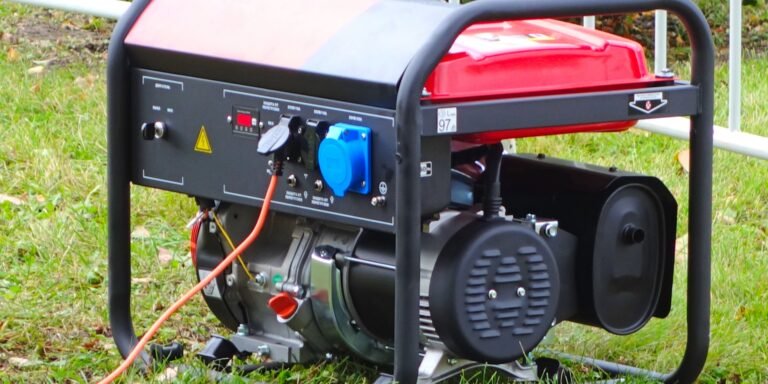
Quick answer: it depends on the generator and the load, but a typical portable generator at about half load runs roughly 4 to 11 hours on a full 20 lb cylinder. A 20 lb cylinder holds about 4.7 gallons of propane when filled to roughly 80 percent. To estimate your runtime, divide the usable gallons by the generator’s hourly propane use at your load, using the figure in the manufacturer’s manual. Run generators only outdoors, at least 20 feet from the house.
If you plan to run a propane or dual-fuel generator in an outage, you need to know how much fuel to store. A standard 20-pound cylinder, the size used on many gas grills, is the most common choice. This guide shows how to estimate runtime, what changes it and how to keep your generator and fuel safe.

The basic math
Propane contains about 91,500 BTU per gallon, and a 20 lb cylinder filled to about 80 percent holds roughly 4.6 to 4.7 gallons, which is about 420,000 to 430,000 BTU of energy. Generator makers publish how much propane each model uses at a given load, often in gallons or pounds per hour at 50 percent load. The formula is simple:
Runtime in hours = usable gallons of propane divided by gallons per hour.
As an illustration only, a generator that uses about 1 gallon per hour at half load would run roughly four to five hours on one 4.7-gallon cylinder, while a smaller one that uses about half a gallon per hour could run nine or ten hours. Published examples vary widely, and one manufacturer lists 11 hours for a 5,200-watt dual-fuel portable on a 20 lb tank at 50 percent load. Use your own model’s numbers.

Why your real runtime differs
Generator load
The more you plug in, the faster you burn fuel. Running a refrigerator and a few lights uses far less than running a furnace blower, a well pump and a space heater at once. Add up the running watts of what you really need, and remember that motors need extra starting watts. Our guide to propane vs. gas generators covers sizing basics.
Continuous or intermittent use
Running continuously wastes fuel when nothing needs power. Many households run the generator for a few hours at a time to keep food cold and charge devices, then shut it off. A full freezer holds its temperature for about 48 hours if you keep the door closed, according to Ready.gov, so you may not need to run all day.
Temperature
Propane vaporizes more slowly in cold weather, which can affect performance. Check the manufacturer’s guidance for cold-weather operation, and never move a cylinder or generator indoors to warm it up.
Cylinder fill and condition
Cylinders are filled to about 80 percent to leave room for expansion, so the gallons you get are fewer than the tank’s water capacity suggests. Exchange cylinders may be slightly under-filled, so check weight if you can. Damaged or old cylinders must be inspected or replaced; the date is stamped on the collar, and portable cylinders generally need requalification after a set period.

Planning how many cylinders you need
Work backward from your plan. Decide how many hours per day you will run the generator, multiply by days, multiply by the gallons per hour at your load and divide by 4.7 gallons per cylinder. Round up and add a buffer. For example, if your generator uses about one gallon per hour at your load and you plan to run it six hours a day for three days, you need about 18 gallons, or about four cylinders. Your own figures will differ.
Safe storage of propane cylinders
- Store cylinders outdoors in a well-ventilated area, upright and secured, away from ignition sources and direct heat.
- Never store propane cylinders, full or empty, in a basement, home or attached garage. Fire code guidance is clear on this.
- Transport cylinders upright, secured and with the valve closed, and do not leave them in a hot vehicle.
- Check hoses and connections for leaks with soapy water, never a flame.
- Keep a fire extinguisher nearby and follow local codes.

Safe generator operation
The CDC, CPSC and Ready.gov are consistent: use generators only outside, at least 20 feet from windows, doors, vents and attached garages, with the exhaust pointed away. Never run one in a garage, basement, crawlspace or shed, even with doors open. Install battery-powered carbon monoxide alarms, keep the generator dry, let it cool before refueling and do not backfeed your home wiring without a licensed electrician installing a transfer switch. See our guide to winter power outage preparation.

Maintenance that affects runtime
Scheduled maintenance
Change the oil and air filter as the manual says, check the spark plug and keep the unit clean. A neglected engine uses more fuel and may not start.
Fluids
Check engine oil before each use and top up as directed. Never add oil while the engine is hot or running.
Battery
If your generator has electric start, keep the battery charged. Test the generator every month or two under load so it is ready. Our guide to starting a generator that has been sitting explains what to check.
Fuel flexibility
If your generator is dual-fuel, you can switch to gasoline when propane runs low, but only follow the manufacturer’s procedure. Gasoline needs stabilizer and safe storage; see our guide to storing gas long term.

Frequently Asked Questions
How many pounds of propane are in a gallon?
About 4.2 pounds per gallon, so a 20 lb cylinder filled to about 80 percent holds roughly 4.6 to 4.7 gallons.
How long will a 20 lb tank run a generator?
Roughly four to eleven hours at half load for typical portable models, depending on the generator. Use the manufacturer’s propane consumption figures.
How long will a larger tank run a generator?
Use the same formula. Divide the usable gallons in the tank, which is about 80 percent of its capacity, by your generator’s gallons per hour at your load.
Can I store a spare cylinder in my garage?
Fire code guidance says propane cylinders should be stored outdoors, never in a basement, home or attached garage.
Is it safe to run a generator in a garage with the door open?
No. Even with doors and windows open, carbon monoxide can build up. Run it outside at least 20 feet away.

Bottom line
Estimate runtime with your own generator’s propane consumption, plan for more cylinders than you think you need, store them outdoors and run the generator safely away from the house with working CO alarms inside.