How to Use Your Water Heater and Pipes as Emergency Water
This post may contain affiliate links, full disclosure here.
Quick answer: a standard tank water heater holds roughly 30 to 80 gallons of water you can drink after treatment. Turn off the power or gas to the heater, shut the cold-water inlet, open a hot tap to let air in, and drain from the valve at the bottom of the tank. Let the water cool and settle, then filter or disinfect it before drinking. Do not use it if you suspect floodwater or a contamination notice affects your home.
Most households own a built-in reserve of emergency water and never think about it. The tank sitting in a closet, garage or basement is a sealed vessel filled with tap water, and the pipes behind your walls hold more. When a main breaks, a storm knocks out a pumping station or an advisory tells you to stop using the tap, that water can bridge the gap.
Using it safely takes a few steps in the right order. Skip one, and you can scald yourself, damage the heater or pull sediment into your glass. Below is a practical walkthrough, including what to do with water in pipes, what to avoid, and how to make the water fit to drink.
This is a supplement to storing water in advance, not a replacement. Our guide to storing water for emergencies explains how to build a dedicated supply, and the sections below cover what to do when you have not yet done that.
Know Which Type of Water Heater You Have
The method depends on the equipment. Look at the unit and its label, or check the manual if you still have it.
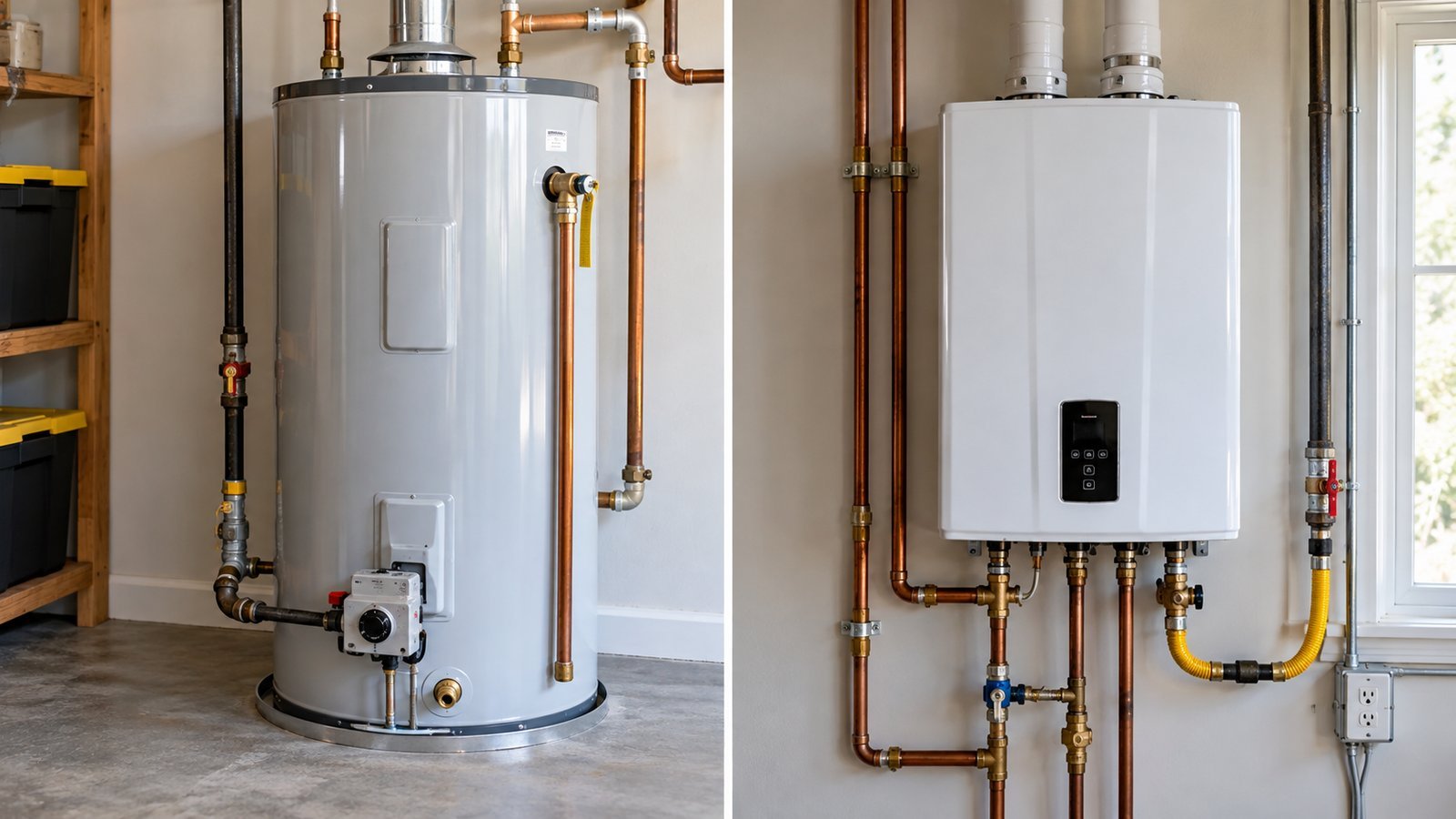
A storage tank heater, gas or electric, keeps a large volume of hot water ready. Residential tanks commonly hold between 30 and 80 gallons, with 40 and 50 gallons being typical for many homes. That volume is what makes them useful in a crisis.
A tankless heater heats water on demand and holds only a tiny amount, so it is not a meaningful emergency source. A heat pump water heater is a storage tank design and works the same way for this purpose. Some homes have a boiler or an indirect tank connected to a heating system. The water inside a heating loop is not meant for drinking, so leave those alone.
Check the label for capacity, and note the location of three things: the cold-water inlet valve on top, the drain valve near the bottom, and the power source. Knowing those ahead of time saves a lot of fumbling in a dark utility closet.
When Not to Use Water Heater Water
A few situations make the tank a poor choice.
Floodwater is the biggest one. Should floodwater reach the heater, the tank and the controls may be damaged or contaminated, and gas units can be dangerous after flooding. The CDC and FEMA advise having a professional inspect flooded appliances before use.
A contamination notice is another. Suppose your utility issued a boil-water advisory or a do-not-use order before the outage, the water in the tank came from the same compromised supply. Follow the instructions on the notice. In most boil advisories, water that was already heated is still treated as questionable and should be boiled or otherwise made safe for drinking.
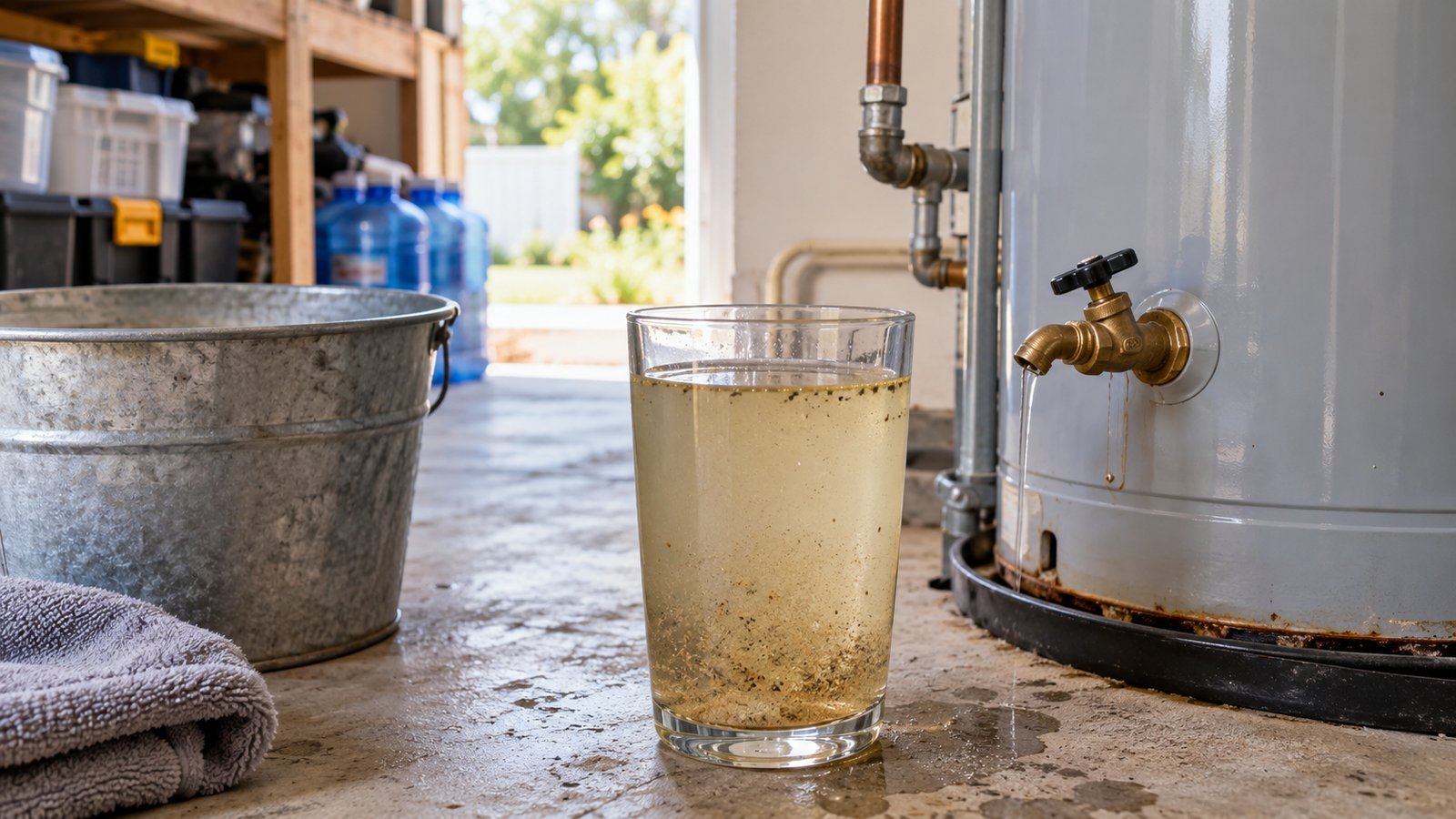
Chemical or fuel odors, an oily film, or visible rust-colored water are also reasons to avoid drinking it. Use it for flushing instead.
Finally, if the heater was off for a long time before the emergency, the water has been sitting. Sitting water may taste flat, but it is not harmful on its own. When in doubt, treat it.
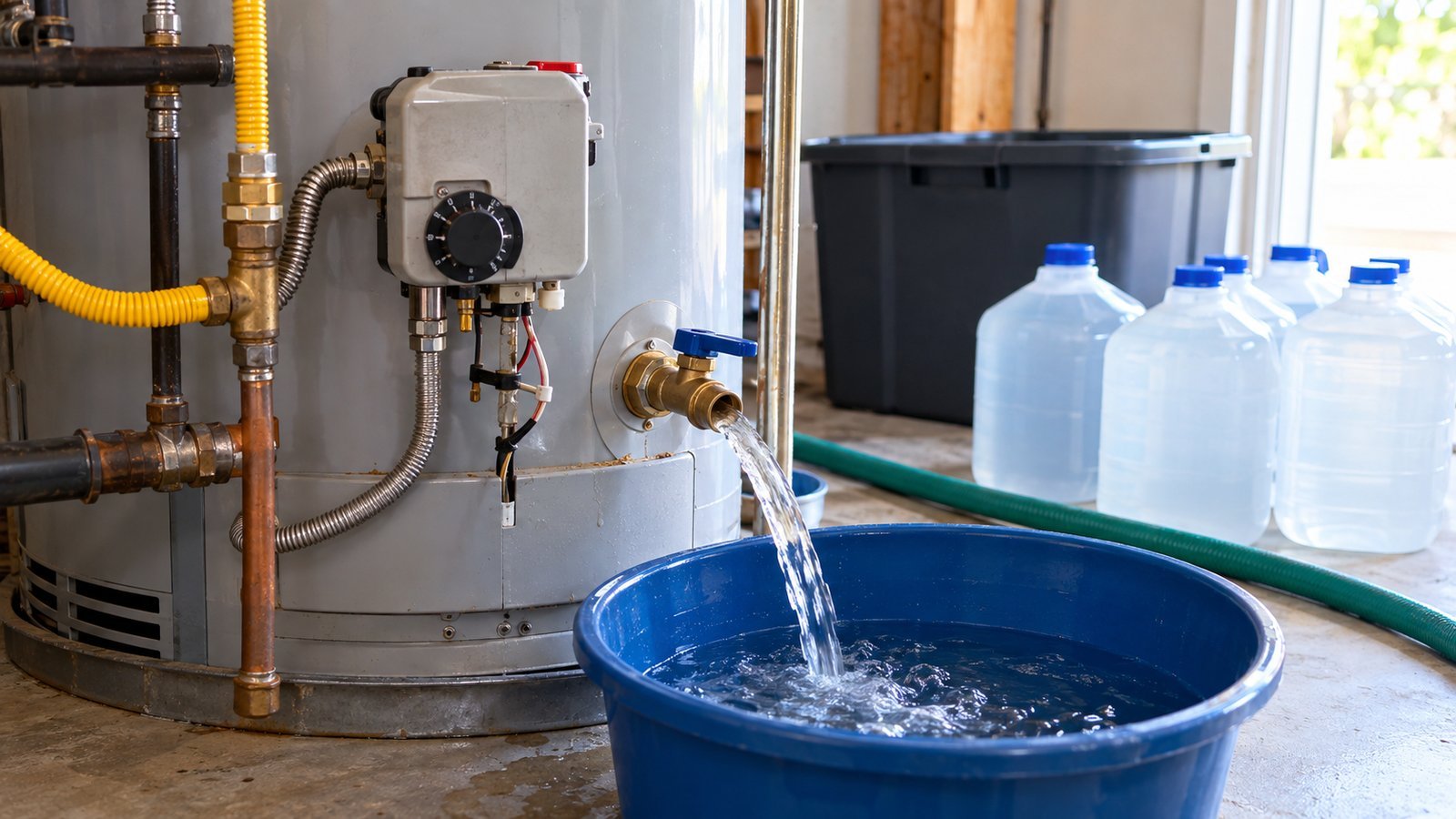
How to Drain the Tank Step by Step
Use these steps for a standard storage tank heater. Wear closed-toe shoes, and take your time, because the water can be hot enough to burn.
- Turn off the power. For an electric heater, switch off the breaker. For a gas heater, turn the gas control to the off or pilot position. Doing so keeps the heating element from running dry and burning out.
- Close the cold-water inlet valve on top of the tank so water does not flow back in from the supply line, especially if the supply is contaminated.
- Let the water cool if it was recently hot. A tank heated to the usual setting can hold scalding water for hours.
- Open a hot-water faucet somewhere in the house. That lets air enter the system, so water can flow out of the bottom without creating a vacuum.
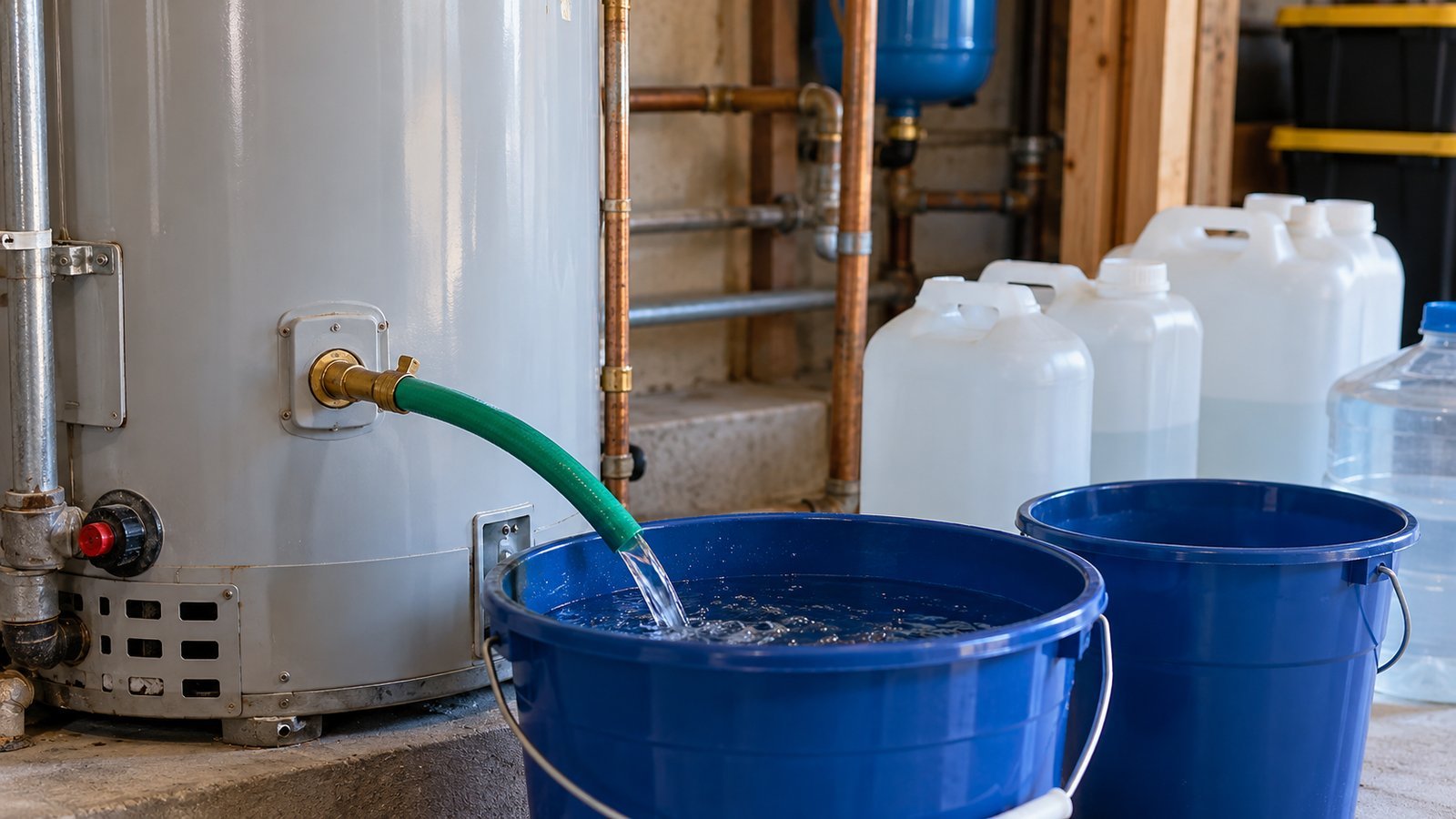
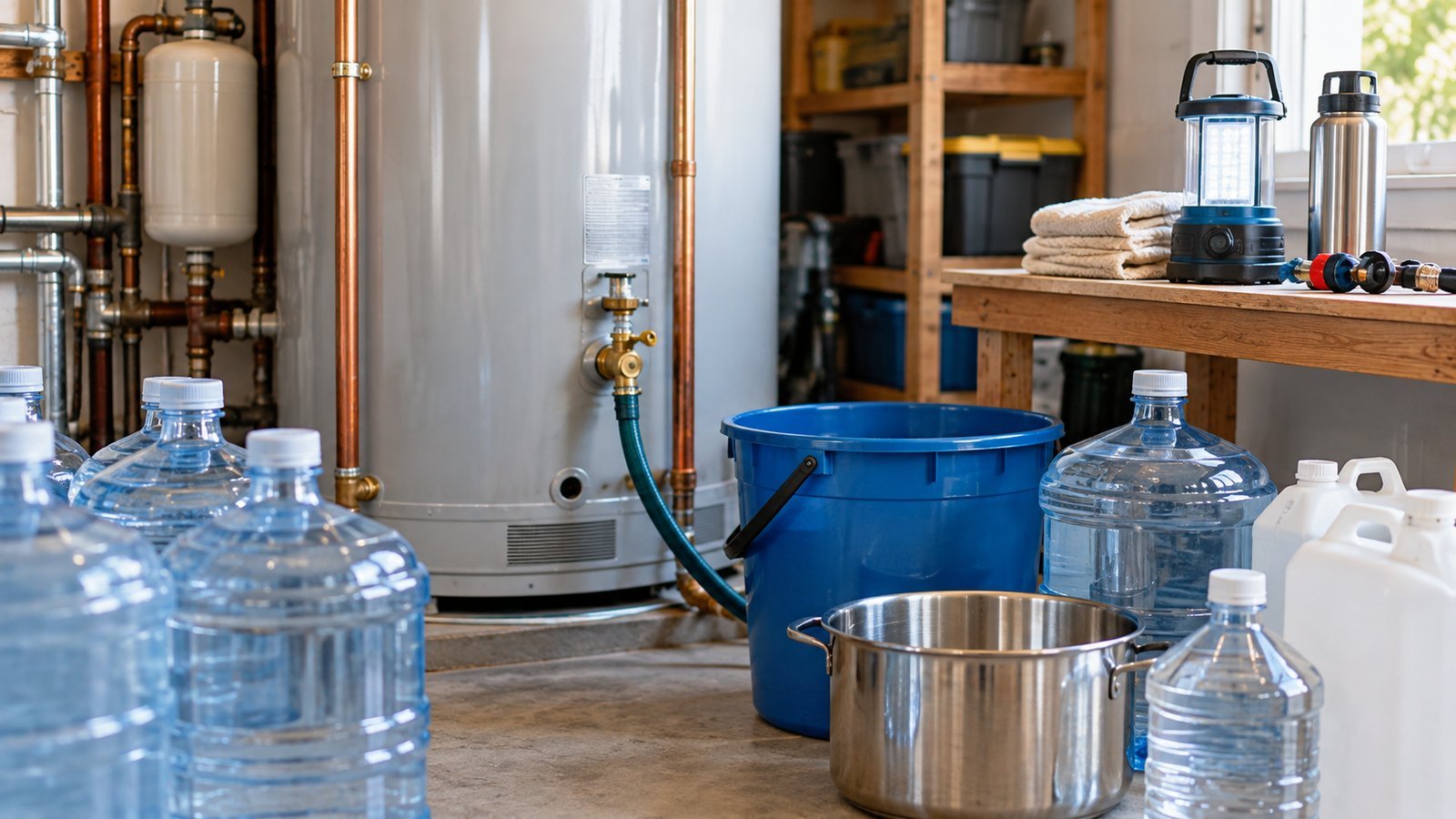
- Attach a garden hose or place a bucket under the drain valve near the bottom of the tank. Open the valve slowly. A valve that clogs or dribbles usually means a hot tap is still closed upstairs.
- Collect water into clean containers with lids, such as food-grade jugs or pots that you have rinsed.
The first few gallons often come out cloudy or with grit. That is sediment, which builds up over time at the bottom of the tank. Let the first bucket run to waste, or collect it separately for flushing the toilet. Once the water runs clear, it is ready for filling drinking containers.
Do not drain the tank in a manner that floods the room. Know where the hose is going before you open the valve. Keep children and pets out of the area.
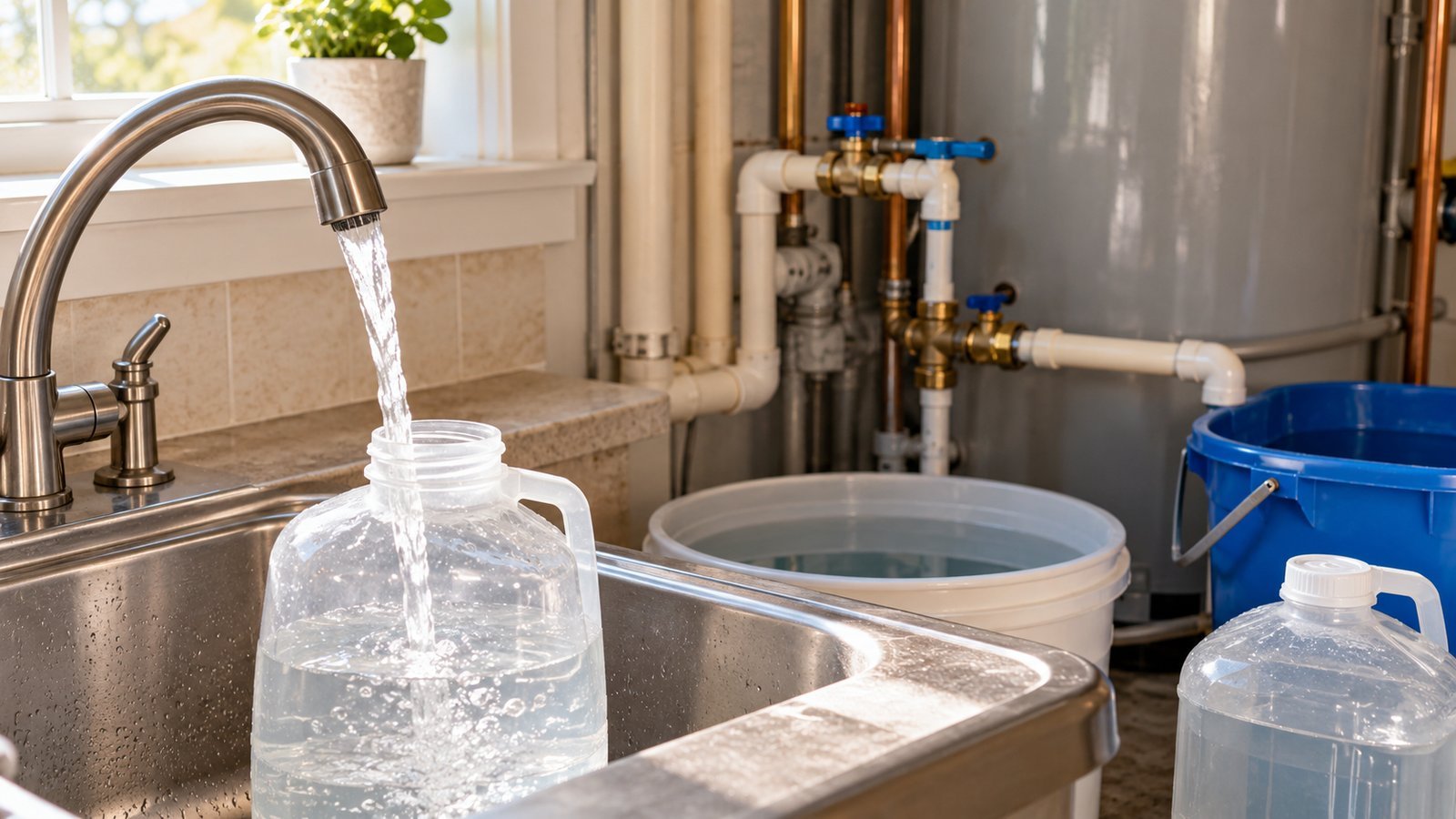
Getting Water Out of Your Pipes
Your home plumbing also holds water. A small house might have several gallons in the pipes. To capture it, first stop the flow back into the supply: shut off the main water valve where the line enters the house. Closing it stops contaminated water from flowing backward from the city main into your pipes if pressure drops.
Next, open the faucet at the highest point in the house, such as an upstairs bathroom, to let air in. Then open a faucet at the lowest point, such as a basement sink or an outside spigot, and collect what flows out. Gravity does the work.
Expect a few gallons at most, and quality varies. Water from pipes should be treated as you would treat any questionable source before you drink it.
Other hidden sources are worth knowing:
- The clean tank of a toilet, not the bowl, holds a few gallons. It is fine for flushing and washing, and it can be treated for drinking if no tank cleaning tablets were used.
- Ice trays and automatic ice maker bins hold clean ice that melts into drinkable water.
- Canned vegetables and fruits include liquid you can drink or cook with.
Avoid the water in swimming pools, hot tubs and waterbeds for drinking, because of added chemicals. Pool water can still be used for flushing toilets.
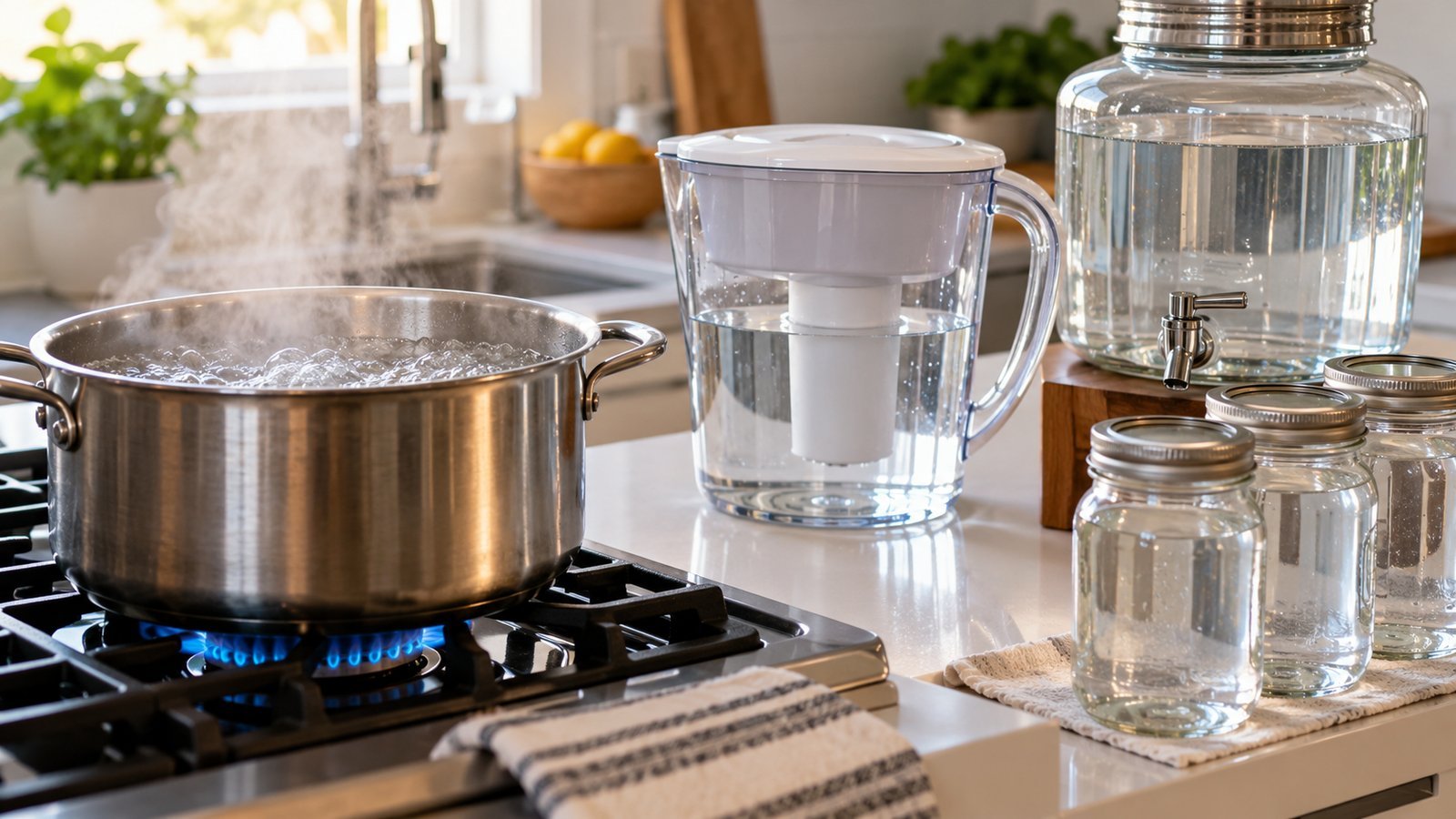
Making Heater Water Safe to Drink
Even a sealed tank can pick up bacteria over time, especially if the water has been warm and stagnant. The CDC describes boiling as the most reliable approach for emergencies. Bring the water to a rolling boil for one minute, or three minutes at elevations above 6,500 feet. Let it cool before drinking.
Without a stove, unscented household bleach works for clear water. For a typical 5 to 6 percent bleach, the common dose is about 8 drops per gallon, or double for cloudy water, then wait 30 minutes. Always check the concentration on your bottle and follow the CDC or EPA chart.
Filtering can remove sediment and parasites, but not all filters stop viruses, so combine it with another step when the source is uncertain. Our overview of five ways to purify water from any source compares the options. For a heat source during an outage, see how to boil water without electricity.
Let hot water cool before treating or storing it in plastic containers. Hot water can warp thin plastic and may cause some containers to release unpleasant tastes.
Storing What You Collect
Once you have drained the tank, you have a limited window. The water is in a container that is not designed for long storage, so use it within a few days if you can.
Use clean, food-grade containers with tight lids. Label each one with the date and the source. Keep them away from direct sun and heat, and keep them off the floor if there is a chance of flooding.
Households that drain water at the start of a storm often fill a bathtub too. A tub of water is valuable for flushing toilets and cleaning, but treat it as non-drinking water unless the tub was scrubbed and rinsed first. A bathtub liner, sold as a single-use bag, keeps the water cleaner if you have advance warning of an event.
How long will it last? A 40-gallon tank gives a family of four roughly 10 days at the federal planning figure of one gallon per person per day. In reality, it also needs to cover cooking and basic hygiene, so plan on a shorter window and start thinking about other sources early.
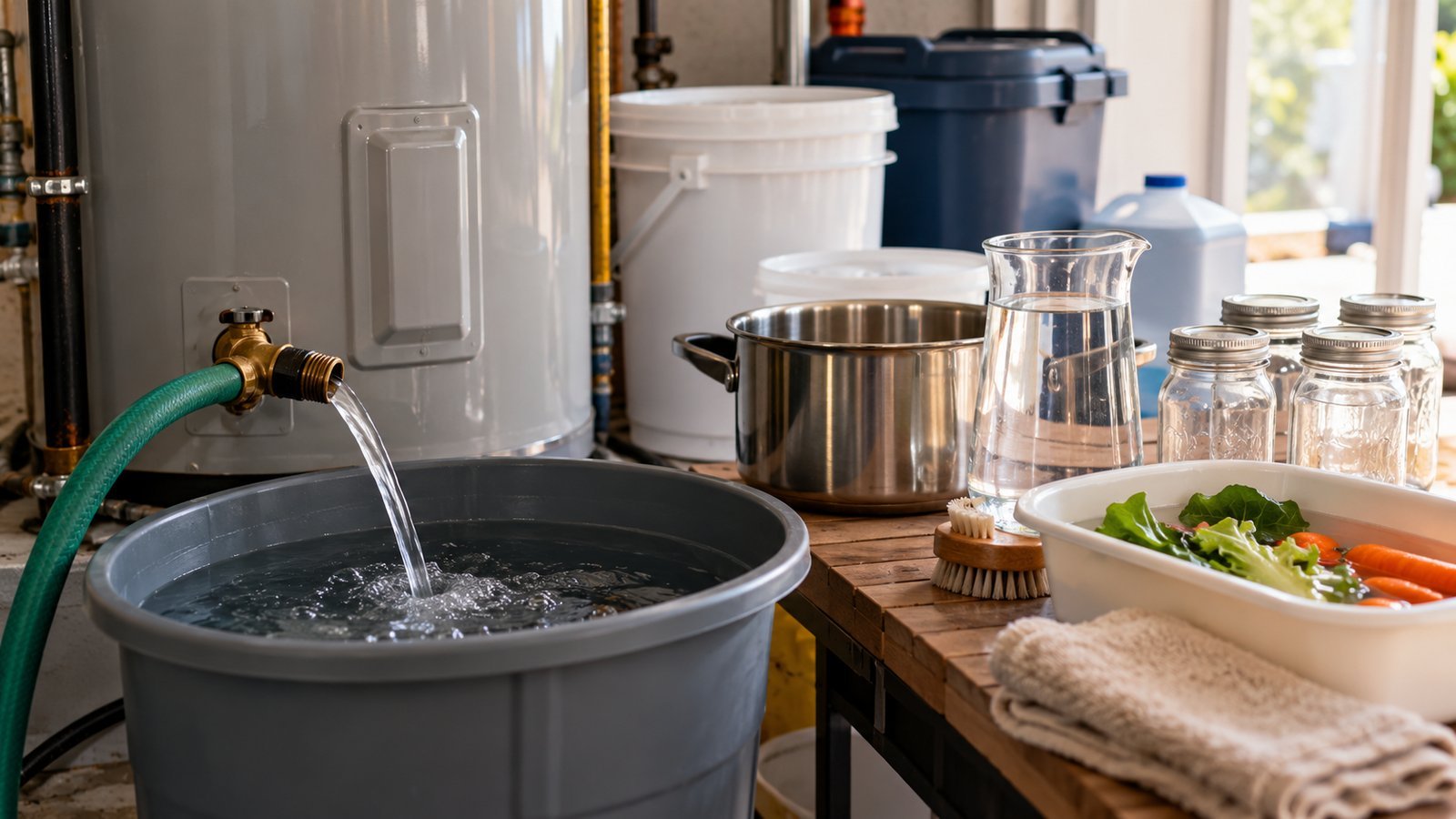
Using the Water Wisely
Treat the reserve as a budget instead of a tap. Drinking and cooking come first, so set aside a share for them before anything else. Washing hands matters nearly as much, because sanitation prevents illness at a time when medical help may be harder to reach. A small bowl, soap and a cup of water will do the job.
Toilets are the next big drain. Pouring a gallon into the bowl flushes it, and untreated pool or bathtub water works fine for that. Dishes can wait or be washed with minimal water, using disposable plates for a few days.
Remember that water you boil or treat is only as clean as the containers it goes into. Keep a dedicated set of clean, lidded containers for drinking water, and a separate set for washing. Label them clearly. If you are weighing whether to filter first, our piece on why you need to filter your water in an emergency walks through what filtering catches. In cold weather, protect stored water from ice, as covered in keeping emergency water from freezing.
Preparing Your Heater Ahead of Time
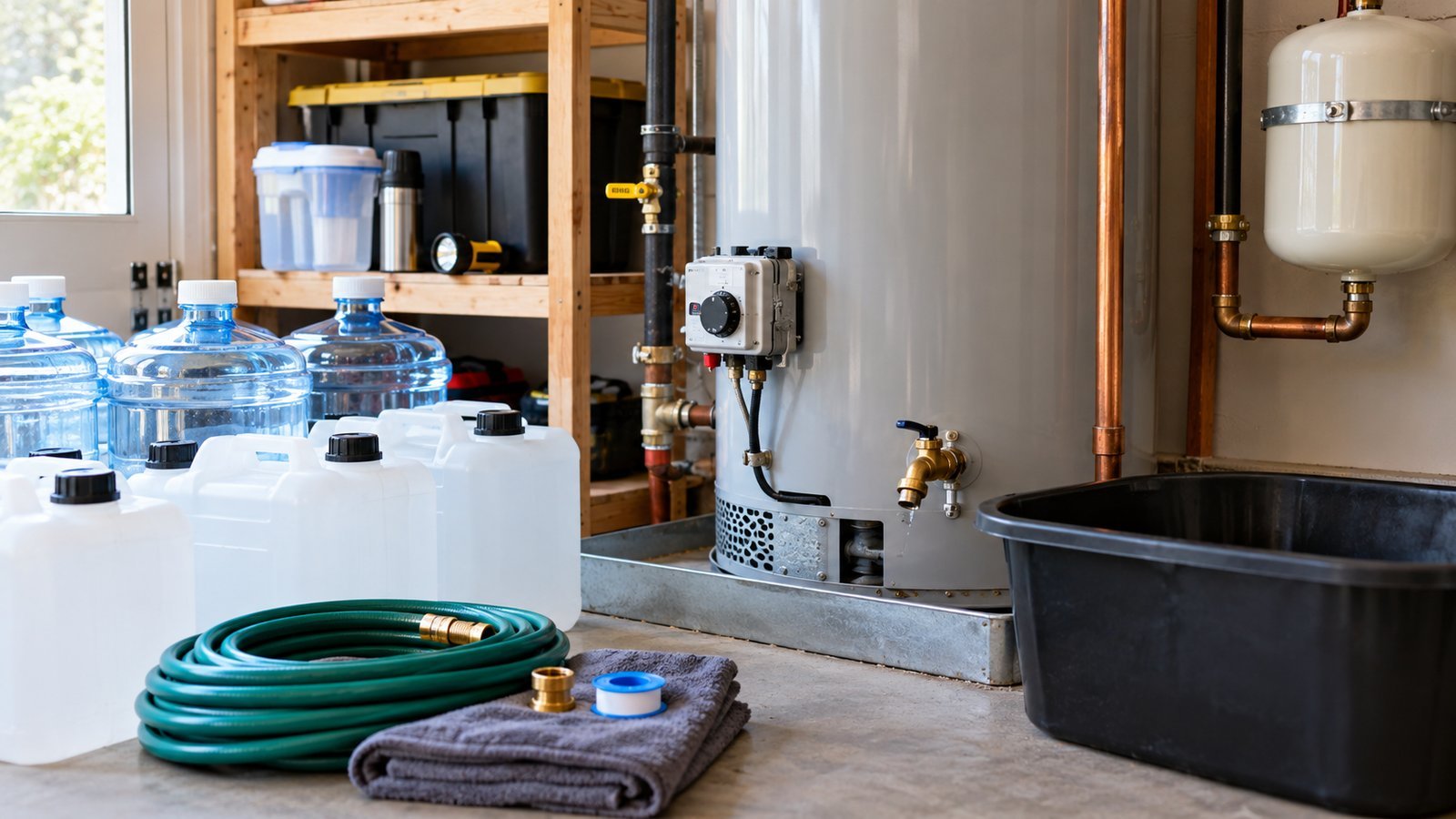
A little prep makes the emergency version easier. Consider these steps while everything is working:
- Locate and label the cold-water inlet valve and the drain valve on your heater.
- Keep a garden hose with a standard connector near the heater, and make sure the drain valve opens easily. Valves that have not been touched in years can stick or leak when first opened, so exercise them under controlled conditions.
- Learn where your main water shutoff is, and make sure everyone in the household knows.
- Flush the tank once a year, following the manufacturer’s directions, to reduce sediment. Many manufacturers recommend this, and it makes emergency water cleaner.
- Keep a small bottle of unscented bleach and a dropper with your water supplies.
- Store a few gallons of bottled water so you do not have to rely on the heater for the first day.
The tank is a good backup, but a poor primary plan. It is most useful as the buffer that gives you time to find another source or wait for service to return.
Sources for this guide include Ready.gov and FEMA guidance on emergency water supplies, CDC instructions on making water safe, and general water heater manufacturer practice. Always check your own heater’s manual for model-specific steps.
Frequently Asked Questions
Is water from the water heater safe to drink?
It can be, after treatment. The tank is sealed and starts out as tap water, but it may contain sediment or bacteria. Boil it, treat it with unscented bleach, or use a suitable filter plus disinfection before drinking, and skip it entirely if floodwater or a contamination notice is involved.
How much water is in a water heater?
Most residential storage tanks hold between 30 and 80 gallons, and 40 to 50 gallons is common. The label on the tank lists its capacity.
Why is the water cloudy as the tank drains?
Minerals and sediment settle at the bottom of the tank over time. Let it run until it clears, or let the water sit so the sediment settles, and filter it before treatment.
Can I use a tankless heater for emergency water?
Not in any meaningful way. Tankless units hold only a small amount of water, so they are not a useful reserve.
Do I need to turn off the main water valve first?
Yes, in most cases. Closing the main valve prevents contaminated water from flowing back into your pipes and lets you drain the system by gravity.