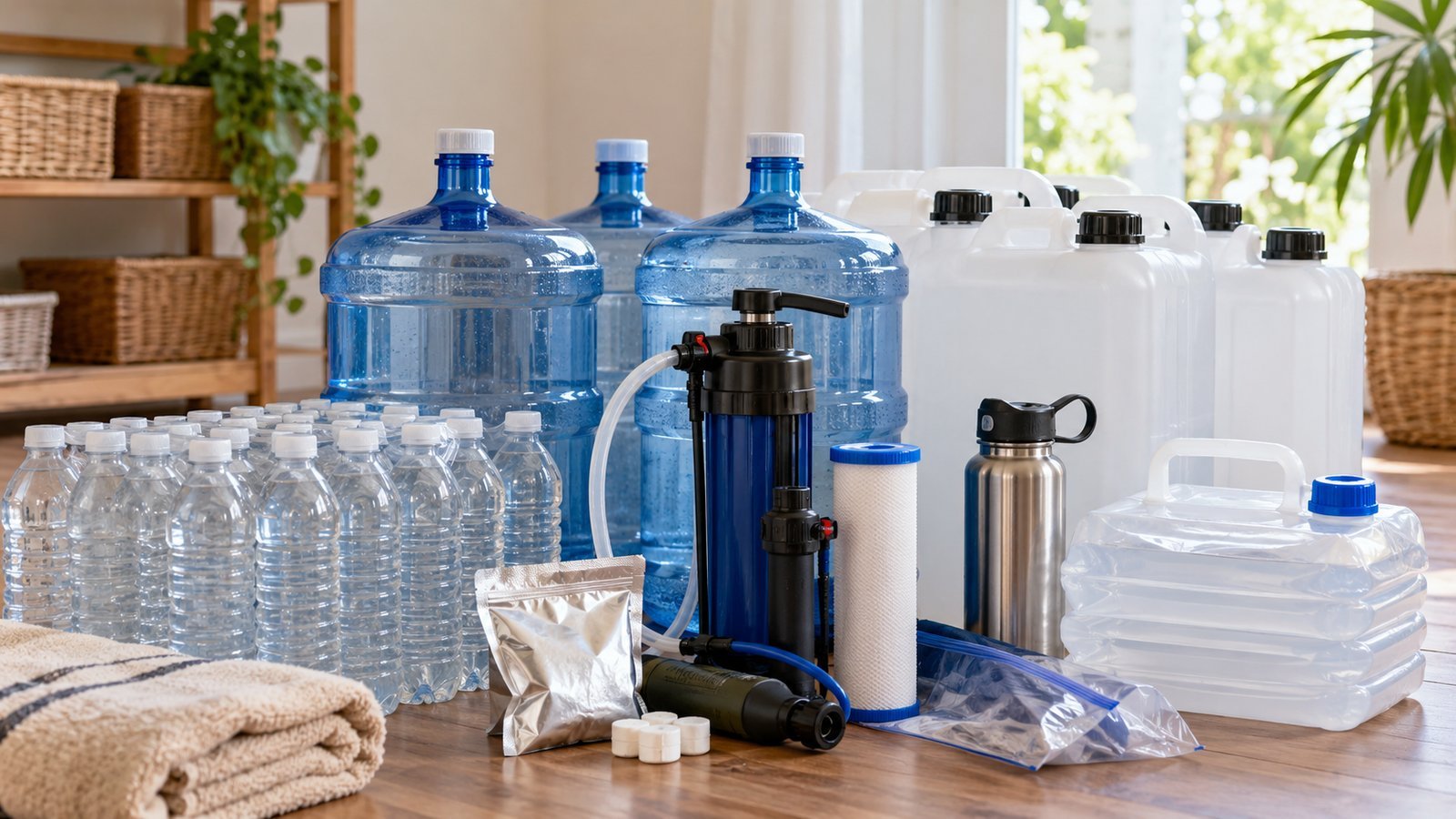
Emergency Water Guide: How Much to Store, Containers, Filters and Purification
This post may contain affiliate links, full disclosure here.
Quick answer: store at least one gallon of water per person per day, plan for a minimum of three days, and go toward two weeks if you have the room. Keep it in clean, food-grade containers or sealed commercial bottles, in a cool, dark spot. If a supply runs short, make water safe by boiling it, treating it with unscented household bleach, or running it through a filter or purifier rated for the germs you are worried about.
Water is the first supply to run short in most emergencies, and the one people forget until the tap runs dry. A person can survive for weeks without food, but only a few days without water. Storms, floods, main breaks, power failures at pumping stations and contamination alerts all interrupt service, sometimes for hours and sometimes for weeks.
Storing water sounds trivial. In practice, it raises a long list of small questions. How much is enough? Is a used soda bottle fine? Does water really go bad? Will a camping filter handle floodwater? This guide walks through each of those questions using guidance from FEMA, Ready.gov, the CDC and the EPA, and it points to deeper articles on this site for the details.
Nothing here replaces advice from your local water utility or health department. When an official notice says to boil, avoid or stop using the water, follow that notice first.
How Much Water You Need Per Person
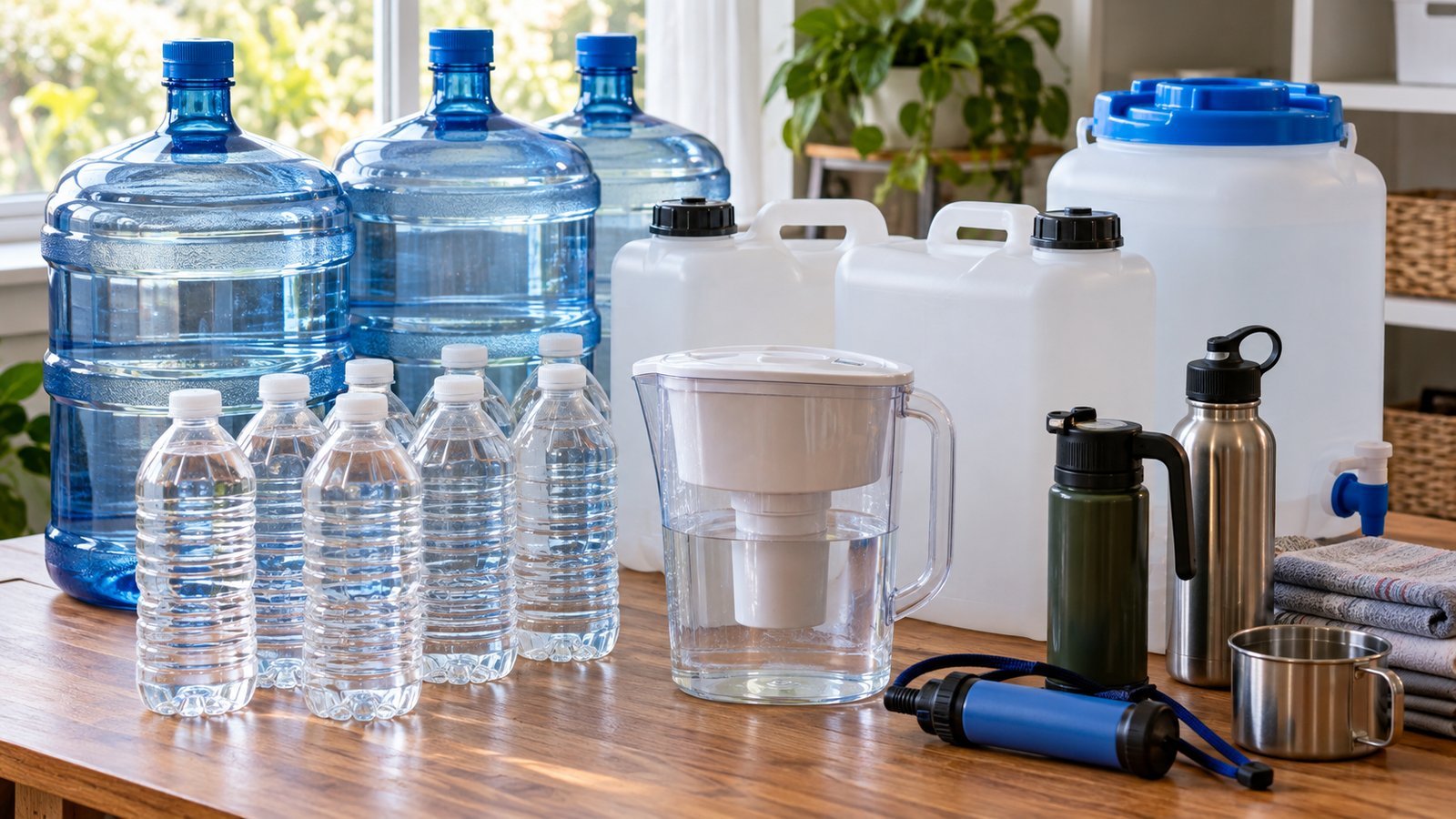
The figure that shows up everywhere in federal guidance is one gallon per person per day. Ready.gov and FEMA describe that gallon as covering both drinking and basic sanitation, such as brushing teeth and wiping hands. It is a floor, not a comfortable allowance. A gallon will not cover laundry, dishwashing or showers.
Several things push the number higher. Hot weather increases how much anyone needs to drink. Pregnant and nursing people need more, and so do people who are ill. Children and older adults can dehydrate quickly, so a margin matters for them. A household with a baby on formula needs extra water for mixing, and pets need their own share.
Here is a simple way to turn the guideline into a plan:
- Count every person in the household, then add pets.
- Multiply by one gallon per day, then by the number of days you want to cover.
- Add a buffer of 25 to 50 percent if anyone is pregnant, elderly, ill or very young, or if your climate is hot.
- Round up to a number of containers you can actually carry and store.
A family of four covering three days needs 12 gallons as the bare minimum. The same family aiming for two weeks needs 56 gallons, which is a lot of floor space. Many households settle on a middle target, such as a week, and rely on filtration for anything beyond that. For a longer walk through the arithmetic, including special cases, see our guide on how to store water long term covers the same ground.
Where to Store Water at Home and in an Apartment
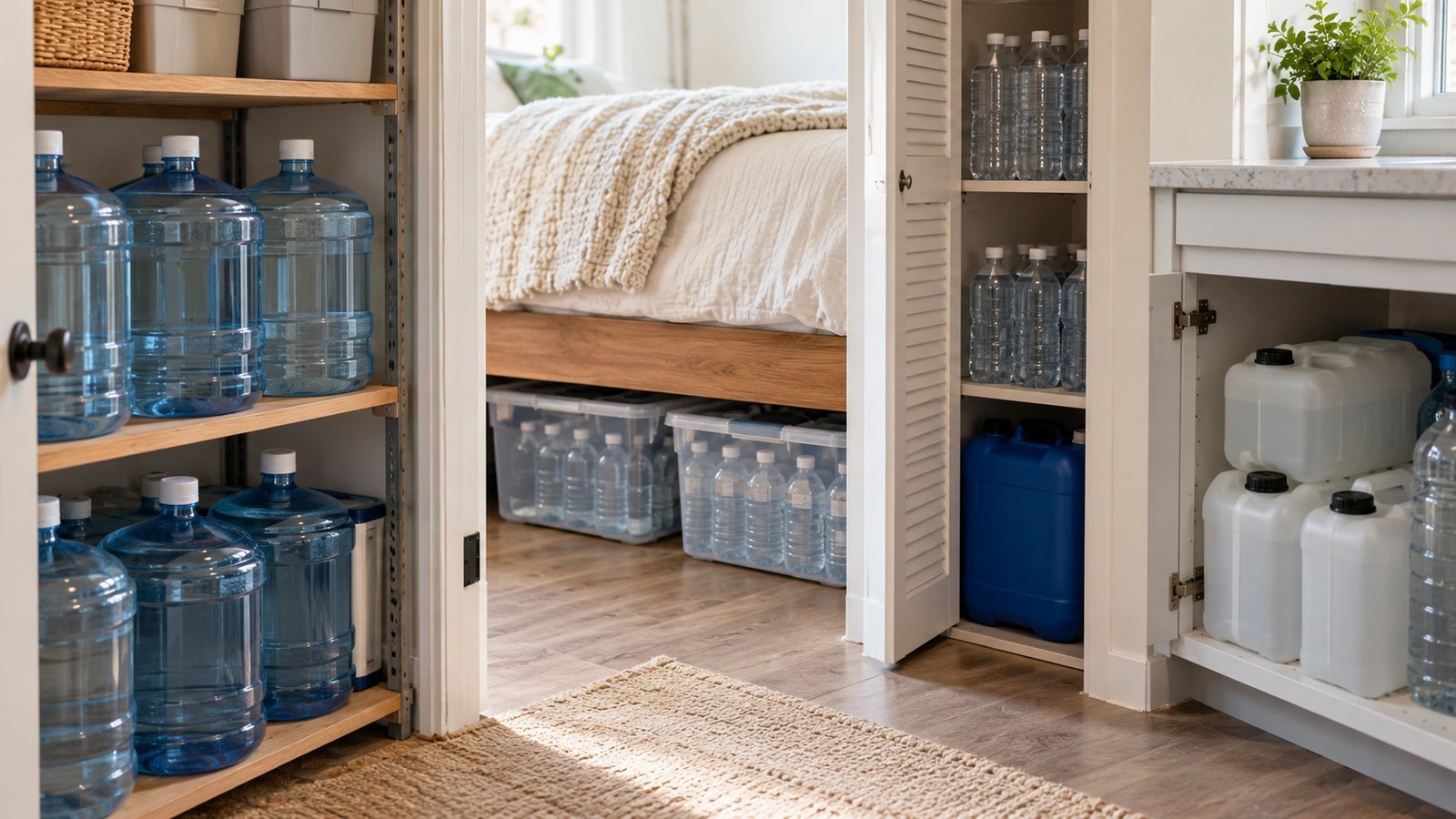
Storage space shapes everything. A house with a garage or basement has options that a one-bedroom apartment does not. Whatever you have, the goal is the same: keep water cool, out of direct sunlight, and away from fumes and chemicals.
Heat and light are the enemies. Sunlight can warm plastic and encourage algae growth in clear containers. Gasoline, solvents and pesticides can permeate some plastics over time, so avoid storing water right next to them. A closet floor, the space under a bed, the bottom of a pantry and the area under a stairwell all work well.
Weight matters too. Water weighs a little over eight pounds per gallon, so a stack of full 5-gallon containers is heavy. Keep heavy containers low and make sure the floor can bear them. In an upper-floor apartment, spreading smaller containers around the home is easier on both your back and the building.
Freezing is the opposite problem. Expanding ice can split rigid containers and burst bottles. Cold-climate garages and sheds are a risk, and our article on keeping emergency water from freezing covers how to protect it. Leave a little headspace in containers you fill yourself so expansion has somewhere to go.
Choosing Containers
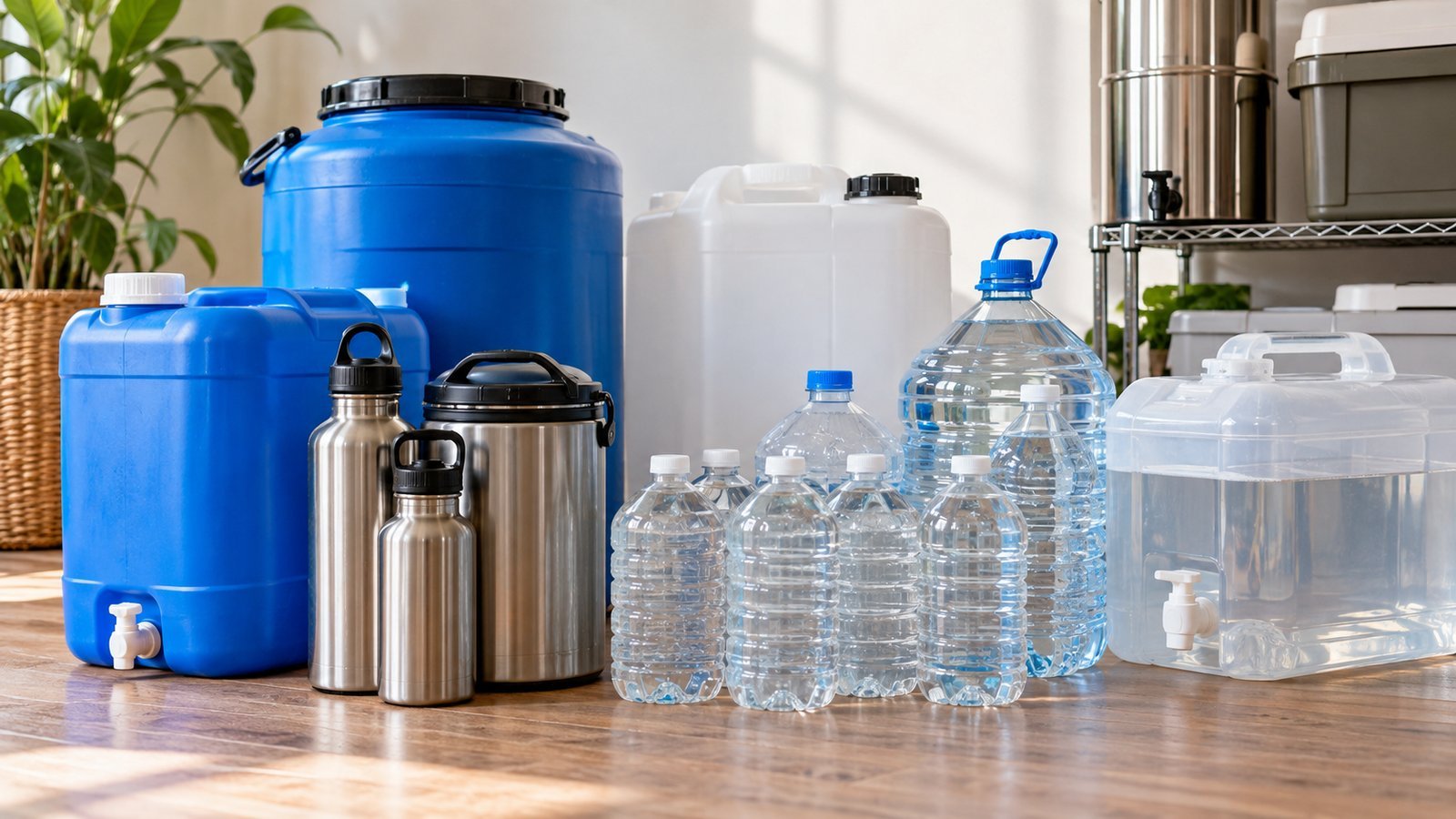
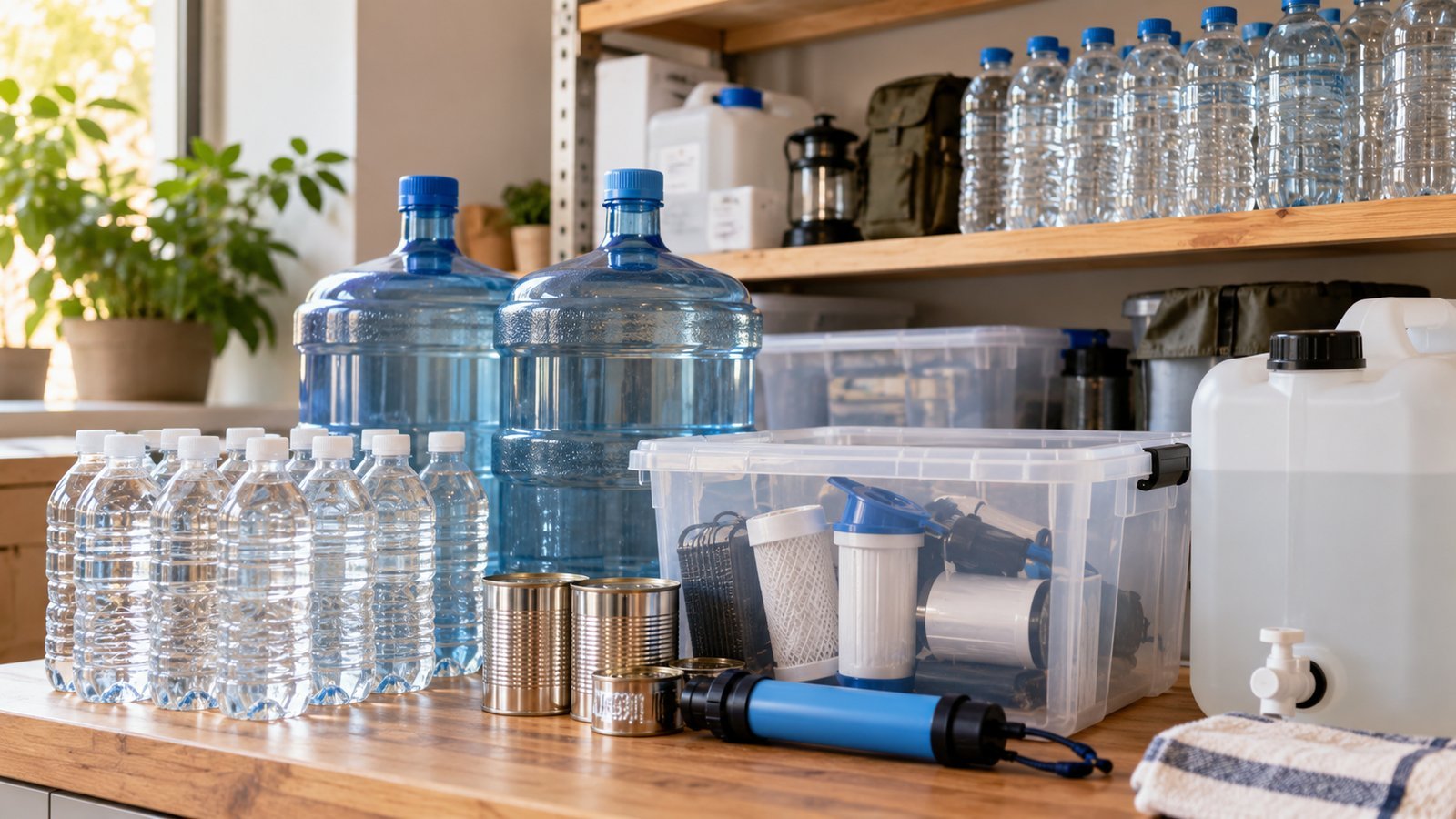
Not every bottle is a good storage vessel. Look for containers made of food-grade plastic, usually marked with a recycling code such as 1 (PET), 2 (HDPE) or 5 (PP), and stamped with a cup-and-fork symbol or the words food grade. Those materials are designed to hold drinking liquids without leaching unwanted chemicals into them.
Common options include:
Commercially bottled water
Sealed store-bought bottles and jugs are the simplest choice. They are already clean, filled safely, and printed with a date. Keep them in their original packaging until you need them, and rotate them as the date approaches.
Reusable food-grade jugs and barrels
Stackable jugs holding 3 to 7 gallons are popular because they have spigots and handles. Barrels of 15 to 55 gallons hold much more but need a pump or siphon and a stable surface. Buy containers new, or only reuse ones that previously held food or beverages.
Repurposed soda and juice bottles
Cleaned two-liter soda bottles are a reasonable low-cost option. Ready.gov and FEMA advise against milk jugs and fruit juice containers, because milk proteins and sugars are hard to remove completely and can encourage bacterial growth. Thin plastic jugs also degrade and leak after a few months.
Collapsible bladders and bathtub liners
Flexible bladders and bathtub-sized liners are useful when you get advance warning, such as before a hurricane. They are not a long-term storage solution, but they can turn a bathtub into several dozen gallons of water for flushing and washing.
To clean a container you plan to fill yourself, wash it with dish soap and water, rinse thoroughly, then sanitize it with a solution of one teaspoon of unscented household bleach per quart of water. Swish it around so it touches every surface, let it sit for about a minute, and rinse again with clean water. Then fill it with potable tap water, cap it tightly, and write the date on it.
Shelf Life and Rotation
Water itself does not spoil. What changes is the container and what gets into the water. Plastic can pick up odors, tiny leaks can let in contaminants, and tap water that was not sealed well can grow bacteria or algae.
The usual guidance is simple. Commercially bottled water should be used by its printed date, or replaced about once a year if no date is printed. Water you bottled yourself from the tap is typically replaced every six months. Mark the date on the container with a permanent marker, and tie rotation to something memorable, like the clock change in spring and fall.
Old water is rarely dangerous by default. It may taste flat or stale, since it has lost dissolved air. Pouring it back and forth between two clean containers, or letting it sit uncovered for a few hours, improves the taste. If the container looks cloudy, smells strange or has visible growth, treat the water before drinking it or use it for cleaning and flushing.
Rotating does not have to waste water. Use older containers for watering plants, washing the car or filling pet bowls, and refill them right away. A rotation habit costs almost nothing and keeps your supply dependable.
Treating Water: Boiling, Bleach and Filters
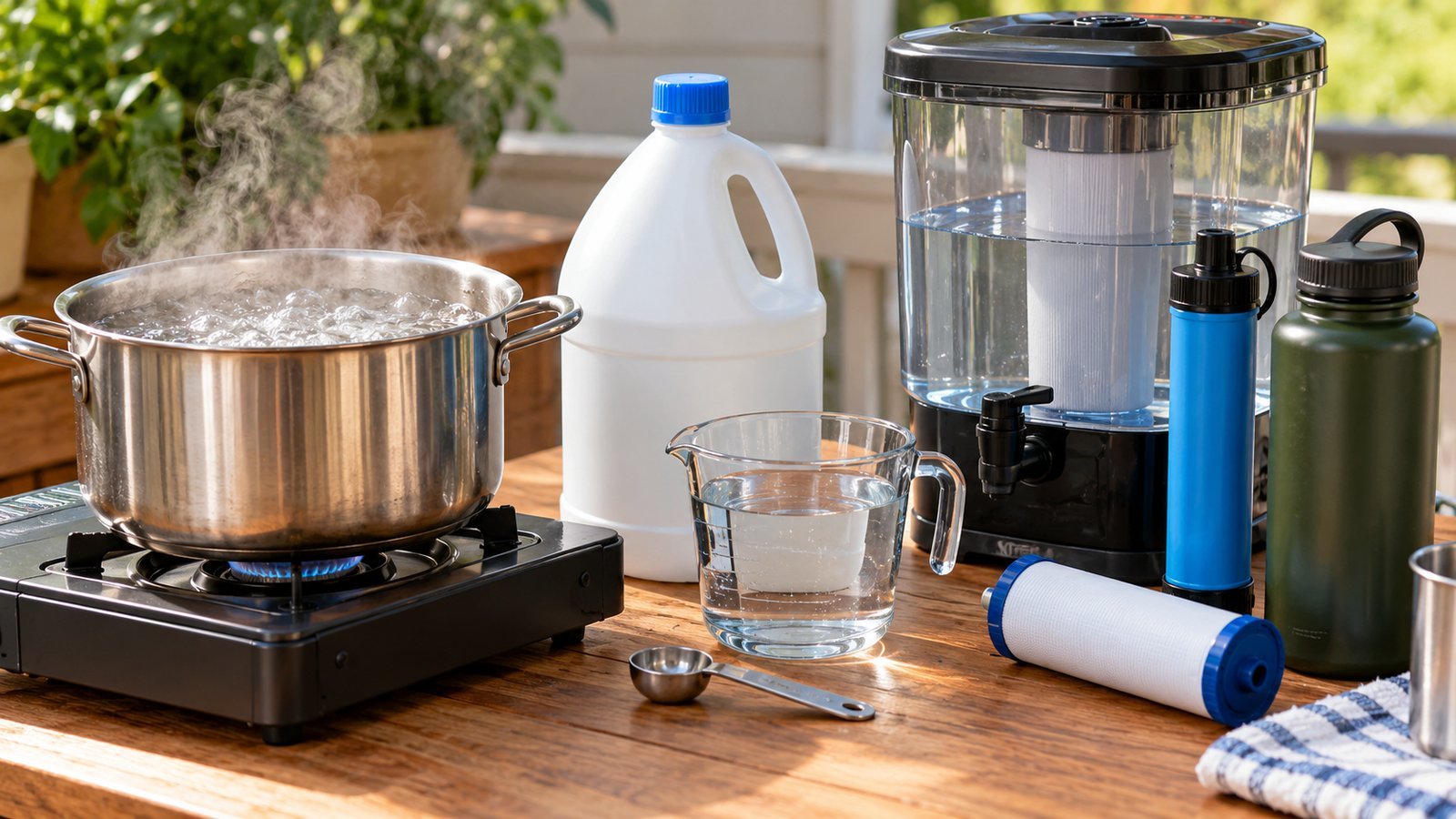
Stored water is the first line of defense. Treatment is the second. If you run out, or if the water you have is questionable, the CDC and EPA describe several ways to make water safer. No single method handles every hazard, so it helps to know what each one does and does not do.
Boiling
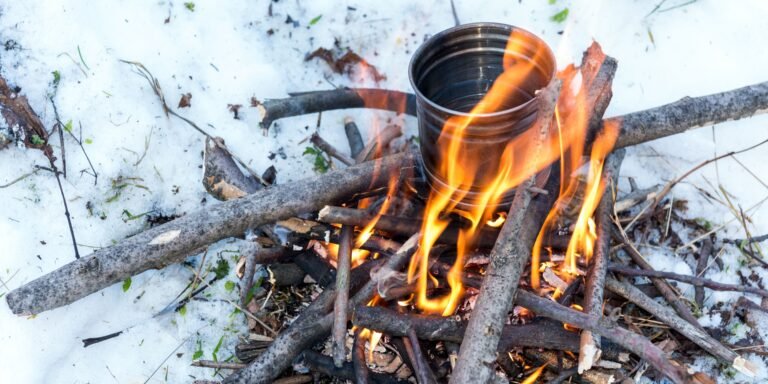
Boiling is the most reliable all-purpose method for killing germs, including bacteria, viruses and parasites. The CDC says to bring water to a rolling boil for one minute, or three minutes at elevations above 6,500 feet. Let the water cool naturally and store it in a clean, covered container. Filter cloudy water through a clean cloth, or let the sediment settle first. Boiling does not remove chemicals, fuel, heavy metals or most contaminants of that type. Our article on boiling water without electricity covers stoves, fires and improvised options.
Household bleach
Without a way to boil, unscented household bleach can disinfect clear water. The CDC and EPA give a dosing chart that depends on the bleach concentration. For a bottle labeled 5 to 6 percent sodium hypochlorite, the common recommendation is about 8 drops per gallon of clear water, doubled for cloudy water. Stir, then wait at least 30 minutes. A faint chlorine smell afterward is expected and is a sign the treatment worked. Do not use scented, color-safe or splashless bleach, or anything with added cleaners.
Purification tablets
Tablets based on chlorine dioxide or iodine are light and shelf-stable. They are handy for go-bags and car kits. Follow the package times exactly, since cold or cloudy water needs longer contact. Chlorine dioxide tablets are generally recommended over iodine, and iodine is not advised for pregnant people or anyone with thyroid conditions.
Filters and purifiers
Filters physically strain out particles. Their effectiveness depends on pore size. A filter with an absolute pore size of 1 micron or smaller is generally recommended against Cryptosporidium and Giardia, according to the CDC. Many filters do not stop viruses, which are much smaller, unless they are specifically labeled as purifiers or paired with a chemical step. Look at what the package claims and, where possible, for independent certification to NSF or ANSI standards.
A good rule is to treat filters as one layer. A common approach is to filter first to remove sediment and parasites, then disinfect with boiling or chlorine. Our guide on five methods to purify water from any source compares these approaches in detail, and the article on why filtering matters in an emergency explains the hazards you are guarding against.
What Filters and Boiling Cannot Fix
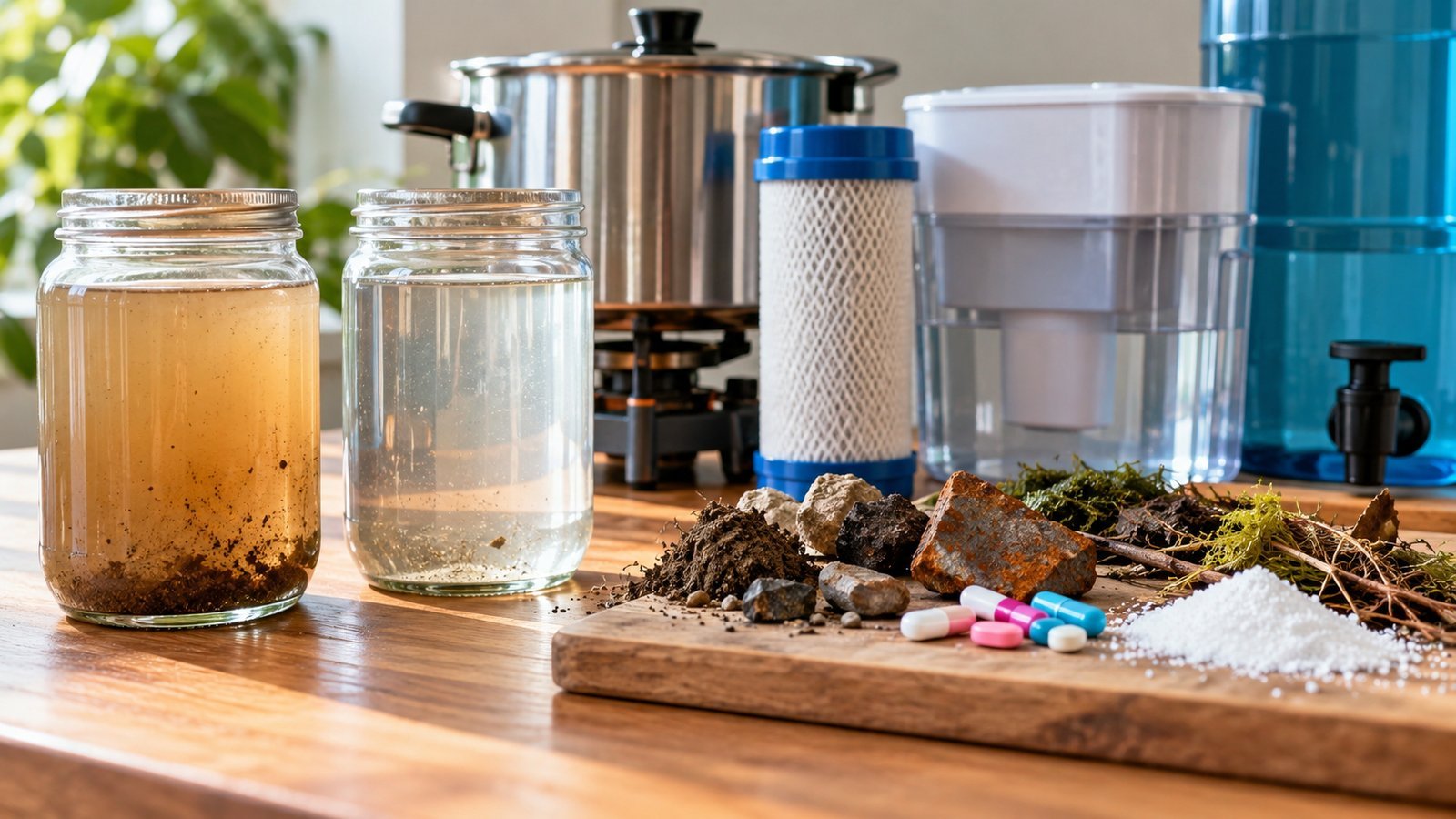
Disinfection deals with living germs. Chemical contamination is a different problem. After floods, industrial spills or fuel releases, water can carry pesticides, petroleum products, heavy metals or sewage. Boiling concentrates some of those instead of removing them, and a basic camping filter will not catch dissolved chemicals.
Signs that water is not suitable for drinking, even after treatment, include an oily sheen, a fuel or chemical smell, unusual colors, or dead fish and animals nearby. In those cases, look for another source or use stored water. Salt water and brackish water also need special handling, because boiling leaves the salt behind. Our article on making seawater drinkable explains why this takes specialized equipment.
After a flood, private wells need testing and disinfection before use. The CDC and local health departments publish steps for this, and your county may offer testing. Until a lab confirms the water is safe, treat well water as contaminated.
Water for Babies, Pets and Special Needs
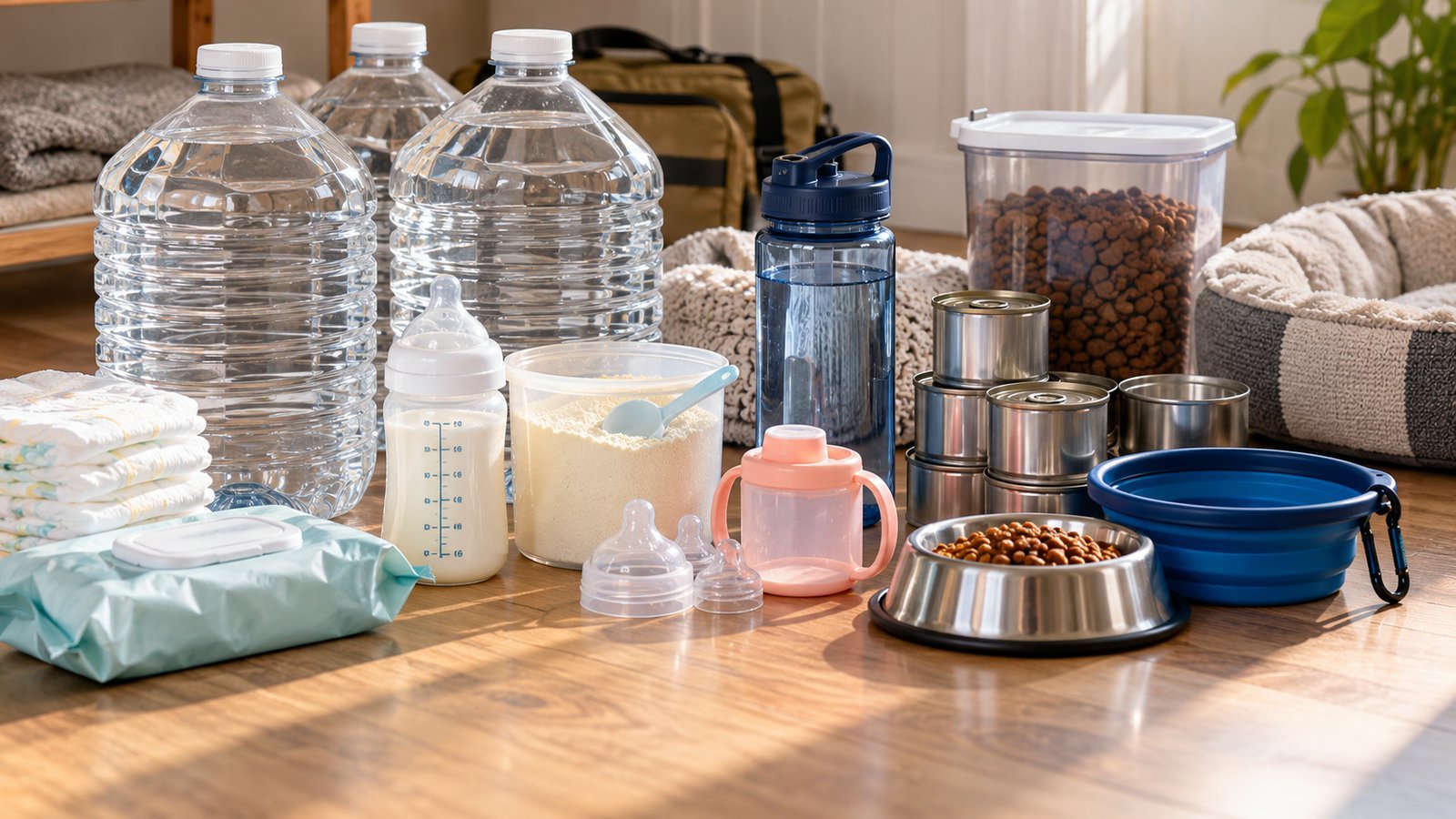
Babies need extra attention. For infants on formula, use treated or bottled water to mix it, and avoid using water that is cloudy or smells off. Powdered formula is not sterile, and your pediatrician can advise on what is best for your child during an emergency. Never dilute formula more than the label says in order to stretch a supply.
Pets drink roughly in proportion to their size and activity level. Ready.gov suggests including them in your supply count and storing enough for several days. Ask your veterinarian for guidance on quantities for your animals, especially for working dogs, cats on wet food, and exotic pets.
People with medical conditions may need extra water for medication, dialysis-related care or equipment cleaning. Talk to your care team ahead of time about what to store and what to do if supply is limited.
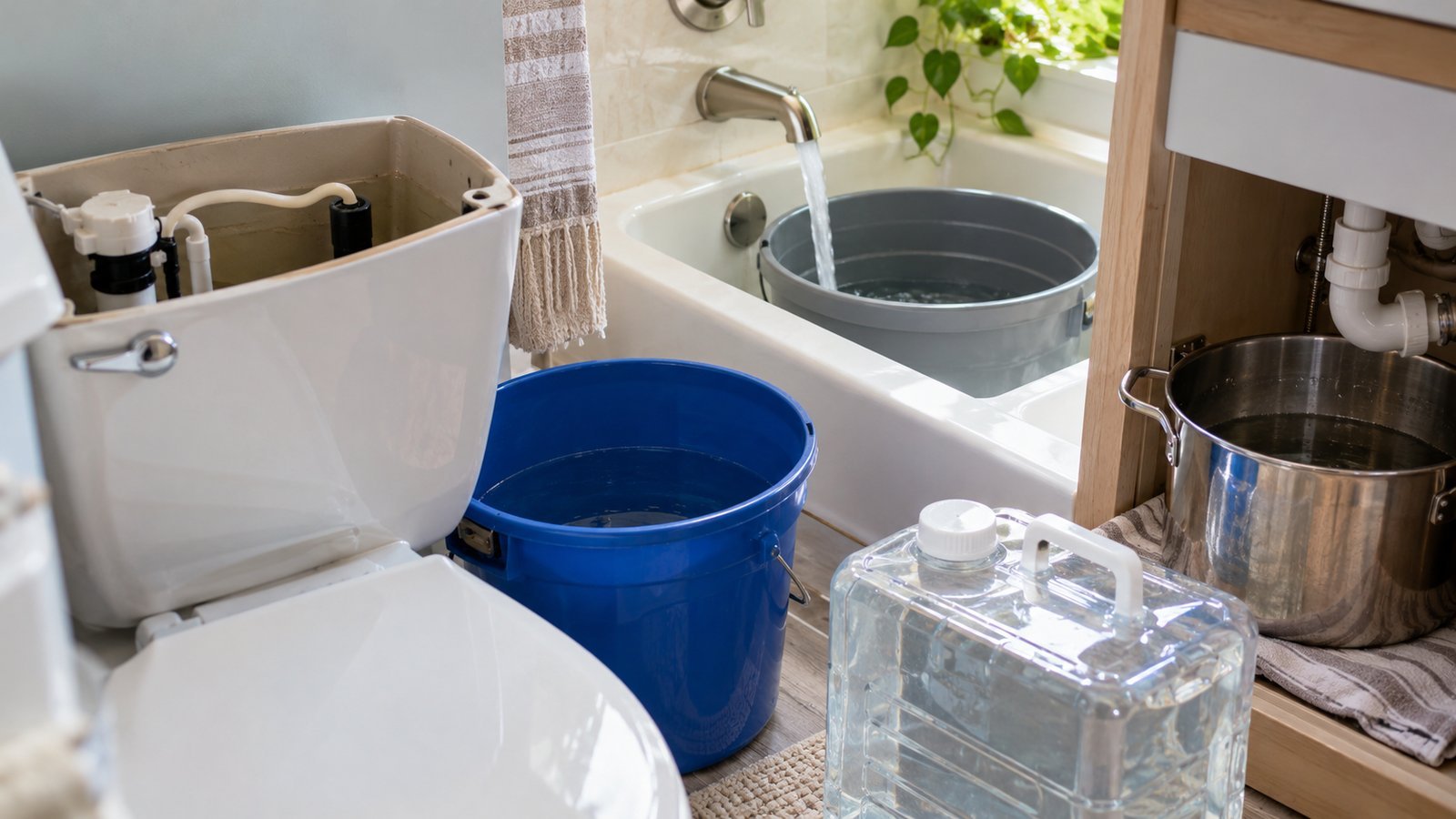
Getting Water From Inside the Home
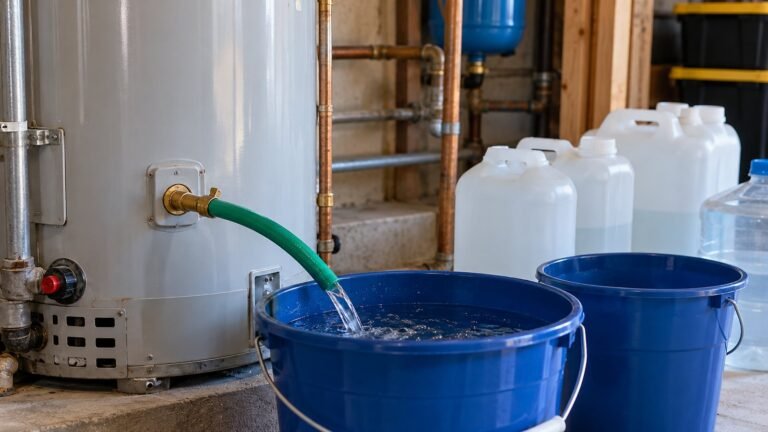
Even with no stored water, a home usually holds some. The water heater tank typically contains 30 to 80 gallons, and the pipes hold more. To use the tank, shut off the power or gas to the heater, close the cold-water inlet valve, open a hot tap somewhere in the house to let air in, and then drain from the valve near the bottom of the tank. The first water out may be cloudy with sediment, so let it settle or filter it, then treat it as described above.
Water in pipes can be accessed by opening the highest faucet in the house and then draining from the lowest. Melted ice from icemakers and liquid from canned vegetables also add up in a pinch. Do not drink from the toilet bowl, but the clean water in the tank (not the bowl) is usable for flushing and cleaning, not for drinking if it has been treated with cleaners.
Avoid water from swimming pools and hot tubs for drinking, since they contain chemicals, though it works for flushing and washing.
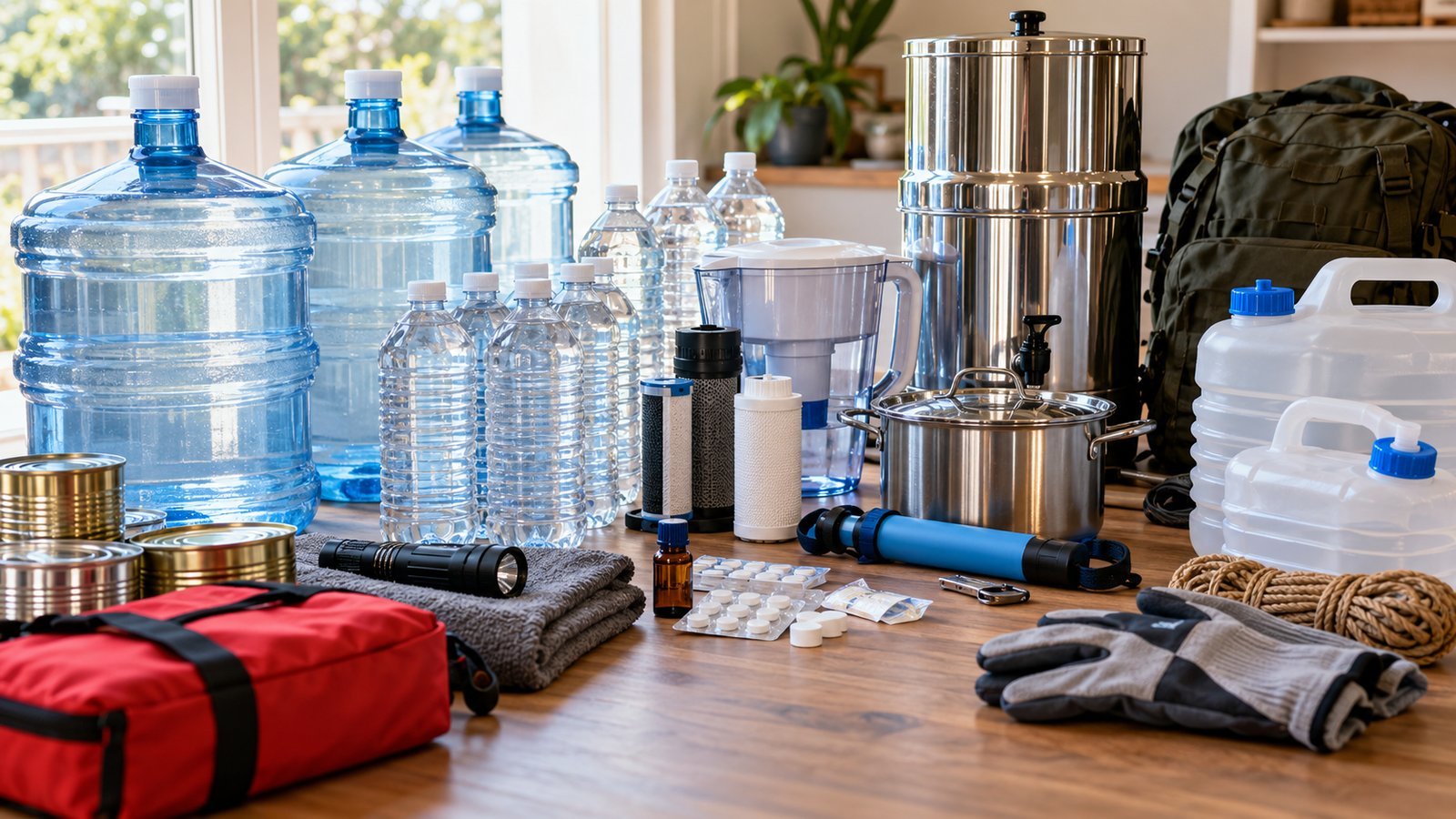
A Simple Emergency Water Checklist
Use this list to check your readiness:
- Calculate your household’s per-day need and the number of days you aim to cover.
- Choose containers that fit your space and are made of food-grade material.
- Label each container with the date and place it in a cool, dark spot.
- Keep a way to treat water: unscented bleach, tablets, a filter, and a stove or fuel for boiling.
- Store a dropper or measuring spoon with the bleach, along with the dosing chart.
- Include supplies for babies, pets and anyone with medical needs.
- Learn how to shut off your water main and drain your water heater.
- Set calendar reminders to rotate supplies twice a year.
The best time to build a water supply is when nothing is wrong. Start with a case of bottled water, add a few jugs when the budget allows, and add one treatment method you know how to use. Each step makes an outage less stressful.
Sources used for this guide include Ready.gov and FEMA guidance on emergency water supplies, the CDC’s pages on making water safe in an emergency, and EPA materials on drinking water in emergencies. Check them directly for the latest charts and notices.
Frequently Asked Questions
How much water should I store per person?
Store at least one gallon per person per day for a minimum of three days, as Ready.gov and FEMA recommend. Two weeks is better if you have the space, and extra is wise for hot climates, children, pregnant people and pets.
Does stored water expire?
The water does not spoil, but containers can leak or pick up odors. Replace sealed commercial bottles by their printed date and replace water you bottled yourself about every six months.
Is it safe to use old milk jugs?
Ready.gov and FEMA advise against it. Milk proteins and sugars are difficult to clean away and can encourage bacteria, and the thin plastic breaks down quickly.
How long should I boil water?
The CDC says to bring water to a rolling boil for one minute, and for three minutes at elevations above 6,500 feet. Let it cool before drinking and keep it covered.
Can I use any bleach to treat water?
Use plain, unscented household bleach with a known concentration, and follow the CDC or EPA dosing chart for that concentration. Avoid scented, splashless or color-safe products and any bleach with added cleaners.
Will a filter remove viruses?
Many do not. Viruses are very small, so look for a product labeled as a purifier, or combine filtering with boiling or chemical disinfection.