
Storing Emergency Water in a Small Apartment: Space-Saving Ideas That Work
This post may contain affiliate links, full disclosure here.
Quick answer: aim for at least one gallon per person per day for three days, and use space that normally goes to waste, such as under beds, in closet floors, behind sofas and under sinks. Choose stackable jugs or flat water boxes instead of big barrels, keep water in cool, dark spots, mind the weight, and add a small treatment kit so you can make more if the supply runs short.
Apartment living makes emergency water tricky. A house can park a 55-gallon barrel in the garage. An apartment may have a single closet, a landlord with opinions and a floor that has to hold furniture, people and everything else. Yet apartment dwellers can lose water just as easily as anyone else, through a main break, a pump failure in a tall building, a storm or a boil-water notice.
The goal is not to store a bunker’s worth of water. The aim is to cover the first few days with a method that fits your space, then back that up with a way to treat more water if needed. This guide covers how much to aim for, where to put it, what containers suit small spaces, how to handle weight and leases, and what to do when your plan runs out.
This article builds on our general guide to storing water for emergencies, and applies those principles to tight quarters. Tall-building residents should also read our guide to preparing for a power outage in a high-rise, since outages and water problems often arrive together.

Set a Realistic Target
Start with the federal planning figure. Ready.gov and FEMA recommend at least one gallon of water per person per day, for drinking and basic sanitation, and a minimum of three days. For a single person, that is 3 gallons. For two people, it is 6 gallons. For a couple with a cat, add a little extra for the pet and ask your veterinarian for guidance on how much your animal needs.
That is the floor. Hot weather, illness, pregnancy and nursing all raise the need, so add a margin if any of those apply. Building toward a week or two gives you a real cushion, though a first goal of three days is far better than nothing.
Apartment dwellers have two advantages. Most are in cities with large, well-run water systems, and help or resupply often arrives faster than in remote areas. They also have neighbors, building staff and nearby stores. The disadvantages are limited storage and few alternative sources, so a smaller, reliable supply matters.
Write the target down. A sticky note on the pantry door that says 3 people times 3 days equals 9 gallons keeps the goal in view and makes it easy to check progress.

Find the Dead Space
Every apartment has unused space. Walk through it with a tape measure and make a list.
Common spots include:
- Under the bed, where flat storage boxes and low jugs slide in easily
- The floor of a bedroom closet, behind shoes and bags
- Behind or under a sofa, in a flat box that is not visible
- Under the kitchen or bathroom sink, away from pipes and cleaning chemicals
- The bottom shelf of a pantry or linen closet
- The back of a coat closet or an entryway bench with a lid
- Inside an ottoman or storage bench
Spread storage around the home. A flooded closet or a blocked room then leaves you water elsewhere. Spreading also divides the weight, which matters on upper floors.
Keep water away from heat and light. Sunny windowsills and spots next to a radiator or stove will warm water and encourage algae in clear containers. A cool, dark closet is better. Keep water away from chemicals as well, since some plastics can absorb fumes over time.

Choose Containers That Fit Small Spaces
Big barrels are out. The containers that work best in apartments are small, stackable and easy to carry.
Commercially bottled water
A case of 24 half-liter bottles holds roughly 3 gallons, and a case slides under a bed or into a closet. Bottled water comes sealed and dated, so there is no cleaning step. Gallon jugs are cheap and stack well, but their thin plastic can leak, so keep them on a tray or in a plastic bin.
Stackable food-grade jugs
Rigid containers holding 3 to 7 gallons are popular among preppers. A 5-gallon jug weighs more than 40 pounds when full, so think about who in the household can lift it. Smaller 3-gallon versions are easier to carry.
Flat water boxes
Some products are designed to be stored flat under beds or in tight shelves. They are made from food-grade materials and hold a few gallons. Check that any product is rated for drinking water, and read the manufacturer’s storage and replacement instructions.
Reused soda bottles
Clean two-liter soda bottles are a low-cost option. Wash them with soap and water, rinse, sanitize them with a solution of one teaspoon of unscented bleach per quart of water, rinse again, and fill them with tap water. Label them with the date. Avoid milk jugs, since milk residue is hard to remove and thin plastic breaks down.
Bathtub bladders
A flexible liner that fits in a bathtub holds dozens of gallons, and it folds flat for storage. The liner helps only with advance warning, such as before a storm or a planned shutoff. Using one keeps stored water cleaner than filling the bare tub. Treat tub water as non-drinking unless you have cleaned and lined the tub, and use it for flushing and washing.

Mind the Weight and the Lease
Water is heavy, at a little over eight pounds per gallon. Ten gallons weighs more than 80 pounds, and a stack of jugs concentrated in one corner puts real load on a floor. Residential floors are designed for ordinary furniture and people, and that margin is usually generous, but it is smart to spread weight, keep stacks low and avoid placing heavy loads on balconies. Residents of older buildings, or anyone with specific concerns, can ask the property manager.
Read your lease. Most leases do not prohibit storing water, but some restrict storage in common areas, stairwells or balconies. Keep supplies inside your unit. Fire codes also limit what can sit in hallways or block exits, so never stash water where it could obstruct a path.
Think about leaks. Rigid jugs rarely fail, but a cracked cap or a degraded jug can leave a puddle. Place containers on a plastic tray or in a bin, and check them when you rotate stock. Upstairs neighbors do not appreciate a surprise.

Use Water You Already Have
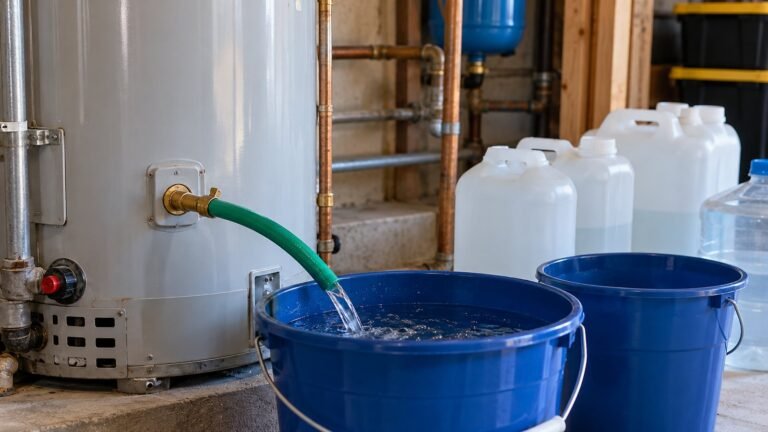
Apartments contain more water than they appear to. A standard storage water heater holds 30 to 80 gallons, though smaller units are common in apartments, and some buildings use central systems you cannot access. Apartments with their own tank can use it as a reserve, but only after safely shutting off power and water to it, so check the manufacturer’s instructions first.
Other sources include the clean tank of a toilet, though not the bowl, for flushing and washing, ice cubes in the freezer, and canned goods with liquid. Your bathtub can be filled when you receive an advance warning, such as a planned water shutoff, and used for flushing.
Do not count on the building’s rooftop tank unless the management confirms it is safe and accessible. In many tall buildings, water pressure depends on electric pumps, so a power outage can cut water to upper floors even if the city supply is fine. This is a good reason to hold a small stored supply.

Add a Treatment Kit
Stored water covers the first days. A small kit extends it. Apartment-friendly options include:
- Unscented household bleach with a dropper, to disinfect clear water using the CDC dosing chart
- Chlorine dioxide tablets, which pack flat and have a long shelf life
- A compact filter or purifier rated for bacteria and protozoa, and one that is certified for the contaminants you worry about
- A pot, a lighter and a small camping stove or a way to boil water, as described in our guide to boiling water without electricity
Never run a camping stove or charcoal grill inside an apartment. Burning fuel indoors creates carbon monoxide, which can kill. Use outdoor spaces where allowed, and know your building’s rules on balcony cooking.
Our overview of five ways to purify water from any source explains how each treatment works and what it cannot do. In general, boiling kills germs but does not remove chemicals, and filters vary in the contaminants they stop. When an official notice tells you not to use the water, follow it.
Tips for Renters and Roommates
Shared homes need shared rules. Agree on where the water lives, who may use it, and who restocks it. A label that reads emergency water, do not use for daily drinking keeps a roommate from finishing the case on a hot afternoon. Keep a master list on the fridge, and put one person in charge of the rotation calendar.
Renters who move often should favor portable containers over anything bulky. Cases of bottled water and small jugs move easily, while built-in or heavy solutions do not. Take photos of where items are stored, in case a landlord inspection prompts questions about storage.

Rotate, Label and Track
A system keeps water fresh without much effort. Write the fill or purchase date on every container with a permanent marker. Commercially bottled water has a printed date, and water you bottled yourself from the tap is usually replaced about every six months, according to Ready.gov and FEMA guidance.
Tie rotation to an event you already remember, such as daylight saving time changes. When the clocks change in spring and fall, check dates, look for leaks and swap old water into daily use. Pour older water into plant pots, use it for cleaning, or drink it, and refill the containers.
Keep a short inventory on your phone or the inside of a closet door. List the location, the number of containers and the dates. After a move, take the list along or recycle it, and start again in the new space.
A Sample Plan for a One-Bedroom Apartment
Here is how one household of two might build a three-day supply, with a small buffer:
- Two cases of bottled water under the bed, about 6 gallons
- Two 3-gallon jugs in the bedroom closet, about 6 gallons
- Four gallon jugs in a plastic bin under the kitchen sink, about 4 gallons
- A bleach bottle with a dropper, a small filter and a box of tablets in the same closet
That adds up to roughly 16 gallons, enough for two people for about a week at the planning figure, with room to spare for a pet. The cost is modest, the space is small and the whole plan can be built over a few shopping trips.
Sources used for this guide include Ready.gov and FEMA guidance on emergency water supplies, the CDC’s pages on making water safe in an emergency, and standard residential weight and fire-safety considerations.

Frequently Asked Questions
How much water should I store in an apartment?
Aim for at least one gallon per person per day for three days, as Ready.gov and FEMA advise. Add extra for pets, hot weather, children, pregnancy or illness, and build toward a week if you can.
Where can I store water in a small apartment?
Use dead space such as under beds, in closet floors, under sinks, behind sofas and inside storage benches. Spread containers around the home, and keep them cool, dark and away from chemicals.
Is it safe to store water in a bathtub?
Treat tub water as non-drinking unless the tub was cleaned and lined first. The water is useful for flushing and washing, and a bathtub liner keeps it cleaner.
How often should I replace stored water?
Replace commercially bottled water by its printed date and water you bottled yourself about every six months. Label each container with the date.