Bee and Wasp Sting First Aid: Removing the Stinger, Easing Swelling and Knowing When a Sting Is an Emergency
This post may contain affiliate links, full disclosure here.
Quick answer: move away from the insects, then get a honeybee stinger out as quickly as you can by scraping or pulling it, since speed matters more than method. Wash the area, apply a cold pack and use an over-the-counter pain reliever or antihistamine if needed. Call 911 and use an epinephrine auto-injector if prescribed if the person has trouble breathing, swelling of the face, lips or throat, hives spreading beyond the sting, dizziness or vomiting. Those are signs of anaphylaxis.
Stinging insects are not just a backyard problem. Yellow jackets nest in wall gaps and planters, wasps build under balcony railings and window air conditioners, and bees forage in community gardens, parks and rooftop plantings. Most stings cause pain and swelling that fade within a few days. A small number trigger a severe allergic reaction that needs emergency treatment.
This guide is part of our emergency first aid guide for city households. It covers the steps to take right after a sting, how to manage normal reactions, and how to recognize when a sting has become an emergency. If someone has a known insect venom allergy, follow their emergency action plan first.
Sources: CDC National Institute for Occupational Safety and Health (NIOSH) guidance on insects and scorpions; American Academy of Allergy, Asthma and Immunology (AAAAI) information on stinging insect allergy; American College of Allergy, Asthma and Immunology (ACAAI); Visscher, Vetter and Camazine, “Removing bee stings,” The Lancet, 1996. Checked November 2026. This article is general safety information, not medical advice. In an emergency, call 911.

Which Insects Sting and How They Differ
In North America, most painful stings come from a few groups of insects in the order Hymenoptera:
- Honeybees have barbed stingers that usually stay in the skin, along with the venom sac. A honeybee generally dies after stinging.
- Bumblebees are less likely to sting unless handled or disturbed, and they can sting more than once.
- Yellow jackets are a type of wasp that often nests in the ground, in walls or in hollow spaces. They are attracted to sugary drinks and food and are a common cause of stings at outdoor meals.
- Paper wasps build open, umbrella-shaped nests under eaves, railings and ledges.
- Hornets build large, enclosed paper nests in trees, shrubs or buildings.
Wasps, yellow jackets and hornets have smooth stingers and can sting repeatedly. Fire ants, found mainly in southern states, also sting and can cause allergic reactions.

Step 1: Move Away From the Insects
When a person is stung, the first priority is to prevent more stings. Walk away calmly but quickly from the area, especially if you are near a nest. Some stinging insects release chemical signals that can attract others, so staying put can lead to more stings.
If many insects are attacking, cover your face and head and get indoors or into a car. Do not jump into water to escape, because the insects may wait for you to surface.

Step 2: Remove the Stinger Quickly
If a honeybee stung you, you will often see a small dark stinger in the skin, sometimes with the venom sac still attached. The venom sac can keep pumping venom for a short time.
A widely cited 1996 study in The Lancet found that the amount of venom delivered depended on how quickly the stinger was removed, not on whether it was scraped or pinched out. The practical advice from the CDC and allergy organizations is simple: get it out as fast as possible using whatever is quickest. That might mean:
- Scraping it sideways with a fingernail, the edge of a credit card or a blunt knife
- Pulling it out with your fingers or tweezers
Do not waste time looking for the perfect tool. Wasps, hornets and yellow jackets usually do not leave stingers, so if you do not see one, there is nothing to remove.

Step 3: Clean and Cool the Sting
Wash the area with soap and water to lower the risk of infection. Then apply a cold pack, ice wrapped in a cloth, or a cold, damp cloth for about 10 to 20 minutes at a time to reduce pain and swelling. Do not put ice directly on the skin.
If the sting is on an arm or leg, raising the limb can help limit swelling. Remove rings, watches or tight clothing near the sting before swelling starts.

Step 4: Ease Pain and Itching
Most stings cause a local reaction: sharp pain at first, then redness, warmth, swelling and itching around the site. Over-the-counter treatments that may help include:
- A pain reliever such as acetaminophen or ibuprofen, following the package directions
- An oral antihistamine to reduce itching and swelling
- Hydrocortisone cream or calamine lotion on the skin
Avoid scratching, which can break the skin and lead to infection. Keep the area clean.
Large local reactions
Some people have a large local reaction, where swelling spreads well beyond the sting, sometimes covering much of an arm or leg. According to the AAAAI, this kind of swelling often peaks a day or two after the sting and can take up to a week or so to settle. Large local reactions are uncomfortable, but on their own they are usually not life-threatening. A doctor may suggest medicines to reduce the swelling. Talk to a health care provider if you have had a large local reaction, since they may advise you on what to do next time.

Step 5: Watch for Signs of Anaphylaxis
Anaphylaxis is a severe, whole-body allergic reaction that can happen within minutes of a sting. It can be fatal without quick treatment. Call 911 right away if a person who has been stung has any of these signs, even if they have been stung before without problems:
- Trouble breathing, wheezing or a tight feeling in the chest or throat
- Swelling of the face, lips, tongue or throat
- Hives or itching that spreads beyond the area of the sting
- Dizziness, fainting, a weak or racing pulse
- Nausea, vomiting, stomach cramps or diarrhea
- A sense that something is very wrong
Use epinephrine if it is available
Epinephrine is the first-line treatment for anaphylaxis. If the person has a prescribed epinephrine auto-injector or nasal spray, help them use it right away, following the device’s instructions. Do not wait to see whether symptoms get better. Antihistamines alone are not enough to treat anaphylaxis.
After epinephrine, keep the person lying down with legs raised unless they are having trouble breathing, in which case let them sit up. If they vomit, turn them on their side. Symptoms can come back after the medicine wears off, so the person should be checked in an emergency department even if they feel better. Our guide to anaphylaxis first aid explains these steps in more detail.
If the person stops breathing or does not have a pulse, begin Hands-Only CPR and use an AED if one is nearby.

When to See a Doctor for a Sting
Not every sting needs medical care, but you should contact a health care provider or seek care if:
- There are many stings at once. Large numbers of stings can cause a toxic reaction from the amount of venom alone, even in people who are not allergic.
- The sting is inside the mouth, nose or throat, where swelling could block the airway.
- The sting is near the eye.
- Swelling keeps spreading after two or three days.
- There are signs of infection, such as increasing redness, warmth, pus, red streaks or fever, a few days after the sting.
- You have had a serious reaction to a sting before.
For general wound care tips, see our guide to cuts and scrapes first aid.

Children and Stings
Children are often stung while playing outside, and a sting can be frightening. Stay calm and follow the same steps. Check the label before giving any over-the-counter medicine to a child, and ask a pharmacist or pediatrician if you are unsure of the dose. Watch children closely for signs of anaphylaxis, and seek emergency help if any appear.
If your child has a known insect venom allergy, make sure school staff, caregivers and activity leaders know about it and know where the epinephrine is kept.

Living With an Insect Venom Allergy
People who have had a severe reaction to a sting should see an allergist. According to the AAAAI and ACAAI, an allergist can test for venom allergy and may recommend venom immunotherapy, a series of allergy shots that can greatly reduce the risk of future severe reactions.
Other steps include:
- Carrying epinephrine at all times when outdoors and making sure it has not expired
- Wearing a medical alert bracelet or carrying a card that notes the allergy
- Telling friends, family and coworkers what to do if you are stung

Preventing Stings Around Apartments and City Spaces
Stinging insects are attracted to food, sweet drinks and nesting sites. A few simple habits can lower the risk of stings.
Around food and drink
- Cover food and drinks outdoors, and use cups with lids or straws.
- Check cans and bottles before drinking, since yellow jackets can crawl inside.
- Keep trash cans closed and clean up spills promptly.
On balconies and patios
- Check under railings, outdoor furniture, light fixtures and window air conditioners for nests in spring and summer.
- Seal small gaps in walls or window frames where yellow jackets might nest.
- Keep outdoor trash bins and recycling away from doors and seating areas.
When you find a nest
Do not try to knock down or spray a large nest yourself, especially if you have a venom allergy. In rentals, report nests to your landlord or building management, who may need to arrange pest control. Honeybee swarms are often collected by local beekeepers, and many cities have beekeeping associations that can help.
Outdoors
- Wear shoes when walking on grass or near flowers.
- Avoid swatting at insects, which can provoke stings.
- Stay calm and move slowly away if a bee or wasp is near you.
What to Tell a 911 Dispatcher After a Sting
If you call 911 for a possible allergic reaction, a few details help responders arrive prepared. Tell the dispatcher:
- That the person was stung by an insect, and roughly how long ago
- The symptoms you can see, such as swelling of the lips, trouble breathing or fainting
- Whether the person has a known allergy and whether epinephrine has been given, and when
- Your exact location, including building entrance, floor and unit number
Stay on the line. Dispatchers can guide you through positioning the person and, if needed, CPR. If you used an epinephrine device, keep it and hand it to responders so they know what dose was given and when. Open the door or send someone to meet the crew at the lobby, especially in a large building where finding the right unit can take time.

Add Sting Supplies to Your First Aid Kit
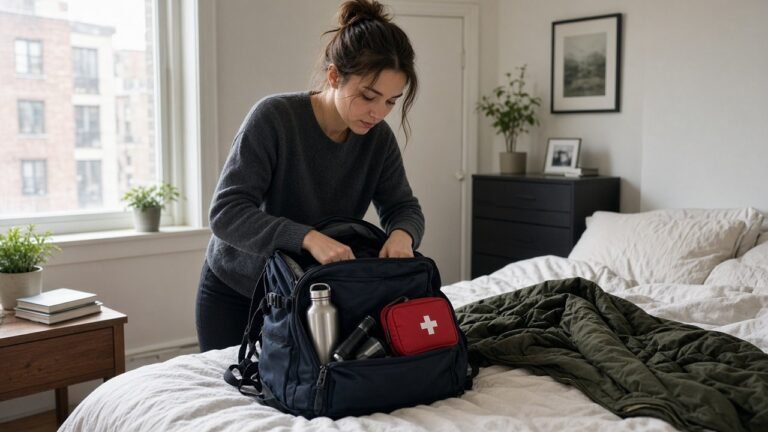
A small apartment first aid kit can easily include supplies for stings. Consider adding:
- A plastic card for scraping out stingers
- Tweezers
- An instant cold pack
- Hydrocortisone cream and an oral antihistamine
- A prescribed epinephrine auto-injector, if someone in the household has a known allergy
Our guide to building a first aid kit for a small apartment has a full checklist.

Frequently Asked Questions
Should I scrape or pull out a bee stinger?
Either is fine. Research published in The Lancet in 1996 found that speed of removal matters more than method, so use whatever gets the stinger out fastest.
How long does swelling from a bee sting last?
A typical sting causes swelling and pain that ease within a few hours to a few days. A large local reaction can peak after a day or two and take about a week to go away.
Can you suddenly become allergic to bee stings?
Yes. A person can develop an allergy to insect venom after earlier stings that caused no serious reaction, which is why everyone should know the signs of anaphylaxis.
Do home remedies like baking soda work?
Some people use baking soda paste or other home remedies for comfort, but there is limited evidence that they work. Cold packs, washing the area and over-the-counter medicines are the commonly recommended options.
Is a wasp sting worse than a bee sting?
Both can be painful and both can cause allergic reactions. Wasps, hornets and yellow jackets can sting more than once, while a honeybee usually stings once and leaves its stinger behind.