Cuts and Scrapes First Aid: How to Clean a Wound, When It Needs Stitches and Signs of Infection
This post may contain affiliate links, full disclosure here.
Quick answer: wash your hands, apply gentle pressure with a clean cloth or bandage until bleeding stops, rinse the wound with clean running water, clean around it with soap, remove small debris with tweezers cleaned in alcohol, apply a thin layer of petroleum jelly and cover it with a bandage. Change the dressing daily or when it gets wet or dirty. Seek care for deep or gaping cuts, wounds that keep bleeding after 10 minutes of pressure, animal or human bites, puncture wounds, and signs of infection such as spreading redness, warmth, pus or fever. Check whether a tetanus booster is due.
Minor cuts and scrapes happen in every home. A slip of the knife while chopping onions, a broken glass in the sink, a fall on the sidewalk or a sharp edge on a box. Most heal well with simple care at home. A few need stitches, a tetanus shot or antibiotics, and knowing the difference prevents complications.
This guide uses guidance from the Mayo Clinic, the American Academy of Dermatology (AAD) and the CDC. It is part of our apartment emergency kit guide, which covers the supplies to keep on hand.
Sources: Mayo Clinic, “Cuts and scrapes: First aid”; American Academy of Dermatology, “How to treat minor cuts”; CDC, “About Tetanus” and tetanus vaccine recommendations; American Red Cross first aid guidance; Mayo Clinic, “Puncture wounds: First aid”. Checked November 2026. General safety information, not medical advice.

Step-by-Step First Aid for Minor Cuts and Scrapes
The Mayo Clinic gives these steps for minor wounds.
- Wash your hands. This helps avoid infection. Use disposable gloves if available, especially when helping someone else.
- Stop the bleeding. Minor cuts and scrapes usually stop bleeding on their own. If not, apply gentle pressure with a clean bandage or cloth and elevate the wound until bleeding stops.
- Clean the wound. Rinse it with water. Keeping the wound under running tap water reduces the risk of infection. Wash around the wound with soap, but keep soap out of the wound itself. Do not use hydrogen peroxide or iodine, which can irritate the tissue. Remove any dirt or debris with tweezers cleaned with alcohol, and see a doctor if you cannot remove all of it.
- Apply an antibiotic or petroleum jelly. A thin layer of an antibiotic ointment or petroleum jelly keeps the surface moist and helps prevent scarring. Some ingredients in antibiotic ointments can cause a mild rash in some people; stop using the ointment if a rash appears.
- Cover the wound. Apply a bandage, rolled gauze or gauze held in place with paper tape. Covering keeps the wound clean. If the injury is just a minor scrape or scratch, leaving it uncovered is an option.
- Change the dressing. Do this at least once a day or whenever the bandage becomes wet or dirty.
- Get a tetanus shot if needed. Check your vaccination record, as described below.
- Watch for signs of infection. See a doctor if the wound is not healing or you notice redness, increasing pain, drainage, warmth or swelling.
Why the AAD favors petroleum jelly
The American Academy of Dermatology recommends using petroleum jelly to keep a wound moist, noting that it helps prevent the wound from drying out and forming a scab, and that wounds with scabs take longer to heal. According to the AAD, petroleum jelly will also help prevent a scar from becoming too large, deep or itchy. A large tube is inexpensive and lasts a long time in a first aid kit.

When a Cut Needs Medical Care
Some wounds need a professional. The Mayo Clinic and AAD advise seeking care when:
- Bleeding continues after 10 minutes of firm pressure
- The cut is deep, gaping or has jagged edges
- Fat, muscle, bone or other deep structures are visible
- The cut is on the face, a joint, the hands or the genitals, where scarring or function matters
- Dirt, glass or other debris cannot be removed
- The wound was caused by an animal or human bite
- The wound is a puncture from a rusty or dirty object, or the person is not up to date on tetanus
- There is numbness, weakness or loss of movement beyond the cut, which can signal nerve or tendon damage
- The person has diabetes or a weakened immune system, which can slow healing
The stitches window
Wounds that need closing are usually best treated soon after the injury. Many emergency medicine references note that the risk of infection rises the longer a wound stays open, so doctors may close fresh wounds more readily than ones that are many hours old. If you think a cut may need stitches, staples, skin glue or adhesive strips, do not wait until the next day.
A simple test: if the edges of the cut pull apart when the area is relaxed, or the cut is longer or deeper than a shallow scratch, have it checked.
Severe bleeding
Heavy, spurting or pooling bleeding is an emergency. Call 911, apply firm direct pressure and use a tourniquet for life-threatening limb bleeding if you are trained. Our Stop the Bleed basics guide explains those steps in detail.

Tetanus: When You Need a Shot
Tetanus is a serious infection caused by Clostridium tetani bacteria, which live in soil, dust and manure and can enter the body through breaks in the skin. The CDC notes that tetanus is rare in the United States because of vaccination, but it can be fatal.
The CDC recommends that adults get a tetanus booster (Td or Tdap) every 10 years. For a wound, clinicians follow CDC guidance that depends on the wound type:
| Wound | Booster usually recommended if |
|---|---|
| Clean, minor wound | It has been 10 years or more since the last tetanus-containing vaccine |
| Dirty or more serious wound (soil, saliva, puncture, burns, crush injuries) | It has been 5 years or more since the last dose |
| Unknown vaccination history | Talk to a provider; vaccination and sometimes tetanus immune globulin may be needed |
If you do not know when you had your last tetanus shot, it is worth asking a pharmacist or provider. Many pharmacies offer Tdap.

Puncture Wounds
Puncture wounds, such as stepping on a nail or a deep stab from a sharp object, are small at the surface but can carry bacteria deep into tissue. The Mayo Clinic advises treating them like a cut: stop the bleeding, rinse the wound, apply petroleum jelly or ointment and cover it. Seek care if the wound does not stop bleeding, is deep, is from a bite, if the object was dirty or rusty, or if it went through a shoe. A puncture on the bottom of the foot through a sneaker carries a particular risk of infection.

Animal and Human Bites
Bites carry a high risk of infection. For a minor bite that barely breaks the skin, the Mayo Clinic suggests washing it with soap and water and applying an antibiotic cream and a bandage. For deeper bites, bites that break the skin and bleed, or bites from wild animals or pets with unknown vaccination status, see a provider promptly. Rabies is a risk with bats, raccoons, skunks, foxes and unvaccinated pets, and the CDC advises contacting a health care provider and local health or animal control officials after any possible exposure. Bites on the hand often need medical care because infections can spread quickly there.

Signs of Infection
Watch the wound for several days. According to the Mayo Clinic and AAD, see a doctor if you notice:
- Redness that spreads around the wound, or red streaks extending from it
- Increasing pain, swelling or warmth
- Pus or cloudy drainage
- Fever or chills
- A wound that is not healing after several days
Spreading redness and fever can signal cellulitis, a skin infection that may need antibiotics. Do not wait for it to get worse.

Cuts in Children and Older Adults
Children often panic at the sight of blood, which can make cleaning a wound harder. Staying calm, explaining each step and letting the child help hold the gauze can make care easier. Fun bandages are popular for a reason. Watch young children so they do not pick at or chew on bandages, which can be a choking hazard. Cuts on the face or lip, or any wound from a dog bite, should be checked by a pediatrician, since children are more likely to be bitten on the face.
Older adults have thinner, more fragile skin that can tear easily, a type of wound called a skin tear. These often happen when bumping into furniture or during transfers from a bed or chair. Gently rinse the skin tear, ease the skin flap back into place if possible, and cover it with a non-stick dressing rather than an adhesive bandage, which can tear the skin again when removed. People who take blood thinners may bleed longer from minor cuts, and anyone with diabetes, poor circulation or a weakened immune system should have slow-healing wounds checked early.

Special Situations
Broken glass
Glass can leave tiny fragments in the wound that are hard to see. Rinse well and look closely under good light. If you think glass remains, or the cut is deep, have it checked; an X-ray can sometimes find fragments. Sweep and then use a damp paper towel to pick up small shards on the floor afterward, and wear shoes until the area is clean.
Kitchen knife cuts
Fingertip cuts often bleed heavily. Apply pressure and hold the hand above the heart. If a piece of skin or a fingertip has been cut off, the Red Cross advises wrapping the part in clean gauze, placing it in a sealed plastic bag and keeping the bag on ice without letting the part touch ice directly, then bringing it to the hospital.
Road rash and large scrapes
Scrapes from falls on pavement can embed gravel and dirt. Rinse thoroughly with running water for several minutes. Large or very dirty scrapes, or ones on the face, may need professional cleaning.
When water is not available
During outages or emergencies, use bottled water or water that has been boiled and cooled for rinsing. Our guide on how to boil water without electricity covers options during outages. Single-use saline wound wash cans are another convenient kit item.

Supporting Healing
A few habits help wounds heal well:
- Keep the wound clean and moist with petroleum jelly under a bandage
- Avoid picking at scabs
- Protect the healed area from the sun, which can darken scars; the AAD recommends sunscreen on healed wounds when outdoors
- Eat well and avoid smoking, which slows healing
- People with diabetes should check wounds daily, especially on the feet

First Aid Kit Items for Cuts
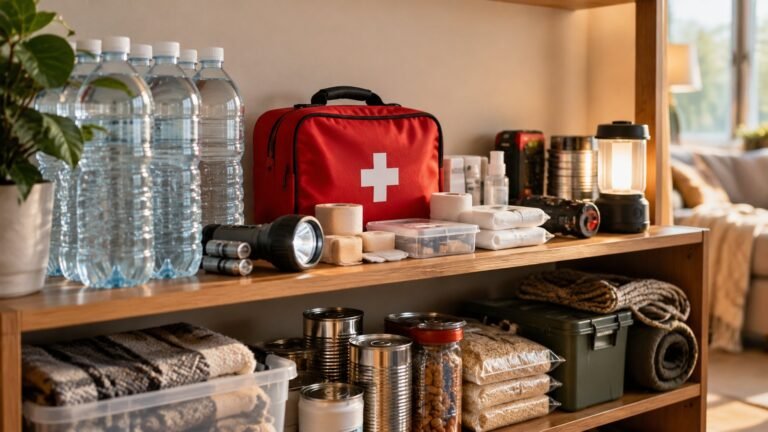
Most supplies are inexpensive and small enough for any apartment:
- Adhesive bandages in several sizes, including fingertip and knuckle shapes
- Sterile gauze pads and rolled gauze
- Paper or medical tape
- Petroleum jelly or antibiotic ointment
- Tweezers and alcohol wipes for cleaning them
- Disposable nitrile gloves
- Saline wound wash
- Adhesive wound closure strips
- Elastic bandage for holding dressings
See our first aid kit for a small apartment guide for the full list and storage ideas.

Frequently Asked Questions
Should I put hydrogen peroxide on a cut?
The Mayo Clinic advises against hydrogen peroxide and iodine on wounds because they can irritate tissue. Clean running water and gentle soap around the wound work well.
Is it better to let a wound air out?
The AAD recommends keeping a wound moist with petroleum jelly and covered, which tends to heal better than a dry scab. Minor scratches can be left uncovered.
How long after a cut can I get stitches?
Sooner is better. The infection risk rises the longer a wound stays open, so seek care the same day if a cut may need closing.
Do I need a tetanus shot for a small cut?
For a clean minor wound, a booster is usually advised if it has been 10 years or more since your last dose. For a dirty wound, the threshold is usually 5 years.
When should I worry about a cut?
Seek care for bleeding that will not stop after 10 minutes of pressure, deep or gaping cuts, bites, punctures, debris you cannot remove, numbness or loss of movement, and signs of infection.

The Bottom Line
Most cuts and scrapes heal well with clean hands, gentle pressure, a thorough rinse under running water, a thin layer of petroleum jelly and a clean bandage changed daily. Skip hydrogen peroxide, check whether a tetanus booster is due, and get care for deep, gaping or dirty wounds, bites, punctures, bleeding that will not stop after 10 minutes, and any sign of infection.