25 Things You Need to Be Prepared for Any Disaster
This post may contain affiliate links, full disclosure here.
Quick answer: start with water (one gallon per person per day), several days of non-perishable food, a first aid kit, a battery or hand-crank radio, flashlights and extra batteries. Then add sanitation supplies, warmth, tools, copies of important documents and some cash. Build the kit in steps, store it where everyone can find it and check it every year.
Most people do not need an elaborate bunker. They need a short list of supplies that cover the basics for several days: water, food, light, communication, warmth, first aid and sanitation. This list follows the Ready.gov basic disaster supplies checklist and adds practical extras. Pick up a few items each week and you will be ready faster than you think.

The essentials: water, food and first aid
1. Water
Store at least one gallon per person per day for drinking and sanitation, and try for a two-week supply if you can. Ready.gov and the CDC both give this guidance. Our full guide to storing water for emergencies covers containers, rotation and treatment.
2. Non-perishable food
Keep at least a several-day supply of food that needs little or no cooking, such as canned goods, peanut butter, crackers, dried fruit and shelf-stable meals. Include a manual can opener. Choose foods your family will actually eat, and note any allergies or special diets.
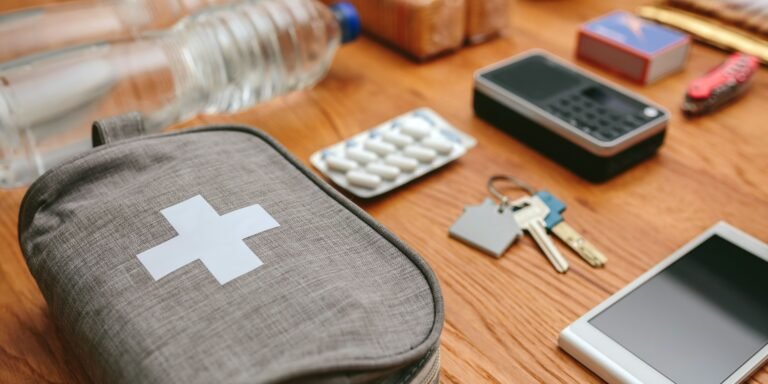
3. First aid kit
A first aid kit should cover cuts, burns, sprains and common illnesses. Add any prescription medicines (Ready.gov notes that about half of Americans take one daily), plus over-the-counter pain relievers and anti-diarrhea medicine. Check our guides to medical supplies and survival medical supplies.
4. Pet food and supplies
Pets need food and water too. Ready.gov lists pet food and extra water for your pet as additional supplies, so count your animals when you work out your water total.

Light, power and communication
5. Flashlights
Keep a flashlight for each member of the household. Emergency and fire-safety agencies generally recommend flashlights rather than candles during an outage, because candles are a fire risk.
6. Batteries and power banks
Stock extra batteries in the sizes your gear uses, and keep a charged power bank for phones. Ready.gov lists a cell phone with chargers and a backup battery as part of a basic kit.
7. Battery-powered or hand-crank radio
A radio, ideally one that receives NOAA Weather Radio alerts, keeps you informed when the internet and cell service are down. See our guide to survival walkie-talkies if you also want two-way communication.
8. Whistle
A whistle can signal for help and carries farther than your voice. Ready.gov lists it in the basic kit.
9. Maps
Keep paper maps of your area and your evacuation routes. If your phone dies, a map still works.

Warmth, shelter and repairs
10. Blankets and sleeping bags
Heavy blankets or sleeping bags help you stay warm if the heat goes out. Ready.gov suggests a sleeping bag or warm blanket for each person.
11. Clothing and sturdy shoes
Pack a complete change of clothes suitable for your climate and a pair of sturdy shoes for each person.
12. Lighters and waterproof matches
Keep lighters or waterproof matches for fire starting, stored in a waterproof container and away from children. Ready.gov lists matches in a waterproof container.
13. Wrench or pliers
Use these to turn off utilities if officials tell you to. Learn where your gas, water and electric shutoffs are before you need them.
14. Duct tape and plastic sheeting
Duct tape and plastic sheeting can seal a room to shelter in place, according to Ready.gov, and can make temporary repairs to a damaged window or roof. In a hurricane-prone area, plywood to cover windows is also worth thinking about, along with caulk for small leaks.
15. Fire extinguisher
A small fire extinguisher is a sensible addition, especially if you use alternative heating or cooking sources. Learn how to use it and check its pressure gauge once a year.
16. Flares and signaling
If you drive in remote areas, reflective triangles or flares in the car help other drivers see you. Check the rules for any marine or road flares you plan to store, since some have storage and expiration limits.

Hygiene and sanitation
17. Toilet paper, wipes and garbage bags
Moist towelettes, garbage bags and plastic ties support basic sanitation, according to Ready.gov. Add toilet paper and baby wipes to the list.
18. Feminine and personal hygiene items
Include feminine supplies, soap, hand sanitizer, toothbrushes and any personal care items your family needs. For babies, pack diapers, formula and wipes.
19. Zip-top bags
Airtight plastic bags keep supplies dry and organized. Ready.gov suggests storing kit items in airtight plastic bags inside a plastic bin or duffel bag.

Money, documents and skills
20. Cash
When power is out, cards and ATMs may not work. Ready.gov recommends keeping some cash or traveler’s checks in small bills. Cash is the more reliable plan than any speculative asset.
21. Copies of important documents
Save copies of insurance policies, identification and bank records electronically or in a waterproof, portable container. Include a list of contacts and medications.
22. A family communication plan
Decide how you will contact each other and where you will meet if you are separated. Pick an out-of-area contact everyone can call or text.
23. Training
Take a first aid and CPR course, such as those offered by the American Red Cross. Skills weigh nothing and are worth more than most gear.
24. Tools and a multi-tool
A good knife or multi-tool handles many small jobs. See our guide to the best Swiss army knife for survival.
25. Dust masks
Ready.gov lists dust masks to help filter contaminated air, and they are cheap and light.

Where to keep your kit and how to maintain it
Ready.gov recommends preparing supplies for home, work and the car, since you do not know where you will be when something happens. Keep the kit in a designated spot that everyone knows, and use one or two easy-to-carry containers. Store canned food in a cool, dry place, keep boxed food in tightly closed containers, replace expired items and review your needs once a year. For a more detailed breakdown by person, see our 72-hour kit checklist for families and our car emergency kit checklist.

A note on bartering and weapons
Earlier versions of this list included weapons, condoms and bitcoin. We have removed them: weapons involve legal and safety decisions that go beyond a basic supply list, and speculative assets are not a substitute for cash. If you are curious about trade goods, see our guide to barter items to stockpile.

How to build the kit in stages
Trying to buy everything in a day gets expensive and overwhelming. Spread it over a few weeks. In week one, set aside water, a few days of food, a flashlight with batteries and a first aid kit. In week two, add a radio, a power bank, copies of documents and cash. In week three, add sanitation items, blankets, a wrench and a fire extinguisher. In week four, add the extras that suit your household, such as pet supplies, baby items, spare glasses and a paper map. By the end of the month you will have covered the main categories on the Ready.gov list.

Think about your household's special needs
The basic list is a starting point. Consider whether you need extra supplies for infants, older adults, people with disabilities or chronic health conditions, or pets. Think about what you would need if you had to leave your home quickly, and what you would need if you had to stay without power for several days. Consider the hazards in your area, such as hurricanes, tornadoes, earthquakes, wildfires or winter storms, and adjust the kit. You can find hazard-specific guidance on Ready.gov and from your local emergency management agency.

Frequently Asked Questions
What should I buy first?
Water, food and a way to get information, such as a battery or hand-crank radio. Then add a first aid kit, flashlights, batteries and sanitation supplies.
How much food and water do I need?
At least several days of food and one gallon of water per person per day for several days. The CDC suggests aiming for two weeks of water if possible.
Where should I store my emergency kit?
In a cool, dry place that everyone in the household can reach, with smaller kits at work and in the car.
How often should I check my kit?
At least once a year. Replace expired food, medicines and batteries, and update the kit as your family changes.
Should I keep cash in my kit?
Yes. Ready.gov recommends cash in small bills, because card readers and ATMs may be down in an outage.

Bottom line
You do not need to buy everything at once. Start with water, food, first aid, light and a radio, then add the rest a few items at a time. Write down the date, set a yearly reminder and check your kit.