Apartment Emergency Kit: What to Keep and Where to Store It
This post may contain affiliate links, full disclosure here.
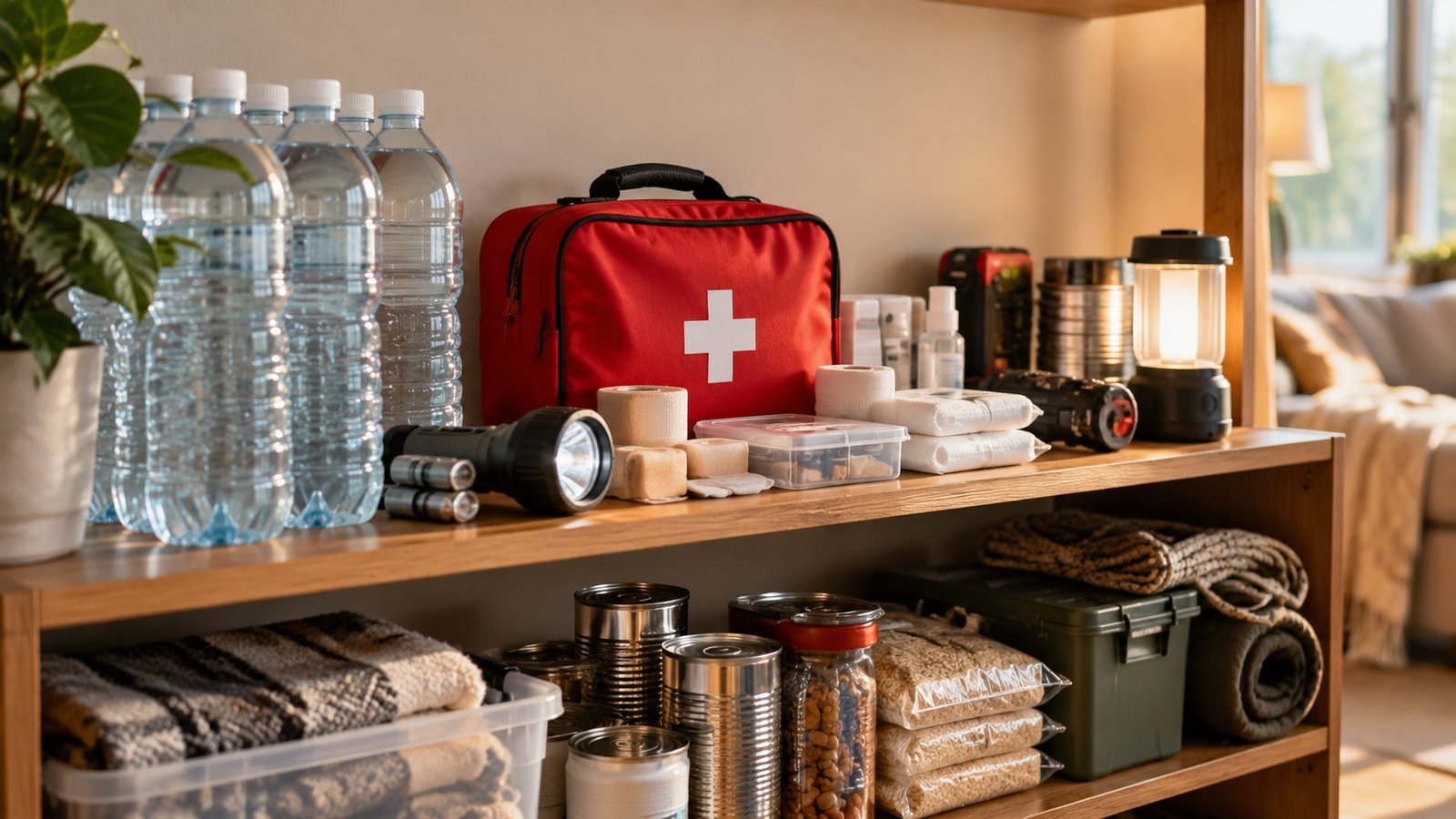
Quick answer: build your kit around three days of water and food, light, a way to get news, basic first aid, your medications and copies of key documents. Ready.gov recommends one gallon of water per person per day for several days, plus at least a several-day supply of non-perishable food. The apartment twist is storage, so split the kit into a small grab bag by the door and a larger bin where space allows.
Living in an apartment changes the preparedness puzzle. You probably have no garage, no basement and not much closet space. You also have less control over the building: elevators stop, hallways go dark, and the water pressure on the ninth floor may drop when the pumps lose power. The good news is that a useful kit is smaller than most people think.
This guide walks through what to include, how to store it in a small footprint, and how to keep it from turning into a forgotten pile. For the basics of a three-day kit, see our 72-hour kit checklist for families.
Start With Water and Food
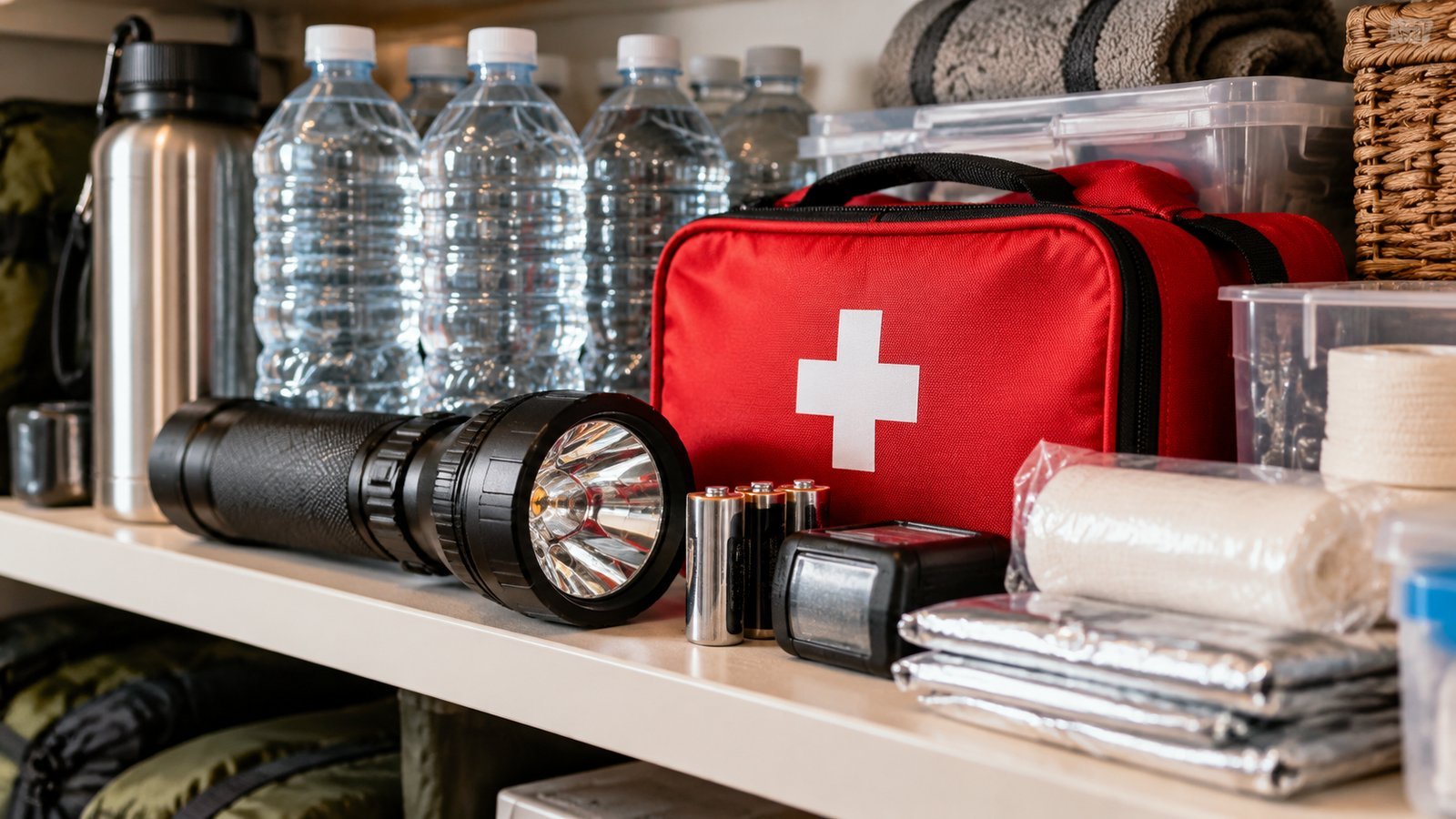
Water is the heavy part. A gallon per person per day adds up fast: a couple needs six gallons for three days, which is roughly 50 pounds. That is a lot to carry up stairs, so decide early whether you will stay put or leave. If you plan to shelter in your apartment, store the full amount. If you might walk out, keep a smaller portable supply and a plan for more.
Where can six gallons hide? Under a bed in flat containers, along the bottom of a closet, or in a cabinet you rarely use. Commercially bottled water is the easiest option because it is sealed and labeled with a date. Our guide to storing water for emergencies covers containers and rotation.
For food, think of what you would eat without cooking. Ready.gov calls for at least a several-day supply of non-perishable food and a manual can opener. Canned goods, protein or granola bars, dried fruit and peanut butter are easy choices. Pick foods you already like. Food that nobody wants to eat tends to stay in the box until it expires.
- Canned meals with pull tabs or a manual opener on hand
- Peanut butter, crackers, nut mixes and dried fruit
- Shelf-stable milk or plant milk for cereal
- Comfort items such as tea bags, instant coffee or chocolate
- Any special foods for infants, older adults or pets
Light, Power and Information
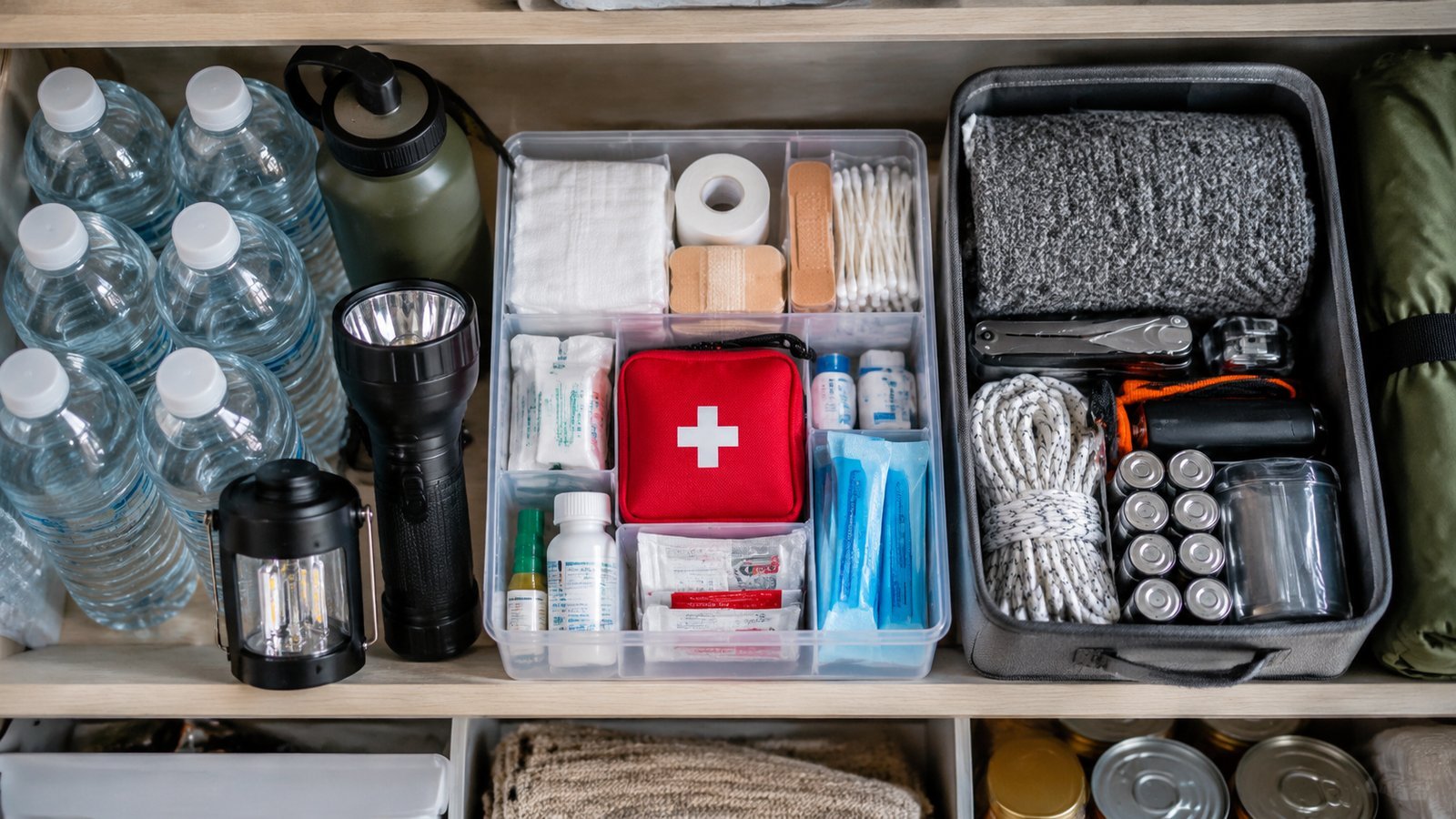
When a building loses power, hallways and stairwells can be dark apart from battery-powered emergency lights. Keep a flashlight or headlamp in the bedroom, the kitchen and the grab bag. Headlamps leave your hands free, which matters on stairs. Store spare batteries with each light, and check them when you change your clocks.
You also need news. A battery-powered or hand-crank radio, ideally one that receives NOAA Weather Radio, tells you what is happening if cell networks are jammed. Phones still matter, so add a charged power bank and the right cables. A phone left on low-power mode stretches a charge for a long time.
Avoid candles as your main light. Open flames in a small apartment full of fabric and paper are a fire risk, and fire departments commonly advise using battery-powered lights instead.
Health, Hygiene and Tools
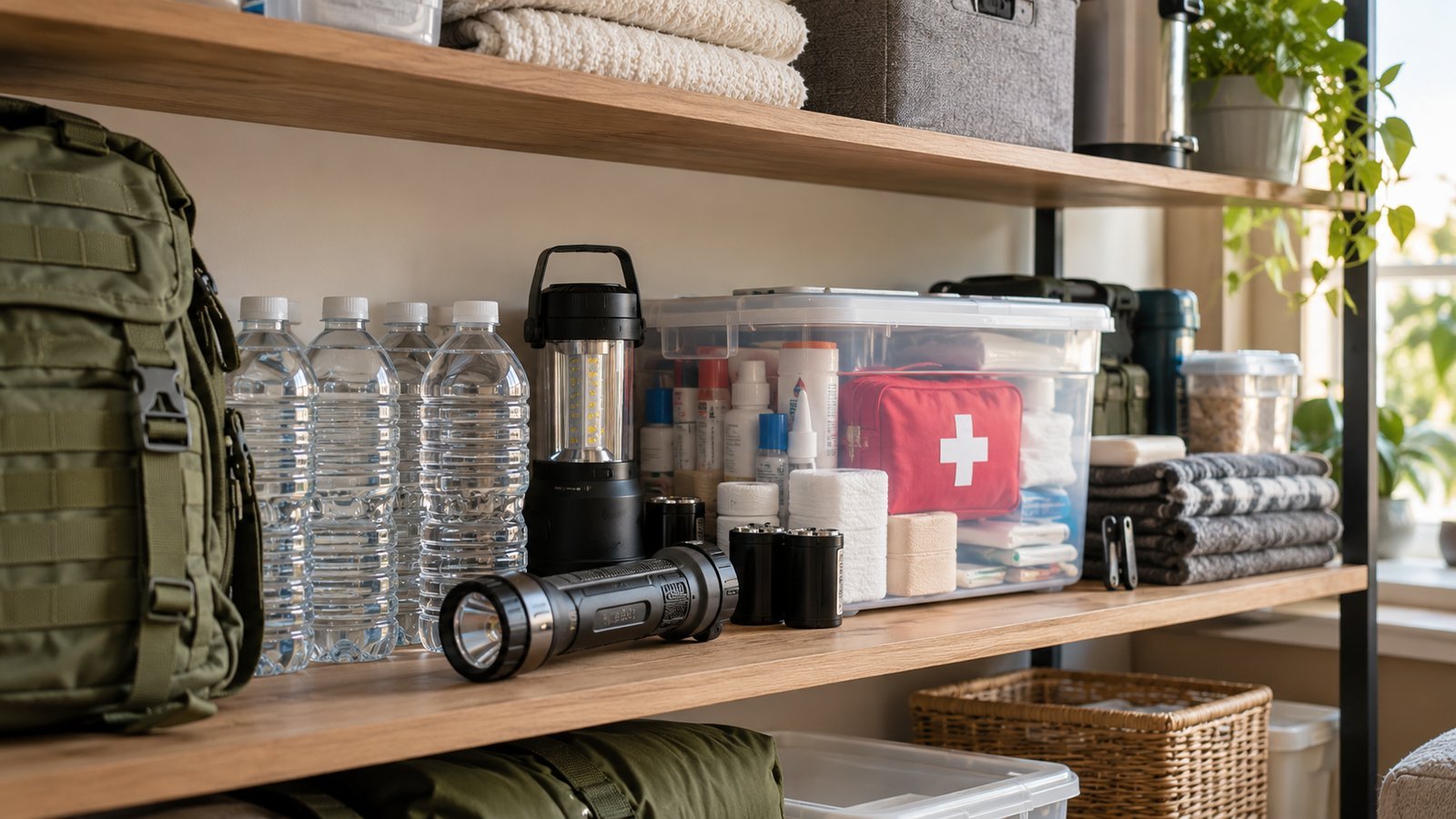
A first aid kit, a week of any prescription medicines you can get from your pharmacy, and copies of your medication list belong in the kit. So do glasses or contact lens supplies. Add hand sanitizer, soap, wipes, trash bags and a few heavy-duty garbage bags that can also act as a makeshift toilet liner. Our list of medical supplies to keep at home goes deeper.
Ready.gov also lists a whistle to signal for help, dust masks, plastic sheeting and duct tape, and a wrench or pliers to turn off utilities. In an apartment you may not be allowed or able to touch the main valves, so ask your building manager where shutoffs are before you need them.
Where to Store Everything in a Small Space
Think in zones. The grab bag lives near the front door, ideally on a shelf or hook where you can reach it without moving anything. It holds a flashlight, a radio, a charger, a first aid kit, copies of documents, some cash, a change of clothes and a day of water and snacks.
The bigger supply bin holds the rest. Under the bed, the top shelf of a coat closet, or inside an ottoman with a lid are all popular choices. Put the heaviest items low. Label the bin so anyone in the household, or a neighbor helping you, can find the right thing quickly.
- Pick one spot for the grab bag and keep it there.
- Put water on the floor level, since it is heavy.
- Keep medicines and documents in a waterproof pouch.
- Tape a short checklist to the inside of the lid.
- Tell everyone in the household where the kit lives.

Keep It Alive: Check and Rotate
A kit that is never opened will quietly fail. Set a reminder twice a year. Swap out food that is close to its date, replace batteries, refresh water if the label says so, and update documents and medication lists. Many people tie this to daylight saving time changes. If a calendar nudge is not your style, our guide to prepping on a budget suggests building a little at a time.
Finally, practice. Spend one evening with the power off and see what you wish you had. It will teach you more than any checklist.

Special Needs: Kids, Pets, Older Adults
A kit for a household is not a kit for a generic person. Parents need diapers, formula or baby food, a few small toys and a change of clothes in each size. Pet owners need food, a leash or carrier, vaccination records and waste bags. Ready.gov also reminds families to include items for older adults and people with disabilities, such as extra glasses, hearing aid batteries, a spare cane or walker tips, and a list of medical devices with their model numbers.
If someone depends on electricity for medical equipment, talk to your doctor and your utility company before an outage. Many utilities keep a list of customers with medical needs. That will not guarantee power, but it can help with planning and notice.

Building the Kit in Stages Instead of One Big Shopping Trip
Few people buy everything at once, and you do not need to. A staged approach keeps the cost manageable and helps you learn what you actually use. Think in four weekends.
- Weekend one: water, a flashlight with batteries, and a battery radio. This covers the most common outage.
- Weekend two: three days of food you will eat, a manual can opener, and a small first aid kit.
- Weekend three: copies of documents, cash in small bills, chargers and a power bank, and your medication list.
- Weekend four: the extras, such as dust masks, plastic sheeting, duct tape, a whistle and sanitation supplies.
Cash deserves a note. When power is out, card readers and ATMs often stop working. Small bills are more useful than large ones because many shops cannot make change in an outage. Ready.gov and FEMA both recommend keeping some cash at home, in a safe place. How much depends on your household; start with enough for a few days of basic needs and add as you can.
Documents and Digital Copies
Gather copies of identification, insurance policies, bank account information, medical information, a lease or deed, and a list of key contacts. Put the paper copies in a waterproof pouch inside the grab bag. Then make encrypted or password-protected digital copies and store them in a cloud service and on a USB drive kept elsewhere, such as at a relative’s home. The point is redundancy. You will not want your only copies sitting in the same apartment if your building has a fire or flood.
Take photos of your belongings room by room. Open drawers and closets so the contents show. Renters insurance claims go much faster with a visual record, and the whole job takes about twenty minutes.
Renters: Know the Rules Before You Need Them
Read your lease and building rules. Some buildings restrict what can be stored in hallways, balconies or storage cages. Fire codes often forbid storing items in stairwells. Fuel is a particular concern: most leases and fire codes prohibit storing propane or gasoline inside apartments. Skip them. A battery lantern and an unpowered plan are safer than a stash of fuel in a building full of neighbors.
Ask management about the building’s emergency plan: where residents gather, how alerts are delivered, whether there is a generator and what it powers. Ask whether there are storage options in the basement. You can suggest a short resident meeting if your building has no plan. The questions are not unusual, and most managers welcome an informed tenant.
Common Mistakes to Avoid
Buying a pre-made kit and never opening it is the most common one. These kits can be a good starting point, but check the contents, because quality varies and they rarely include medications, special diets or your documents. Another mistake is stocking food the household does not like. A third is storing everything in a single hard-to-reach place, so the first thing you do in an emergency is dig through a closet in the dark.
Fourth, many people forget the kit exists until the batteries have leaked. Alkaline batteries can leak over time, so store them in a separate bag or a plastic case, and replace them on schedule. Fifth, people over-focus on gear and under-focus on knowledge. Knowing where your shutoffs are, who your neighbors are and how to call for help beats any gadget. If you want to compare packing lists for leaving fast, our guide to the best food for a bug-out bag is a good next read.
A Sample Layout for a One-Bedroom Apartment
Here is how one small household might arrange things, as an illustration rather than a rule. By the front door, on a shelf or hook, sits the grab bag with a headlamp, radio, power bank, first aid kit, document pouch, cash and snacks. In the bedroom closet, on the floor, sits a lidded bin with extra food, batteries, hygiene supplies and plastic sheeting. Six gallons of water live in flat cases under the bed. A lantern sits on the kitchen counter, where it doubles as a night light, and a flashlight sits in the nightstand drawer.
Notice that nothing here requires a storage unit. The aim is to put each item where you would reach for it by instinct. Walk your route from bed to door in the dark and put the essentials along it if your layout differs. Then test it once. You will almost certainly move something, and that is the whole point of the test.
Agree on the plan together, including who buys what, and label the shared bin so no one borrows from it if you share a place with roommates. A short shared note on the fridge with the plan, the contacts and the location of the kit makes a big difference when someone is home alone.
What a Realistic Budget Looks Like
Cost keeps many people from starting, so spread it out. Much of what you need may already be in your home: flashlights, blankets, towels, a can opener, a first aid basics drawer. Begin by gathering those. Then add one or two items per grocery trip, such as an extra case of water or a few cans of food you like. Used or discount stores often sell lanterns and radios. Avoid buying a large, expensive kit just to feel ready. A modest kit that you have checked and understand is more useful than an elaborate one in a box. Review the budget prepping guide for more ways to stretch a small amount of money.
Finally, remember that the cheapest preparedness tool is information. Knowing your building’s exits, signing up for alerts and swapping numbers with neighbors costs nothing.
Frequently Asked Questions
How much water do I need in an apartment kit?
Ready.gov recommends one gallon per person per day for several days, for both drinking and sanitation. Add more for pets and for hot weather.
Where can I store water if I have no space?
Use flat spaces under beds and the bottoms of closets, or buy slim containers that stack. Keep them away from heat and sunlight.
Should I keep a kit at work too?
Yes, a small one is a good idea. Comfortable shoes, water, snacks, a flashlight, a charger and any medication are enough to get you home or let you stay put.
Do I need a go-bag as well as a kit?
They are the same idea at different scales. The go-bag is the portable part of your kit for leaving fast, and the bin is for staying put.