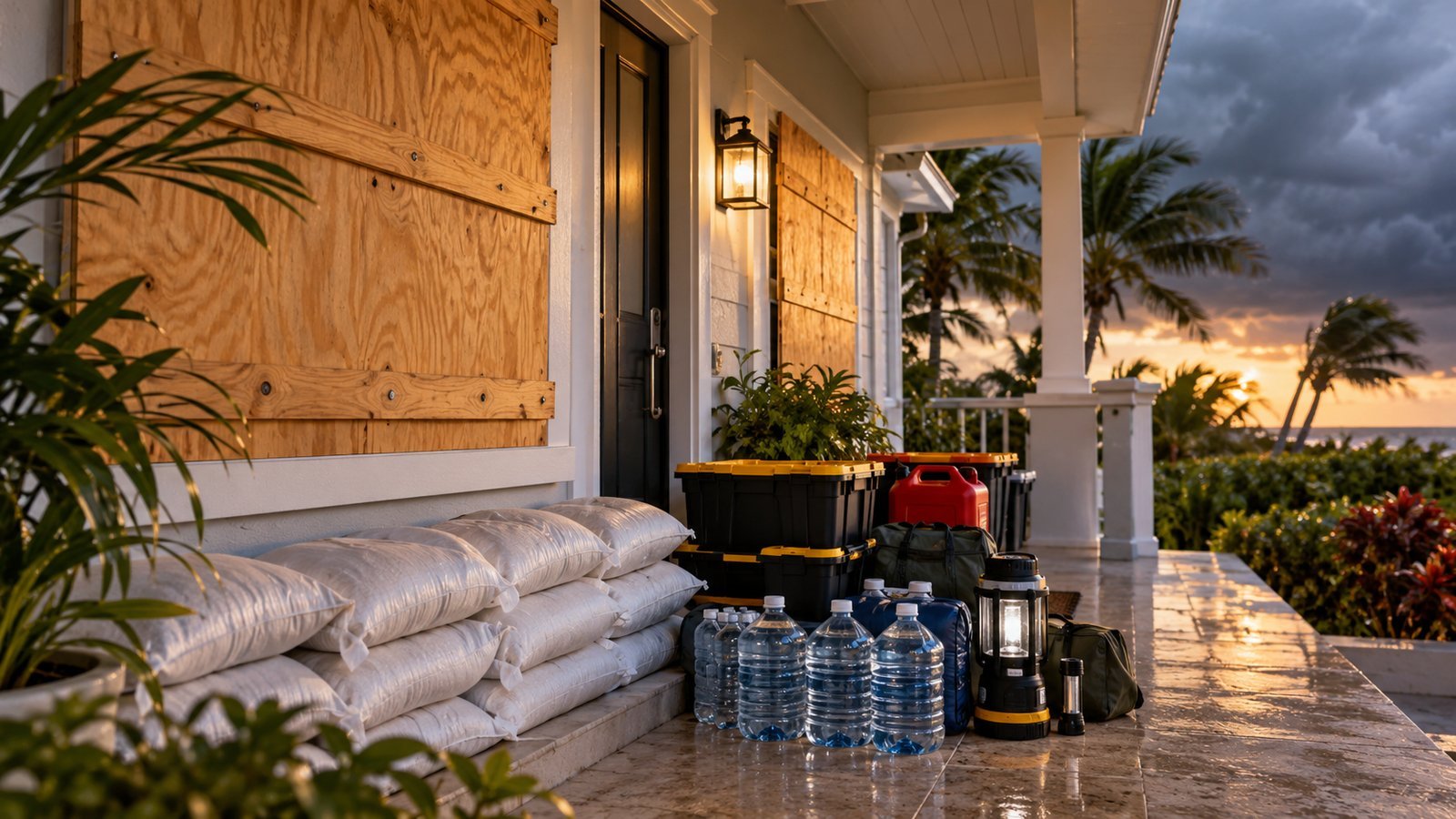
Hurricane Preparedness Checklist: Before, During and After
This post may contain affiliate links, full disclosure here.
Quick answer: before hurricane season, learn your evacuation zone, make a household plan, gather several days of supplies, and sign up for alerts. When a storm approaches, evacuate immediately if officials order it. Staying home? Shelter in an interior room, and never walk or drive through flood water. Afterward, wait for the all-clear, document damage, and treat cleanup as a hazard of its own.
Hurricanes are not one disaster but a bundle of them: wind, rain, flooding, tornadoes and storm surge arriving together. Storm surge, Ready.gov notes, has historically been the leading cause of hurricane-related deaths in the United States, which is why the most important question is often not how strong the wind will be but where the water will go. The Atlantic season runs from June 1 through November 30, and the Eastern Pacific season from May 15 through November 30. This checklist is for anyone on a coast, or anywhere within reach of a storm’s remnants.
The sections below follow the order that makes sense in real life: what to settle well ahead of time, what to do in the days before landfall, what to do while the storm is overhead, and what to watch for afterward. Keep it open on your phone, or print it and tape it inside a closet door.
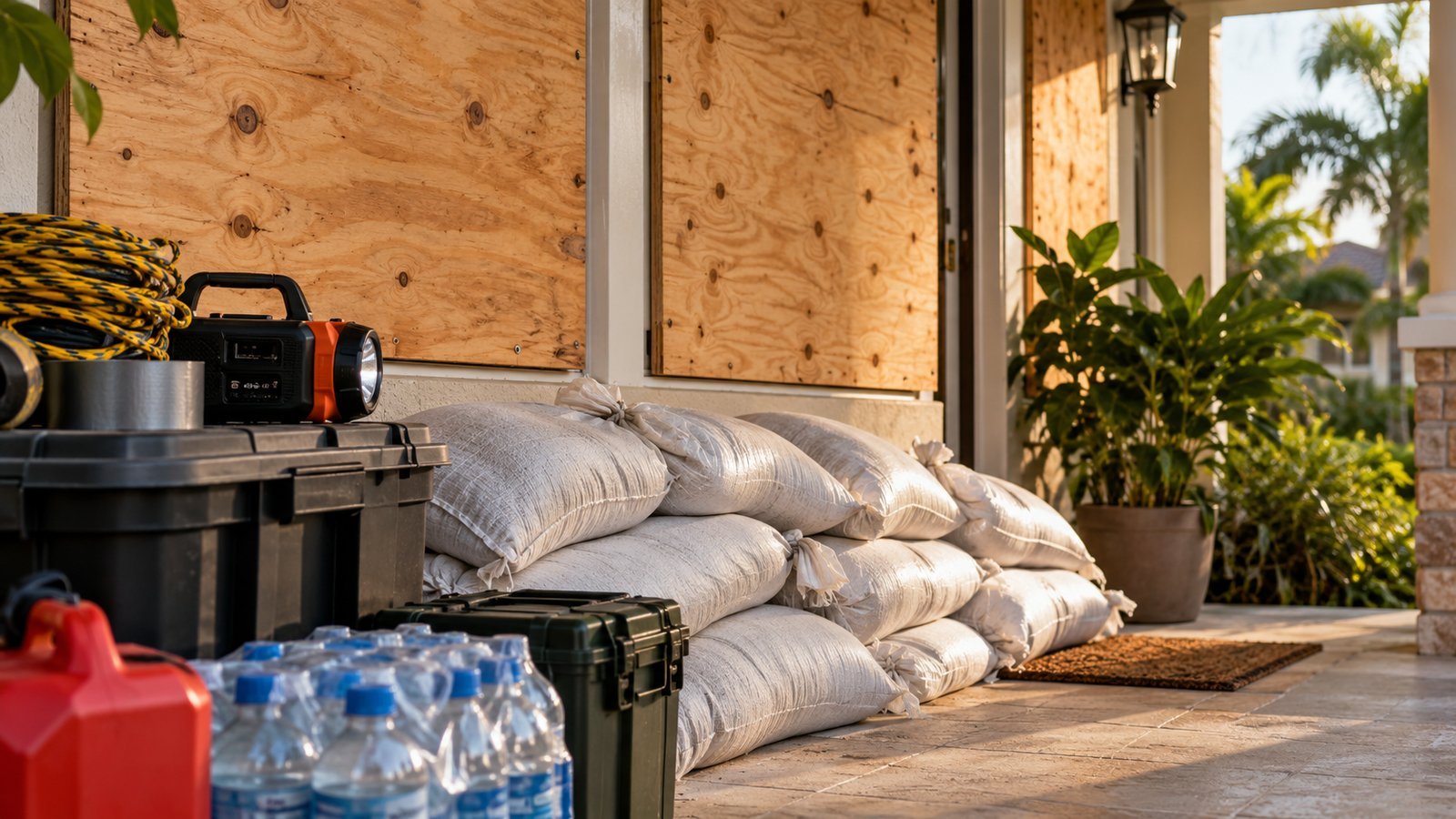
Know Your Risk Long Before a Storm Appears
Ready.gov is direct about one thing that surprises people: hurricanes are not just a coastal problem. Rain, wind, flooding and even tornadoes can reach well inland from the point where a storm makes landfall. A town two hundred miles from the beach can still lose power for days or see roads washed out. So the first task is a plain assessment. Do you live near the coast, a river, or a low-lying area? Is your home in a flood zone? Have storms hit your region before?
Next, find out whether you live in an evacuation zone. Local emergency management offices publish zone maps, and many counties let you search by address. Zones are usually labeled by letter or number, and officials tend to call evacuations by zone, so knowing yours saves a frantic search later. Write the zone on your emergency card, and note the route you would take, plus a second route in case the first is flooded or jammed. The agency advises practicing the route with your household and your pets and deciding in advance where you will stay.
Finally, learn how you will hear about danger. Have several ways to receive alerts, Ready.gov suggests. Download the FEMA app, which can send National Weather Service alerts for up to five locations. Sign up for your community’s alert system. Know that the Emergency Alert System and Wireless Emergency Alerts reach phones without any sign-up. A battery or hand-crank radio covers the day when networks fail. Our 72-hour kit checklist is a good companion for building the basics.
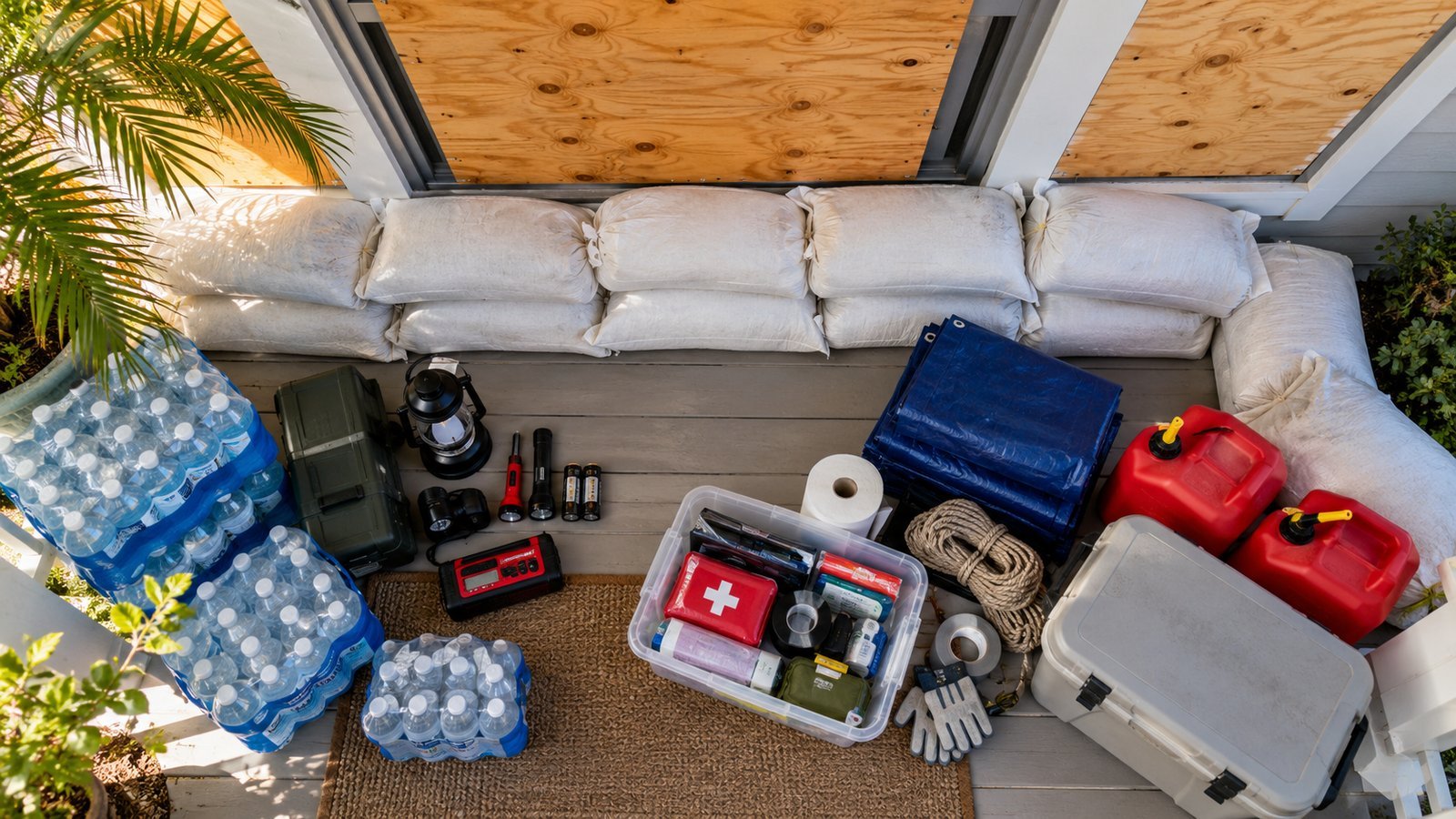
Make a Plan Everyone in the House Can Repeat
A hurricane plan is mostly a set of decisions made calmly so they do not have to be made under pressure. Sit down with everyone in the household and settle four questions. Will we evacuate or stay, and who decides? Where will we go, and how will we get there? How will we reach each other if we are separated? What do we need to bring? Households should also consider whether anyone has a disability or access and functional needs and may need extra help, and to plan for that early, because transportation and shelter space can be harder to arrange at the last minute.
Include pets in every answer. Many public shelters and hotels do not take pets, though service animals are accepted, so identify a pet-friendly place ahead of time: a hotel outside the zone, a relative’s home, or a boarding facility. Keep vaccination records, a leash or carrier, and several days of food and water for each animal in your go bag. Our guide to preparing children for emergencies offers ideas for involving younger family members without frightening them.
Business owners get a separate recommendation from Ready.gov: a continuity plan so you can keep operating, or restart quickly, after the storm. For a household, the equivalent is knowing who has your insurance papers, how bills will get paid, and where the family will live if the house is not habitable.
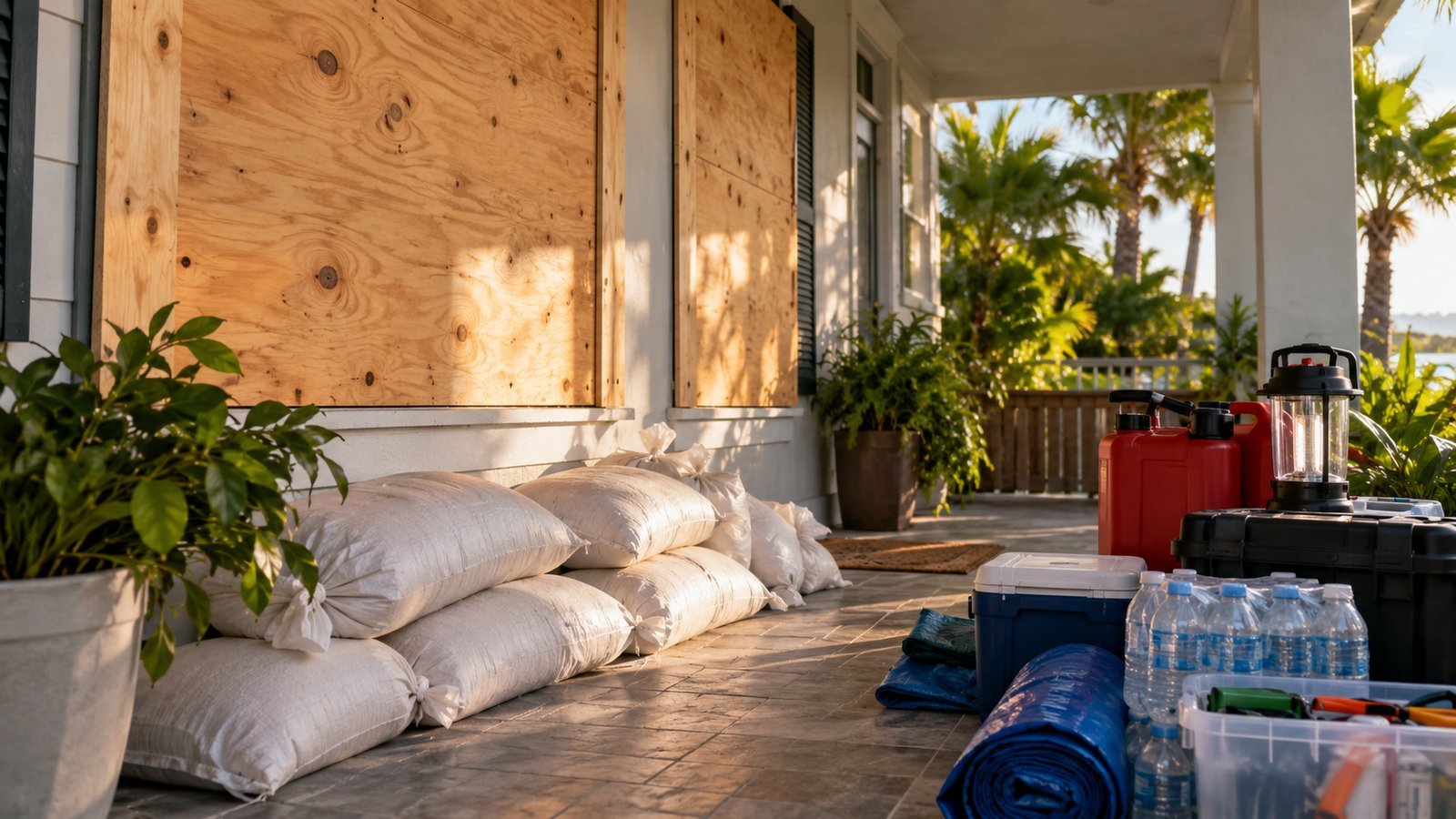
Protect Your Home and Your Paperwork
Hardening a house is partly big projects and partly small chores. The small chores are the ones almost everyone can do. The list includes decluttering drains and gutters, bringing in outdoor furniture, and considering hurricane shutters. Loose objects become projectiles in strong wind, so bring in or tie down grills, planters, bikes and patio sets. Clear gutters so rain can leave the roof. Photograph or video your home, inside and out, as a record for insurance. Renters should ask the landlord what the building has in place and whether you may add anything.
Paperwork deserves its own pass. Insurance policies and personal documents such as ID should be up to date, Ready.gov advises, with copies kept in a secure, password-protected digital space. Put paper originals in a waterproof container you can grab quickly. Check what your policies cover: standard homeowner’s policies generally do not cover flood damage, and a separate flood policy typically takes about 30 days to take effect, so the time to buy is well before a storm is on the map.
Do not forget your devices. Keep phones charged whenever a hurricane is in the forecast, and buy backup charging devices. A fully charged power bank or two is cheap insurance.
Pack Supplies for Both Staying and Leaving
The classic hurricane supply list is the same as a general emergency kit, with weather-specific additions. Ready.gov’s basic kit calls for one gallon of water per person per day for several days, at least several days of non-perishable food, a battery or hand-crank radio and a NOAA Weather Radio, a flashlight, a first aid kit, extra batteries, a whistle, dust masks, plastic sheeting and duct tape, moist towelettes and garbage bags, a wrench or pliers, a manual can opener, local maps, and a phone with chargers and a backup battery.
- Prescription medications, with a list of doses and your pharmacy’s number
- Cash in small bills, because card readers and ATMs may be down
- Sturdy shoes, a change of clothes and rain gear for each person
- Disinfectant supplies, soap and hand sanitizer
- Pet food, water and medicine
- Copies of key documents in a waterproof pouch
- Infant formula, diapers and baby supplies where needed
Ready.gov points out that you may not have access to ordinary supplies for days or even weeks after a hurricane, so stock for the long end of that range if you can. Split the supplies into a grab-and-go bag and a larger stay-at-home bin. For water, store at least what the kit calls for, and see our guide to storing water for emergencies for containers and rotation. Fill the car’s gas tank when a storm is forecast; stations can run dry or lose power.
When the Storm Approaches: Evacuate or Shelter
This is the decision that matters most. The guidance from Ready.gov is unambiguous: in a mandatory evacuation zone, when local officials tell you to evacuate, do so immediately. Leaving early means lighter traffic, open hotels and daylight driving. Waiting makes everything harder, and emergency responders may be unable to reach you once conditions deteriorate. Take your go bag, pets, medications and documents, lock up, and follow the route you chose. Tell your out-of-town contact where you are heading.
Outside an evacuation zone, staying home means preparing to take cover from high winds and flooding. For high winds, take refuge in a designated storm shelter or an interior room. Pick a room with no windows on the lowest level that is not at risk of flooding, and bring your kit, radio, phone and bedding. Stay away from windows and glass doors. Keep listening for updates, since conditions and instructions can change.
Our article on how to decide whether to bug out or stay put lays out the questions to ask. For hurricanes, the short version is simple: follow official evacuation orders, and do not count on being able to ride out surge or flooding.

During the Storm and After It Passes
Once the storm arrives, the job is to stay safe and informed. When flooding traps you in a building, go to the highest level, but not to climb into a closed attic, where rising water can trap you. Do not walk, swim or drive through flood waters. The phrase to remember is Turn Around, Don’t Drown: just six inches of fast-moving water can knock you down, and one foot of moving water can sweep a vehicle away. The calm in the eye of a storm is not the end, so wait for official word before going outside.
After the storm, wait for officials to say it is safe to return. Cleanup is where many injuries happen. Wear protective clothing, work with someone else, and use appropriate face coverings or masks if you are cleaning mold or other debris. People with asthma and other lung conditions, or with suppressed immune systems, should not enter buildings with visible or smellable mold or indoor water leaks, and children should not help with disaster cleanup. Do not touch electrical equipment if it is wet or you are standing in water, and turn off electricity at the main breaker only if it is safe to do so. Do not wade in flood water, which can carry pathogens, debris, chemicals and wildlife, and may be electrically charged by downed lines.
Save phone calls for emergencies and use texts or social media to check in, because networks are often down or busy. Photograph property damage before you move anything, and call your insurance company. Check on neighbors, especially older adults. Food in a warm refrigerator needs care too; see the power outage basics for the basics on keeping food safe when electricity fails.
Power Outages After a Hurricane: Generator and Food Safety
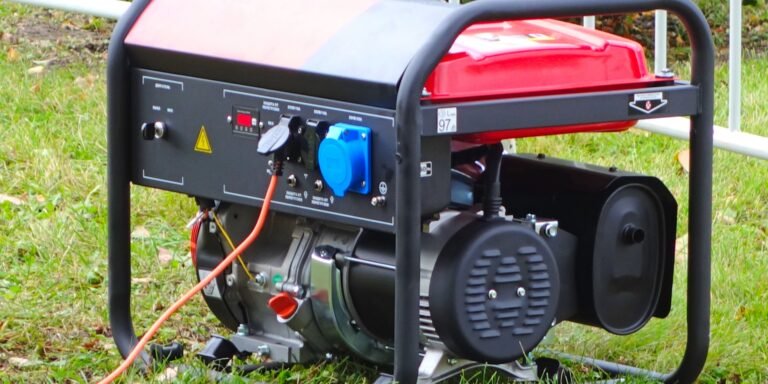
Long outages are common after a hurricane, and they bring their own hazards. Ready.gov’s generator guidance is the part worth memorizing. Generators and their fuel belong outdoors and at least 20 feet from windows, doors and attached garages. Install working carbon monoxide detectors on every level of the home, because carbon monoxide is colorless and odorless and can kill people and pets. Keep the generator dry, let it cool before refueling, connect appliances with heavy-duty extension cords, and follow the manufacturer’s instructions. Never heat a home with a gas stovetop or oven.
For food, keep refrigerator and freezer doors closed. A refrigerator keeps food cold, says Ready.gov, for about four hours and a full freezer for about 48 hours; USDA guidance adds that a half-full freezer holds for about 24 hours. Throw out perishable food that has been at 40 degrees F or above for two hours or more, and never taste food to judge its safety. An appliance thermometer in each unit takes the guesswork out. Run any generator you own before storm season, and see our propane versus gas generator comparison if you are shopping.
Finally, keep an eye on neighbors who may rely on powered medical equipment or live alone. Checking on neighbors, senior adults and anyone who may need extra help is part of the Ready.gov advice. A knock on the door after the storm, once it is safe, is one of the most useful things you can do.
Frequently Asked Questions
When is hurricane season?
The Atlantic and Central Pacific seasons run June 1 to November 30; the Eastern Pacific season runs May 15 to November 30 (Ready.gov). Storms outside those dates are uncommon but possible.
Should I evacuate if I am not in an evacuation zone?
Not necessarily, but follow your local officials. Zones are drawn around surge and flood risk, and orders can expand. Residents of mobile or manufactured homes, or of poorly protected homes, should consider leaving even without an order.
How much water should I store?
One gallon per person per day for several days, for drinking and sanitation, is the Ready.gov figure. Add more for pets and hot weather.
Is it safe to drive through a flooded road if it looks shallow?
No. One foot of moving water can sweep a vehicle away, and you cannot judge depth or road damage from the surface. Turn around.
Does homeowner's insurance cover flooding?
Typically not. Homeowner’s policies generally exclude flood damage, and flood insurance, such as a National Flood Insurance Program policy, usually takes up to 30 days to take effect (Ready.gov).