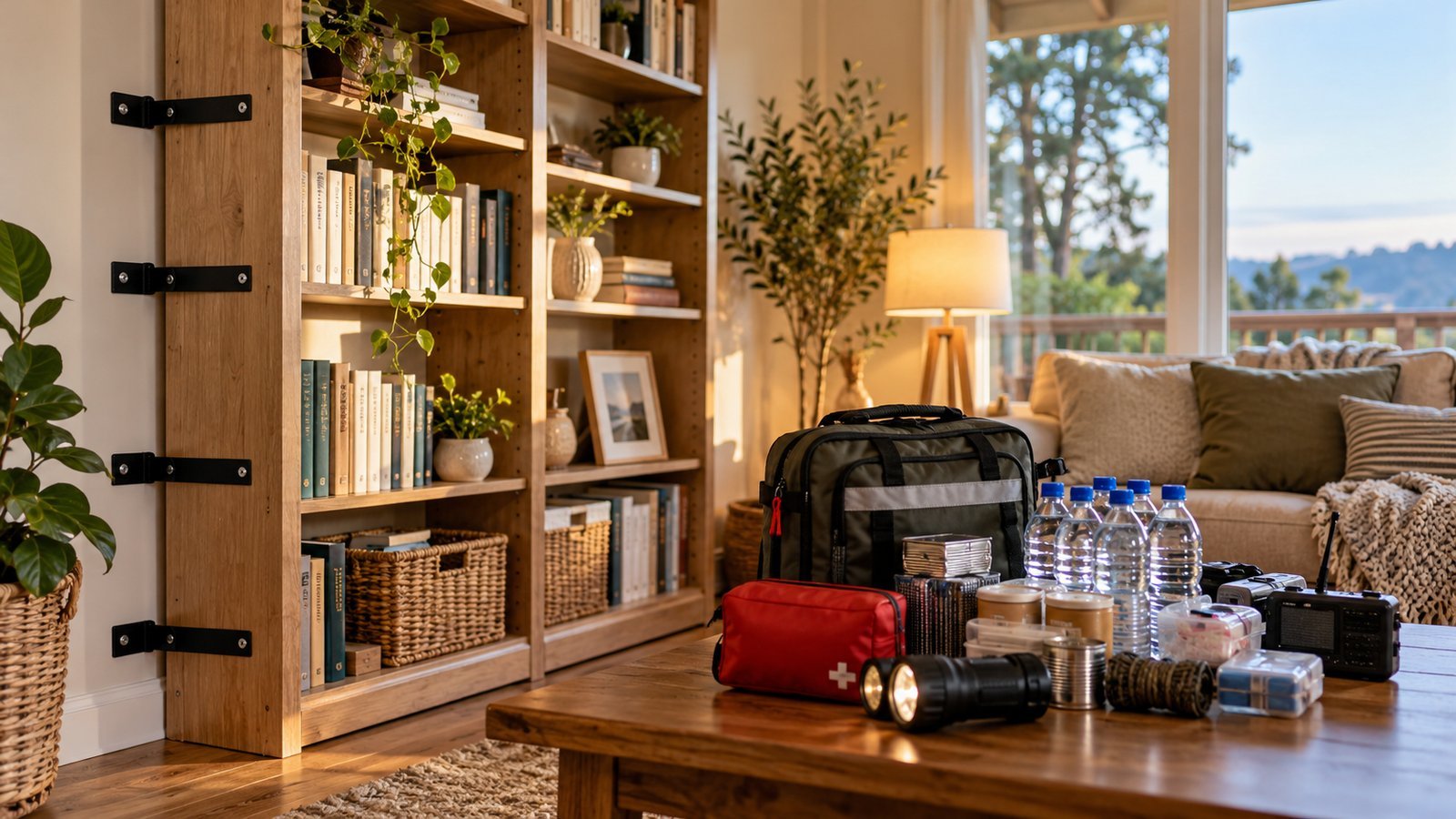
Earthquake Preparedness: What to Do Before, During and After
This post may contain affiliate links, full disclosure here.
Quick answer: when the ground shakes, drop to your hands and knees, cover your head and neck, and hold on until the shaking stops. Stay where you are indoors, and stay away from doorways. Before an earthquake, secure heavy furniture, build a kit, and make a family plan. Afterward, expect aftershocks, check for hazards such as gas leaks, and use text messages rather than calls.
Earthquakes arrive without a forecast. A storm gives you hours or days; an earthquake gives you seconds. That is why the advice from Ready.gov and FEMA leans so heavily on practice: the people who respond correctly are the ones whose bodies already know what to do. This guide covers how to protect yourself during the shaking, how to make a home less dangerous, what to keep on hand, and what to do when the ground is still again.
Earthquakes are not only a West Coast concern. Parts of the central and eastern United States, Alaska, Hawaii and U.S. territories all carry seismic risk, and quakes have been felt far from where they began. Check with your state geological survey or emergency management office to learn how your area ranks.
Drop, Cover and Hold On: The Core Skill
Ready.gov teaches a three-step response. First, drop where you are onto your hands and knees. The position keeps you from being knocked over and lets you move if you need to. People who use a wheelchair are told to lock the wheels instead. Second, cover your head and neck with one arm and hand. A sturdy table or desk nearby is the best cover, so crawl underneath it. With no shelter, crawl next to an interior wall away from windows, stay on your knees and bend over to protect vital organs. Third, hold on until the shaking stops. Under a table, hold the leg with one hand and be ready to move with it as it slides. Without cover, hold your head and neck with both arms and hands.
Adaptations exist for different bodies. A person who uses a cane can drop, cover and hold on, or sit on a chair or bed and cover the head and neck with both hands, keeping the cane within reach. A person using a walker should lock the wheels if there are any, get as low as possible, bend over, and cover the head and neck with arms, a book or a pillow. Practice the version that fits you. The first time you try it should not be during a quake.
A handful of habits are worth building. Take drills seriously at home and work. Notice, when you enter a room, what is overhead and what could fall. Keep shoes and a flashlight next to your bed, since broken glass and darkness are common after a nighttime quake.
Where You Are Changes What You Do
- Indoors: stay put. Do not run outside, and avoid doorways. Moving during shaking is how many people get hurt by falling objects.
- In bed: turn face down and cover your head and neck with a pillow.
- In a car: pull over and stop, and set your parking brake. Avoid stopping under bridges, overpasses, trees or power lines if you can help it.
- Outdoors: stay outdoors. Move to an open area away from buildings, trees, streetlights and power lines, then drop, cover and hold on until the shaking stops.
- Near the coast: if a quake is long or strong, and you are in a tsunami area, go inland or to higher ground right away once the shaking stops, without waiting for an official warning.
The advice to avoid doorways surprises people who learned the opposite in school. In older buildings, doorways could be stronger than the surrounding walls. In modern construction, they are no stronger, and a swinging door can injure you. Under a sturdy table is better. Current Ready.gov guidance points people to drop, cover and hold on instead.
Make Your Home Less Dangerous
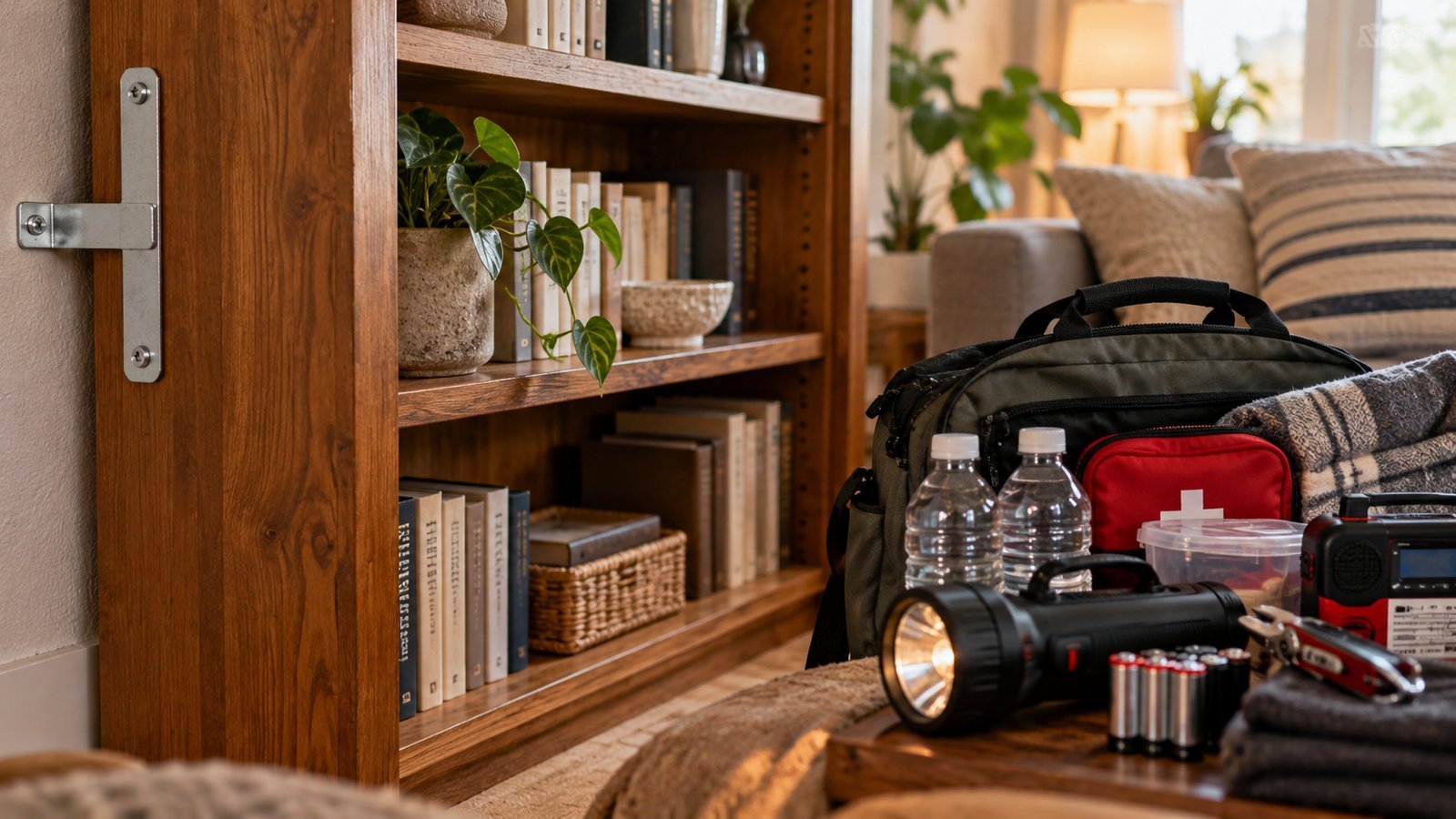
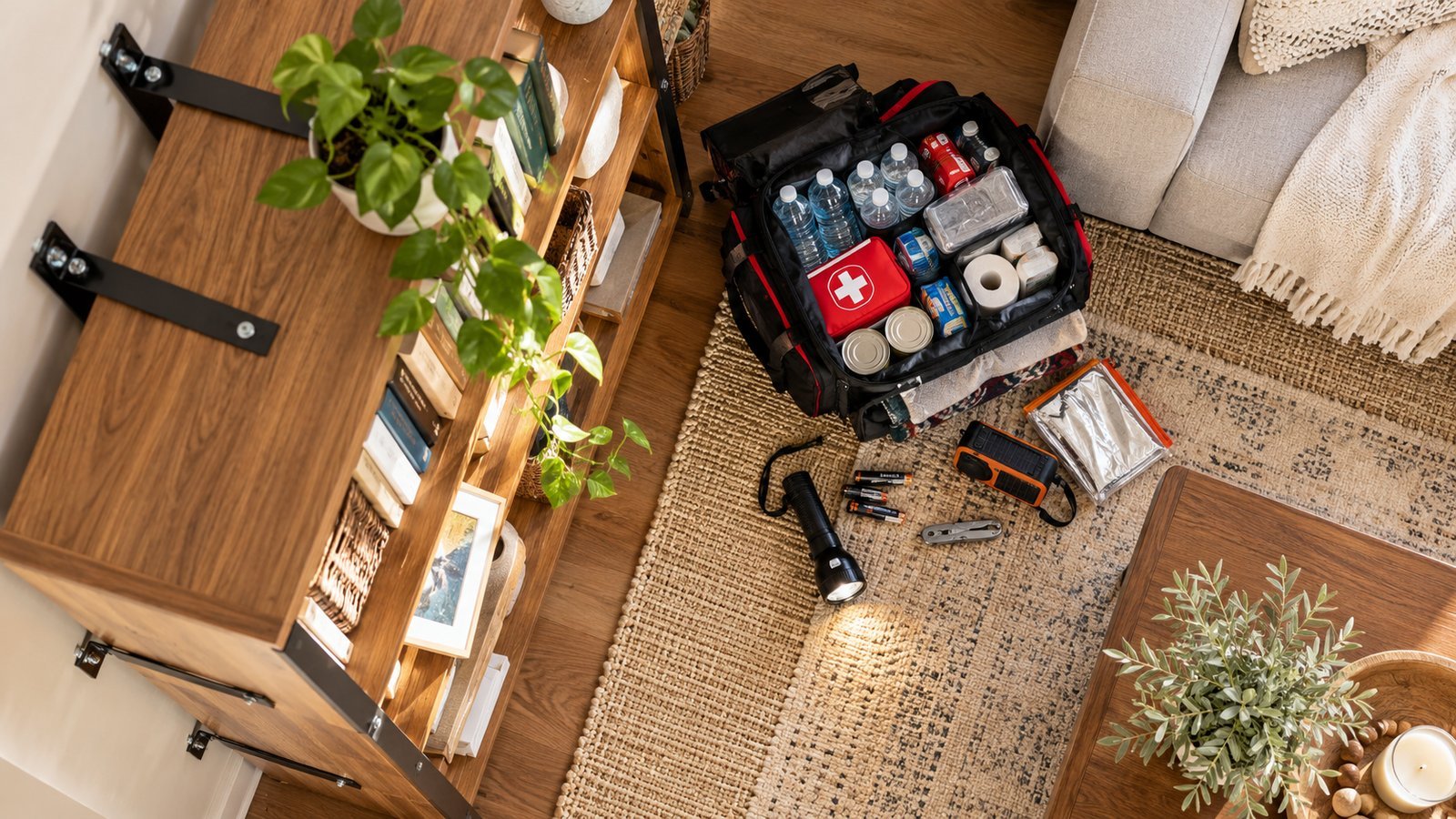
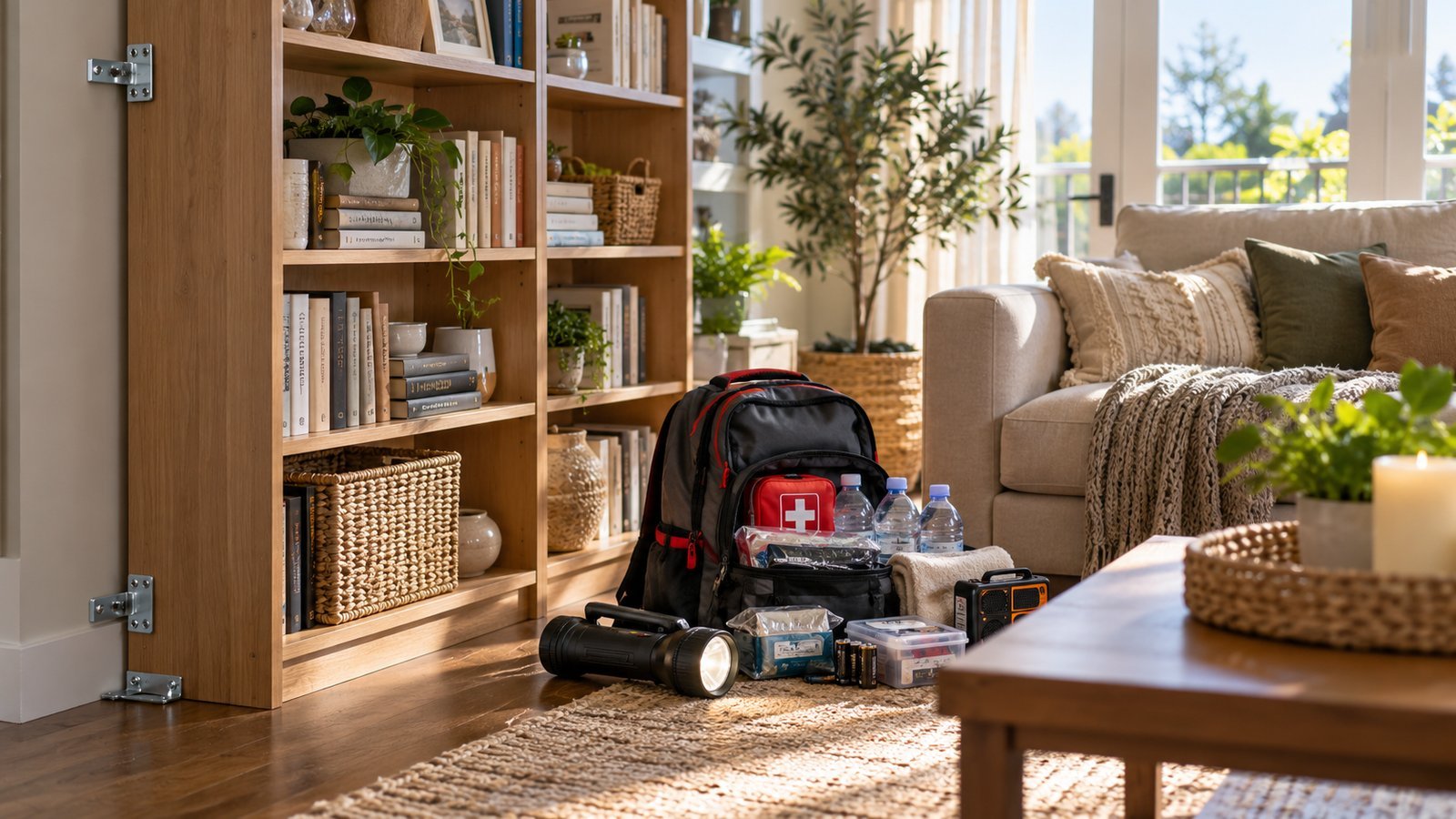
Most earthquake injuries come from falling or flying objects rather than building collapse. That makes home preparation unusually effective. The recommendation is to secure heavy items such as bookcases, refrigerators, water heaters, televisions and objects that hang on walls. Anchor tall furniture to wall studs with brackets or straps. Strap the water heater to the wall. Move heavy and breakable items to low shelves. Keep beds away from windows and heavy mirrors or framed art, and use closed latches on cabinets in earthquake-prone regions so dishes do not spill onto the floor.
Larger projects exist for people who own their home. Owners can also consider improvements that fix structural issues which could cause a building to collapse, such as foundation bolting or bracing of cripple walls in older houses. A licensed contractor or structural engineer familiar with seismic retrofit can tell you what applies. Renters can talk to their landlord about the building’s age and any retrofit programs. Many cities publish lists of vulnerable building types.
Learn how to shut off gas, water and electricity, and keep a wrench near the gas meter if your utility recommends it. Do not shut off gas unless you smell it, hear a hissing sound or suspect a leak, because only a professional should turn it back on. Check your insurance too: Ready.gov notes that a standard homeowner’s policy does not cover earthquake damage, so consider a separate policy if you live in a risky area.

Build a Kit and a Communication Plan
An earthquake kit is a standard emergency kit with a few extras. The kit should hold enough food and water for several days, along with a flashlight, a fire extinguisher and a whistle. Keep a pair of sturdy shoes and work gloves where you can reach them. Our 72-hour kit checklist covers the basics, and our guide to storing water explains how to keep it fresh.
Make a family emergency communications plan with an out-of-state contact, since local lines are often jammed while a call to another state may go through. Decide where you will meet if you are separated, and make sure children know what to do at school. Practice drop, cover and hold on with the whole household, and get the sign-up details for any earthquake alert system your region offers; some give a few seconds of notice, which is enough to take cover.
Preparedness also has a community side. Being prepared lets you avoid unnecessary trips and manage minor medical issues at home, easing pressure on urgent care and hospitals. Not everyone can afford to stock up, so for those who can, building supplies slowly is a sensible approach.
Right After: Aftershocks, Injuries and Hazards
When the shaking stops, take a breath and check yourself. Check whether you are hurt, and help others if you have training. Inside a damaged building? Go outside and quickly move away from it, and do not enter damaged buildings. Expect aftershocks, which can be strong enough to cause further damage. Be ready to drop, cover and hold on again.
There can be serious hazards: leaking gas and water lines, downed power lines, broken glass and weakened structures. Put on sturdy shoes before walking through debris. Leave and call from outside when you smell gas or hear a hiss. Use a flashlight rather than a candle or lighter. Keep away from damaged chimneys and walls. When trapped, send a text or bang on a pipe or wall, cover your mouth with a shirt for protection from dust, and use a whistle instead of shouting.
In an area that may experience tsunamis, go inland or to higher ground right away after the shaking stops, and avoid floodwaters, which can contain chemicals, sewage and debris. Contact your healthcare provider for non-emergency medical needs, and call 9-1-1 for a medical emergency. Save phone calls for urgent needs and use text messages or social media to let people know you are okay.

Cleanup, Recovery and Mental Health
Be careful during cleanup. Wear long sleeves, long pants, work gloves and sturdy thick-soled shoes. Do not try to remove heavy debris by yourself. Use a mask if you are cleaning mold or other debris, and know that people with asthma or other lung conditions or suppressed immune systems should not enter buildings with visible or smellable mold or indoor water leaks. Children should not take part in cleanup.
Take photos of damage before you clean up, and contact your insurance company. Keep receipts for emergency repairs and hotel stays. Check on neighbors, especially older adults and people with disabilities. Stress after an earthquake is normal, and aftershocks can keep it going for days or weeks. Talk with family, keep routines when you can, and reach out to a doctor or a disaster distress helpline if you struggle. Our guide to medical supplies to keep at home can help you build a better first aid setup before the next event.

Earthquakes at Work, at School and Away From Home
You will not always be in your own living room. Think through the places you spend time. At work, notice where sturdy desks and tables are, which exits are closest and whether heavy shelving is anchored. Many workplaces run drills, and taking part is not a formality. Ready.gov asks people to practice protecting themselves during earthquakes with family and coworkers, because a rehearsed response is faster than a remembered one.
At school, children usually practice drop, cover and hold on under their desks. Ask about the school’s plan for after the shaking: where students gather, how parents are notified and who may pick up a child. Keep your contact information with the school current, and resist the urge to drive straight there if officials ask families to wait, since roads may be damaged and clogged.
In a store, theater or other crowd, drop where you are and cover your head and neck, and try to move away from shelves, glass and heavy fixtures. Do not rush for the exits, because crowds crushing toward a door create their own danger. In a high-rise, stay away from windows and exterior walls, and know that sprinklers and alarms may activate. Do not use elevators afterward; use the stairs if your building is safe to move through.
On a trip, take a minute to learn the basics of a new place. Hotels often post evacuation instructions on the door, and the front desk can tell you about local hazards. Keep a small kit in your bag: a flashlight, a whistle, a power bank, sturdy shoes and any medication. A few ounces in a daypack can matter a great deal. Our car emergency kit checklist is a good model for a kit that rides along with you.
One more thing to settle ahead of time is a post-quake routine for the household. Decide who checks on whom, who grabs the kit, and where the family gathers if the house feels unsafe. Write the routine on your emergency card and rehearse it once or twice a year, perhaps when you change the batteries in your smoke alarms. The more automatic the steps are, the more attention you will have for the unexpected things that every earthquake brings.
Frequently Asked Questions
Is a doorway the safest place during an earthquake?
No. Avoid doorways, and drop, cover and hold on instead. Under a sturdy table is better.
Should I run outside when the shaking starts?
Not if you are indoors. Stay inside, since falling debris outside entrances is a major hazard. Once the shaking stops and if the building is damaged, move outside and away from it.
What should I do if I am in a wheelchair?
Lock your wheels, bend over, and cover your head and neck with your arms or a pillow, then hold on until the shaking stops.
Do I need earthquake insurance?
Standard homeowner’s insurance does not cover earthquake damage. Whether you need a separate policy depends on your area, your home and your budget.
How long do aftershocks last?
They can continue for days, weeks or longer, and some are strong. Treat each one as a reason to drop, cover and hold on.