Power Outage Options for Renters and Apartment Dwellers: What You Can and Cannot Do
This post may contain affiliate links, full disclosure here.
Quick answer: renters can prepare for outages without a fuel generator. Prioritize flashlights or lanterns, charged power banks, a battery or solar power station sized for phones and medical devices, nonperishable food, water, and a cooler plan for refrigerated medicine. Ready.gov and the CDC say fuel generators belong outdoors and well away from windows; balconies, garages and hallways are not safe. Keep fridge and freezer doors closed, never heat with a gas oven, and know where your building’s stairs and a cooling or warming center are.
City renters face outages with fewer tools than homeowners. You usually cannot install a transfer switch, run a gas line for a standby generator or drill into shared walls. That constraint does not leave you helpless. It pushes you toward battery power, smart storage and clear building rules, which is the practical path described in our emergency power guide. Pair that plan with power banks for emergencies and space heater safety during winter outages so heat and charging stay safe.
Sources: Ready.gov, Power Outages; CDC, What to Do to Protect Yourself During a Power Outage; FEMA and CPSC portable generator safety materials; U.S. EPA guidance warning against generators on balconies or near openings; FDA guidance on refrigerated medicines during disasters. Checked November 2026. This is general preparedness information, not building-code or medical advice. Follow your lease, local fire code and your clinician’s instructions.
What Changes When You Rent
Homeowners can sometimes place a generator on a driveway twenty feet from openings, hard-wire a transfer switch or store fuel in a shed. Apartment leases often ban fuel storage, balcony generators and permanent electrical changes. Shared walls and stacked windows mean your exhaust can enter a neighbor’s unit even when you think you are “outside.”
Treat the lease and the fire code as part of the plan. Ask the property manager in writing which devices are allowed, whether the building has emergency lighting on stairs, how long elevators stay usable on backup power and where residents should go in extreme heat or cold. Screenshot the reply into your phone’s notes app.

Battery Lights Beat Candles
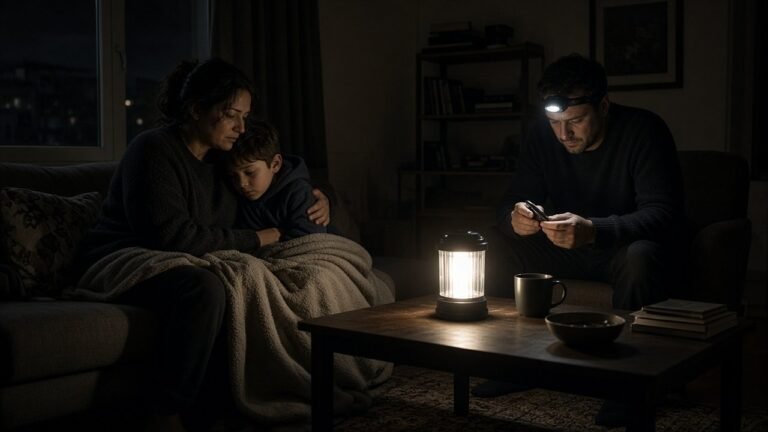
Candles start apartment fires. Battery lanterns, headlamps and flashlights do not. Ready.gov advises a flashlight for every household member. Keep extras in the go-bag and by the bed. LED lanterns with hanging hooks free your hands for cooking or packing.
Test batteries twice a year when you change smoke-alarm batteries. Store spares in the original packaging away from metal keys that can short coin cells.
Power Banks and Portable Power Stations
A USB power bank keeps phones and small medical meters alive. A larger lithium portable power station can run a CPAP for part of a night, charge laptops or power a mini-fridge for medicine if the watt-hour rating and continuous watts match the device label. Read both numbers before you buy. Our guide to portable power stations versus gas generators explains why indoor-safe battery systems fit renters better than fuel machines.
Recharge stations from the wall on ordinary days. Some accept car charging or foldable solar panels on a sunny balcony when the lease allows panels that do not alter the railing. Never block egress paths with cables.

Why Fuel Generators Fail the Apartment Test
Ready.gov, the CDC, FEMA and the CPSC all place portable fuel generators outdoors and far from windows, doors and vents. CDC guidance uses a distance of at least 20 feet from openings. The EPA has warned that balconies and partially enclosed spaces can trap carbon monoxide and push it indoors. Opening a sliding door does not make a balcony a safe generator pad.
Carbon monoxide is colorless and odorless. Symptoms include headache, dizziness, weakness, nausea, chest pain and confusion. People who are asleep can die before they notice anything wrong. Install CO alarms with battery backup on every level you occupy, as Ready.gov recommends, and leave immediately for fresh air if an alarm sounds or symptoms appear, then call 911.
Never plug a generator into a wall outlet to “backfeed” the apartment. That practice can electrify building wiring and endanger utility workers. Plug appliances into the generator with heavy-duty outdoor-rated cords only when you are in a truly outdoor, code-compliant location that your lease allows—an uncommon situation for high-rise renters.

Food Safety Without Power
Keep refrigerator and freezer doors closed. Ready.gov and the CDC state that a refrigerator holds safe temperatures for about four hours if unopened. A full freezer holds about 48 hours; a half-full freezer about 24 hours. Use a fridge thermometer. Discard perishable food that rose above 40°F for two hours or more, following standard food-safety rules. Stock no-cook pantry food so you are not tempted to run a charcoal grill on a balcony.
Heating and Cooling Without Breaking Rules
Never use a gas stove or oven to heat a home. Ready.gov flags carbon monoxide, fire and appliance damage risks. Unvented combustion heaters indoors are similarly dangerous. If your building becomes unsafe in extreme weather, leave for a friend, hotel or public warming or cooling center announced by local officials.
Electric blankets and small space heaters need intact cords, clear three-foot zones and constant adult attention. Review space heater safety before winter. Many leases limit heater types; follow those rules.
Elevators, Water and Communications
High-rises may lose elevators, electronic door locks or water pumps during long outages. Practice the stair route with a flashlight. Keep a printed contact list because phones die. Sign up for wireless emergency alerts and your city’s opt-in notifications. A hand-crank or battery NOAA weather radio still works when cell towers congest, which pairs well with the alerts guidance in related severe-weather posts on this site.
Tell neighbors on your floor if someone relies on elevator access or powered medical devices so you can check on each other.

Medical Devices and Refrigerated Medicine
Ready.gov urges alternate plans for power-dependent medical devices and refrigerated medicines. Talk with your clinician before storm season about battery backups, cooler packs and when to seek a facility with power. Keep a written medication list in your wallet and a waterproof pouch.

Building a Renter Outage Kit
Pack in one bin you can reach in the dark:
- Flashlights or lanterns and spare batteries
- Power banks kept above 50 percent charge
- Battery radio and whistle
- Manual can opener, no-cook food and water (Ready.gov’s baseline of one gallon per person per day remains a useful planning figure)
- Cooler and frozen gel packs reserved for medicine
- Copies of ID, insurance and prescriptions
- Warm layers or cooling towels depending on season
- Cash in small bills if ATMs are down
Store the bin where a roommate can find it. Review it when leases renew.

Talking With Landlords Before the Storm
Ask about generator policy, stairwell lighting, backup power for fire alarms and elevators, after-hours maintenance numbers and whether residents may run extension cords in hallways (usually no). Document answers. If a building rule conflicts with life safety, call the non-emergency fire marshal line for clarification rather than improvising with fuel indoors.

After Power Returns
Expect surges. Ready.gov recommends disconnecting sensitive electronics before power returns when practical, then plugging them back in one at a time. Restock ice, recharge batteries and replace any medicine that left the safe temperature range per pharmacist guidance. Note what failed—dead lantern, short cord, missing cash—and fix it while the outage is fresh in memory.
Working With Building Staff During the Outage
Call the after-hours number once to report the outage if the whole building is dark, then conserve your phone battery. Ask whether elevators are offline, whether stairwell lights have battery backup and whether management will open a lobby space with power for charging. Write down answers so roommates hear the same plan.
If only your unit is dark, check the breaker panel before assuming a block-wide failure. Reset a tripped breaker once. If it trips again, leave it off and call maintenance—repeated resets can hide a dangerous fault.
Accessibility and Mobility Notes
Residents who cannot use stairs need an evacuation helper list before storm season, not during. Ask the fire department non-emergency line how your city handles elevator outages for people with disabilities. Keep a whistle or loud phone alarm app to signal neighbors if you need help and cannot reach the hallway.
Frequently Asked Questions
Can I run a quiet inverter generator on my balcony if I point the exhaust out?
No. Balconies can trap carbon monoxide and send it into your unit or a neighbor’s windows. Ready.gov and CDC outdoor-distance rules are written for open outdoor placement far from openings, not stacked apartment balconies.
Are portable power stations safe indoors?
Lithium portable power stations produce no combustion exhaust when used as designed. Follow the manufacturer’s ventilation, charging and temperature limits, keep vents clear and use undamaged cables. They are not a license to overload circuits with high-watt heaters.
How long will my fridge stay safe?
About four hours if you leave the door closed, per Ready.gov and CDC outage food guidance. Use a thermometer and when in doubt throw perishable food out.
What if my CPAP or oxygen concentrator needs power?
Ask your durable-medical-equipment supplier about battery options and runtime before an emergency. Register with your utility’s medical-baseline or critical-care program if one exists, and know the nearest facility with backup power.
Should I leave the city during a multi-day outage?
Leave if heat, cold, medical needs or building systems make the unit unsafe. Tell someone your plan. Take medicine, chargers, documents and pets.

Sources
Ready.gov Power Outages; CDC power-outage protection and carbon monoxide pages; FEMA and CPSC generator alerts; EPA indoor-air guidance on generators; FDA emergency medicine storage pages.

Lease Clauses Worth Reading Twice
Look for language about generators, fuel, space heaters, barbecues, balcony storage and alterations to electrical systems. Some buildings allow battery stations but ban anything with a combustion engine. Others restrict the wattage of appliances plugged into bedroom circuits. If the lease is silent, ask in writing rather than assuming a hardware-store generator is fine.
Insurance matters too. Renters insurance does not make an unsafe generator legal, but a home inventory and policy number help after food spoilage or device damage. Photograph serial numbers of power stations and medical equipment before storm season.
Layered Lighting Plan
Think in layers. A headlamp lets you walk stairs hands-free. A lantern lights a table for cards or homework. Keep a compact flashlight in each backpack as well. Scented candles and oil lamps add soot and open flames that fit poorly in small rooms with limited ventilation.
If you use rechargeable lights, keep one set of disposable-battery lights as a backup when you cannot recharge. Darkness makes simple tasks—finding shoes, reading a medication label—slow and stressful.
Charging Discipline on Ordinary Days
Outage kits fail when power banks sit at 10 percent for months. Pick a weekly reminder to top them off. Unplug wall warts you do not need so a returning surge has fewer victims. Label cords for “phone,” “radio,” and “CPAP battery” so you are not guessing at midnight.
Water and Bathroom Reality in Tall Buildings
Some towers lose water pressure when pumps stop. Fill a clean bathtub early if officials warn of a long outage and your building’s plumbing allows it. Keep a separate covered bucket for flushing if needed, and never drink bathtub water unless you treat it using methods from trusted water guidance. Stock hand sanitizer and disinfectant wipes for times when washing is limited.

Noise, Neighbors and Shared Walls
Portable power stations make fan noise. Generators make far more. In apartments, noise becomes a neighbor issue quickly. Battery gear stays friendlier. Share hallway updates when elevators fail so people with mobility limits get help without waiting for a frantic knock at 2 a.m.

Seasonal Twists
Summer outages turn into heat emergencies. Drink water, use damp cloths, and leave for a cooling center rather than inventing indoor combustion cooling. Winter outages push people toward ovens and grills—the exact behaviors Ready.gov and the CDC warn against. Pack blankets and layered clothing instead.

Checklist Before Hurricane or Winter-Storm Season
- Test flashlights and replace weak batteries.
- Charge power banks and note runtime on your phone.
- Freeze gel packs dedicated to medicine.
- Print medication and contact lists.
- Walk the stairwell once with a child or older adult in the household.
- Confirm pet carrier locations.
- Review the building’s outage email or portal instructions.
- Put cash and a car phone charger in the kit if you drive.
Repeat the checklist when you renew the lease or change roommates.