Portable Power Station vs Gas Generator: Pros, Cons and What Drives the Cost
This post may contain affiliate links, full disclosure here.
Quick answer: a portable power station is a quiet, exhaust-free battery that can run indoors and suits phones, lights, CPAP machines, routers and short refrigerator runs, but it must be recharged. A gas generator produces much more power for as long as you have fuel, which suits refrigerators, freezers, sump pumps and multi-day outages, but it is loud, needs maintenance and must run outdoors at least 20 feet from the home because of carbon monoxide. Many households end up with both: a power station for indoor essentials and a generator to recharge it and run large loads.
These two options dominate backup power conversations, and they are often compared as if one must win. In practice, portable power stations and gas-powered generators solve different problems. One stores a fixed amount of energy and delivers it silently. The other turns fuel into a large, continuous supply of electricity but brings noise, fumes and upkeep.
This comparison walks through the factors that matter in a real outage, from output and run time to safety, noise, maintenance and the costs that add up over years. For the full range of options, including solar and medical device planning, see our emergency power guide.

The Short Version: Who Each One Suits
A portable power station tends to fit:
- Apartment and condo dwellers who cannot run a generator outdoors safely or legally
- People who need to power a medical device at the bedside
- Households whose essential load is small: phones, lights, a radio, a router, a fan
- Short outages of a day or two, or longer ones with solar or car recharging
A gas generator tends to fit:
- Homeowners with a safe outdoor spot at least 20 feet from the house
- Households that need to run a refrigerator, freezer, well pump, sump pump or furnace blower for days
- Areas with long storm outages where recharging a battery would be difficult
- People comfortable with routine engine maintenance and fuel storage

Power Output and Run Time
Output is where the two differ most.
A power station has two ratings that matter: battery capacity in watt-hours and inverter output in watts. Capacity decides how long it can run a load. Output decides what it can start and run at once. A unit with a small inverter cannot start a refrigerator compressor no matter how big its battery is.
A gas generator is rated by running watts and starting or surge watts. As long as it has fuel and the load stays under its running rating, it keeps going. Run time per tank depends on the size of the tank and the load, and manufacturers publish run time at a stated percentage of load.
That difference shapes multi-day outages. A power station runs down and must be recharged from the grid, a car, solar panels or a generator. A generator only needs more fuel, though fuel itself can be hard to find after a major storm, when gas stations without power cannot pump.
Matching to your load
Before choosing, add up what you need to run, both in daily watt-hours and in peak watts. A short list of phones, lights and a CPAP may total well under a thousand watt-hours a day, which a mid-size power station can handle. Adding a full-size refrigerator and a sump pump pushes most households toward a generator or a much larger battery system.
Outlets, AC Power and Expansion Battery Packs
Look past the headline wattage to what each machine can actually plug into.
What comes out of each
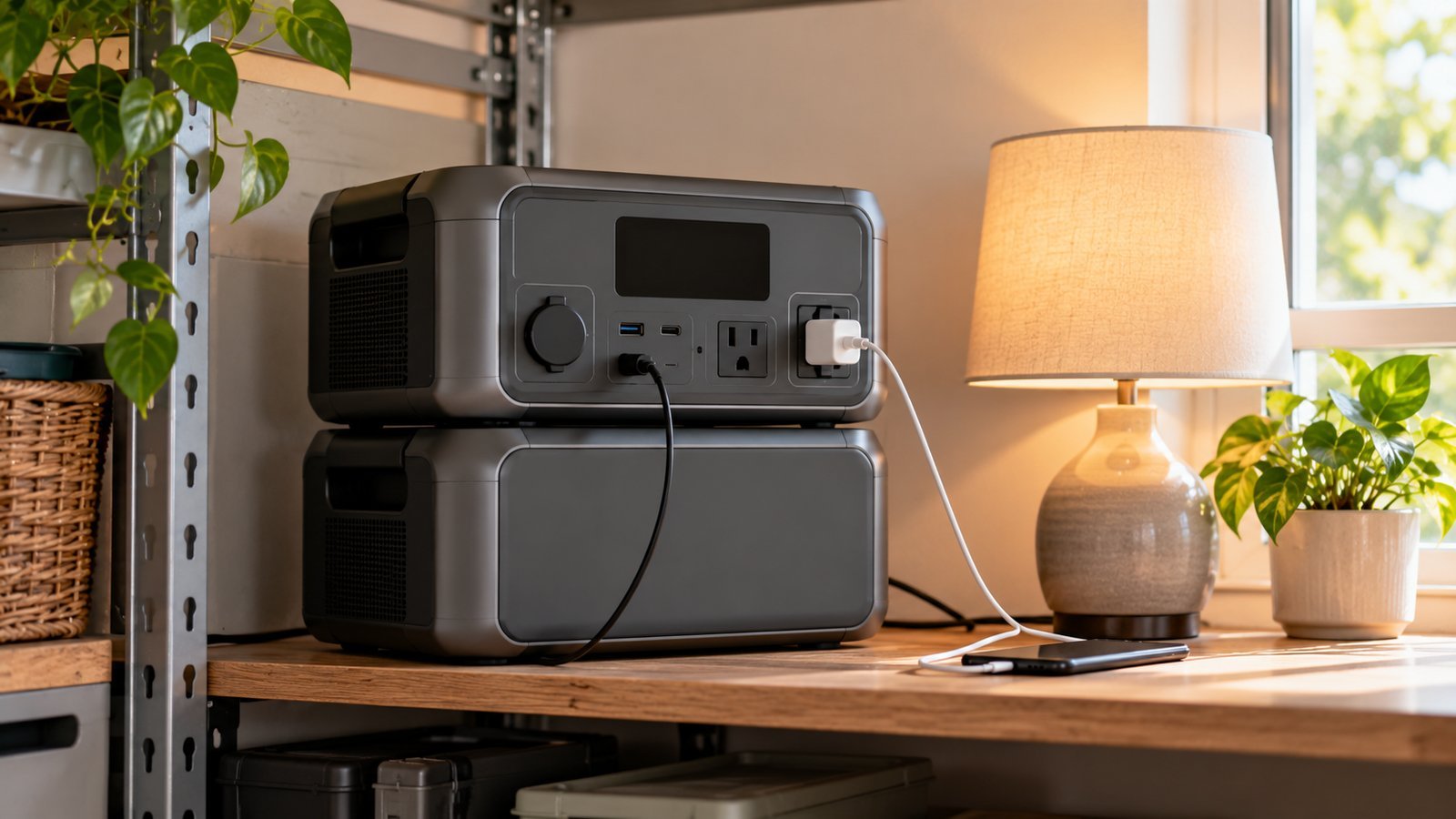
Portable power stations convert stored battery energy into AC power through standard 120V outlets, and most add USB-A and USB-C ports and a 12-volt car-style socket. The DC ports skip the inverter and waste less energy, which matters for phones, lights and routers. A gas-powered generator typically offers several 120V outlets, and larger models often add a 240-volt outlet for loads such as a well pump or a transfer switch connection. Many portable generators also include a 30-amp RV outlet.
Power output limits
A power station’s power output is limited by its inverter, often well below what a mid-size generator delivers. If the combined load on its outlets goes past the rating, it shuts off to protect itself. Generators can also overload, but larger models give more headroom for motors that surge when they start.
Expansion battery packs
Some portable power stations accept an expansion battery pack that plugs into the main unit and adds watt-hours without adding inverter output. That can stretch run time for a CPAP or refrigerator through a longer outage, but it will not let the station start a larger load. Check the maximum number of expansion packs the unit supports and how long the full system takes to recharge.
LiFePO4 batteries
Many newer power stations use lithium iron phosphate, written LiFePO4 or LFP. In a 2020 Sandia National Laboratories study of commercial cells, the LFP cells tested lasted roughly 2,500 to 9,000 full cycles before dropping to 80 percent of original capacity, compared with roughly 200 to 2,500 for the nickel-based (NMC) cells tested, with results depending heavily on temperature and depth of discharge. Real products differ, so compare the cycle rating on each spec sheet.

Safety: Indoors vs Outdoors
Safety is the clearest dividing line.
Gas generators produce carbon monoxide, an odorless, colorless gas that can kill quickly. The Consumer Product Safety Commission’s guidance is firm: never use a portable generator inside a home, garage, basement, crawlspace or shed, even with doors and windows open. Run it outdoors, at least 20 feet from the house, with the exhaust pointed away from windows, doors and vents. Ready.gov repeats the same warnings and adds that battery-powered carbon monoxide alarms should be installed in the home.
Many newer portable generators include a carbon monoxide shutoff feature designed to turn the engine off if carbon monoxide builds up around the unit. Voluntary safety standards, such as UL 2201 and ANSI/PGMA G300, address carbon monoxide emissions and shutoff. The feature adds protection, but it does not make indoor use safe.
Generators also carry fire and shock risks. CPSC advises letting a generator cool before refueling and keeping it dry, and warns never to plug a generator into a wall outlet, which can backfeed power into utility lines.
A power station makes no exhaust and can be used indoors. Its risks are the ones common to large lithium batteries and electrical devices: use the manufacturer’s charger, keep it away from heat and water, do not use it if it is swollen or damaged, and follow the manual’s guidance on ventilation and charging.

Noise, Neighbors and Rules
Gas generators make noise, and the level varies widely. Inverter generators generally run quieter than conventional models, particularly at light loads, because their engines can slow down when demand is low. Manufacturers publish noise ratings in decibels, usually measured at a set distance, which makes comparing models easier.
Noise matters for sleep, for neighbors and for local rules. Some cities have noise ordinances, and many homeowner associations, condo boards and leases restrict or ban generators. Apartment buildings almost always prohibit fuel-burning generators on balconies.
Power stations are close to silent. Some have small cooling fans that run under heavy load or while charging. For bedside medical equipment or light sleepers, that difference alone can settle the question.

Maintenance and Storage
Generators
Engines need regular care. Typical tasks include oil changes on the schedule in the manual, checking spark plugs and air filters, and running the generator periodically under load. Fuel is the biggest maintenance issue. Gasoline degrades in storage, and stale fuel left in a carburetor can gum it up. Fuel stabilizer, used as directed, helps, and many owners either run the carburetor dry or drain it before storage. Our guides on starting a generator that has been sitting and storing gasoline long term cover both problems.
Fuel storage has its own rules. Store gasoline only in approved containers, outside the living space and away from heat sources. Local fire codes often limit how much fuel can be stored at a home.
Power stations
Batteries need much less attention. Manufacturers usually recommend storing a power station partly charged and topping it up every few months, since batteries slowly lose charge while sitting. Heat shortens battery life, so a cool indoor closet is a better home than a hot garage. Check the charge before storm season and after any use.
Battery chemistry affects lifespan. LiFePO4 cells, used in many newer power stations, are generally rated by manufacturers for more charge cycles than older lithium-ion designs. Cycle ratings are listed on spec sheets and are worth comparing.

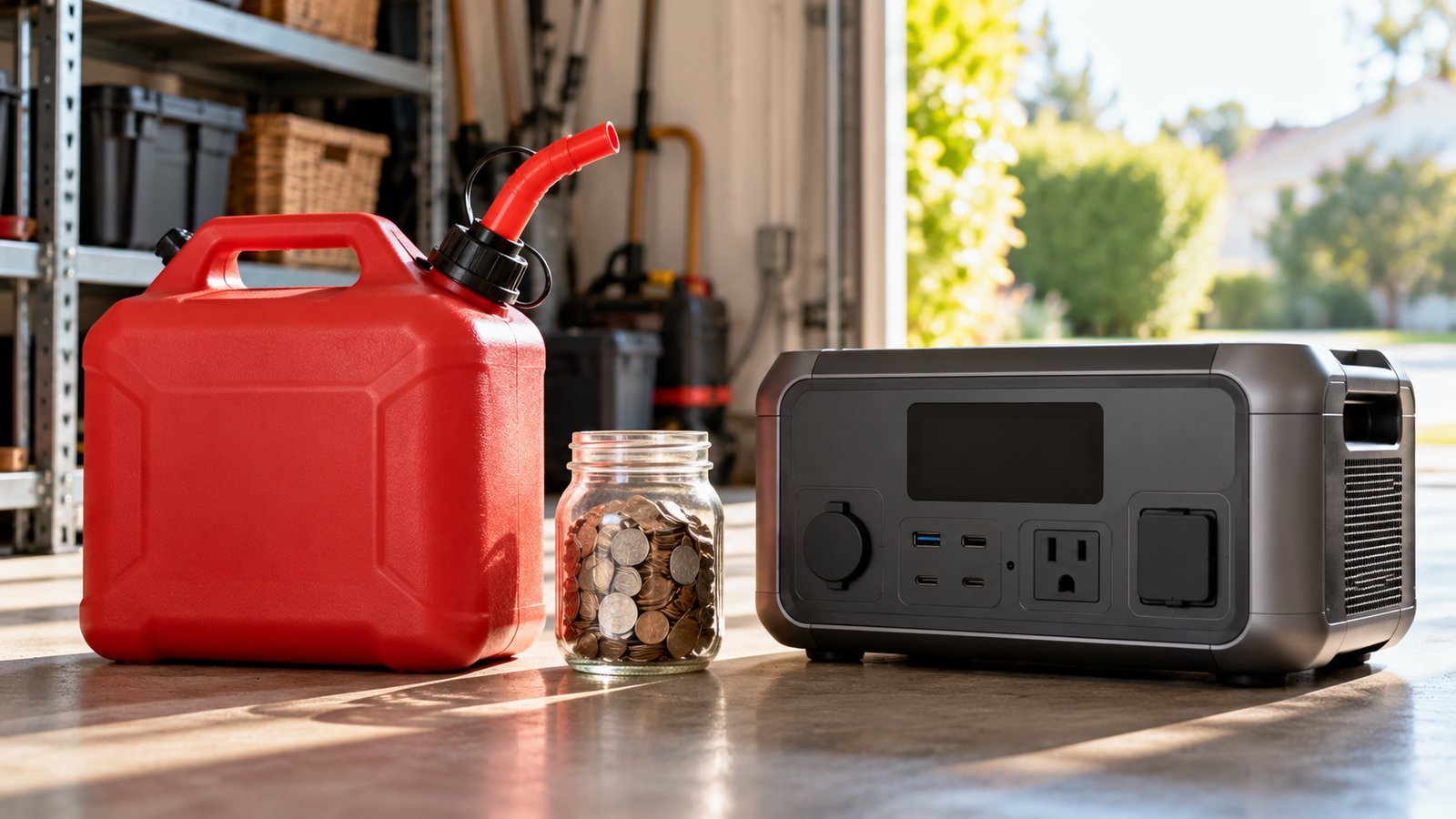
What Drives the Cost
Prices change constantly, so this section focuses on what drives cost rather than quoting numbers.
Upfront cost
Power stations are priced mainly by battery capacity and inverter size. Generators are priced mainly by running and surge watts, with inverter models usually costing more than conventional ones of similar output. Comparing price per watt-hour for batteries and price per running watt for generators makes listings easier to compare.
Operating cost
A generator burns fuel every hour it runs. Fuel cost is easy to estimate: the manufacturer’s gallons-per-hour figure at your expected load, multiplied by hours of use and the local fuel price. Add oil, filters, spark plugs, stabilizer and fuel containers over the years.
A power station’s operating cost is the electricity to recharge it, which is usually small, plus the cost of solar panels if you add them. The larger long-term cost is battery wear. Every battery loses capacity over its rated cycle life, and eventually the unit holds noticeably less than it did when new.
Hidden costs
Both options have extras that are easy to forget:
- For generators: heavy-duty outdoor-rated extension cords, a transfer switch or interlock installed by a licensed electrician, a cover or enclosure designed for running in wet weather, and carbon monoxide alarms
- For power stations: solar panels and cables, a car charging cable, and possibly an expansion battery
Lifetime Cost: A Simple Way to Compare
Sticker prices hide the real comparison. A rough lifetime cost estimate uses the same few inputs for either option.
For a generator
Lifetime cost = purchase price + accessories (cords, cover, CO alarms) + installation costs for any transfer switch or interlock + yearly fuel, oil, filters and stabilizer for each year you expect to own it. Fuel use depends on how many outage hours you actually run it, so use your area’s typical outage pattern rather than a worst case.
For a power station
Lifetime cost = purchase price + any solar panels, cables or expansion battery packs + the small cost of electricity to recharge + replacement when the battery has worn down. To estimate battery life, divide the rated cycle count by the full cycles you expect each year. As simple arithmetic, a battery rated for 3,000 cycles and run through 50 full cycles a year would reach that rating only after decades, so for many households the calendar age of the battery and electronics will matter more than cycle count.
What usually decides it
For short, occasional outages and small loads, a power station often costs less over its life because it needs no fuel and little maintenance. For frequent multi-day outages with large loads, a generator’s lower cost per watt usually wins. Write down your own numbers before buying.

Propane, Dual-Fuel and Hybrid Setups
Gasoline is not the only fuel. Propane stores for long periods in a tank without the degradation problems of gasoline, and dual-fuel generators can run on either. Propane typically yields somewhat less power than gasoline in the same engine. Our comparison of propane versus gas generators goes into the trade-offs, and our guide to how long a generator runs on a 20 lb propane tank covers the fuel math.
Hybrid setups combine strengths. A generator can run for a few hours a day to recharge a power station and cool down the refrigerator, while the power station handles overnight loads silently indoors. That approach cuts fuel use and noise while keeping essentials running around the clock.
Some newer vehicles, including certain electric and hybrid models, can supply household current through built-in outlets or accessories. Check the vehicle manufacturer’s instructions, and never run a gasoline engine in a garage, even to charge a battery.
Whole-House Generators and Natural Gas: The Next Step Up
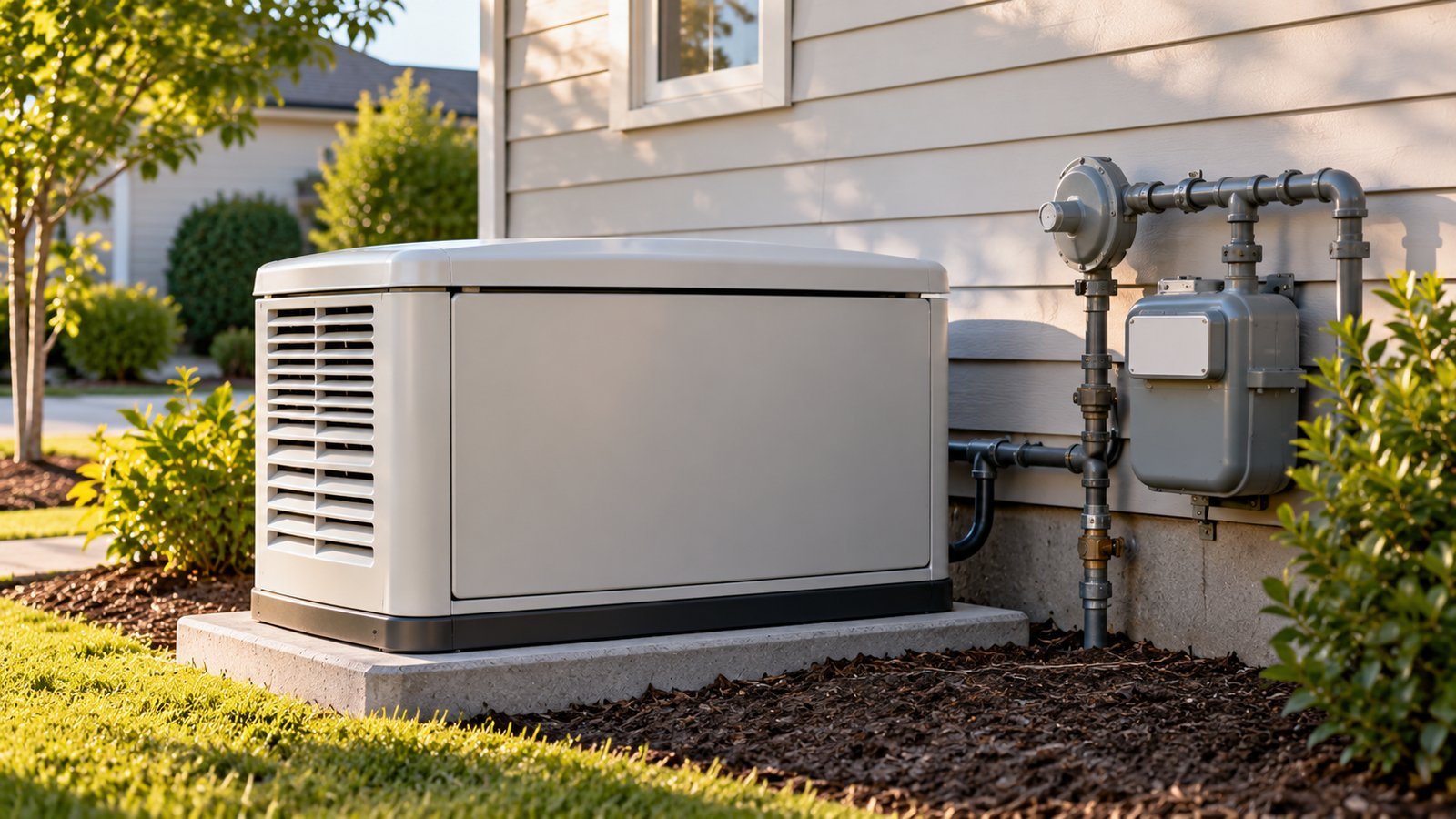
If a portable generator is not enough, the next step is a whole-house generator, also called a home standby generator. These are permanently installed outdoors on a pad, connected to the home’s electrical panel through an automatic transfer switch, and fueled by natural gas from the utility line or by a large propane tank. When the grid goes down, the generator starts on its own and the transfer switch moves the home over to it automatically.
Natural gas removes the fuel storage problem, since the supply comes through the gas line, though the gas supply can be interrupted in some disasters. Installation costs add significantly to the equipment price: a licensed electrician, often a gas plumber, a concrete pad, permits and inspections. Standby generators still produce carbon monoxide and must be placed according to the manufacturer’s clearances and local code.
For whole-house backup without an engine, some homeowners choose a large home battery system, sometimes paired with rooftop solar. Our watt-hour worksheet for sizing backup power shows how to estimate the capacity either option would need.

Using Each One When the Power Is Out
Day-to-day use during an outage looks quite different with each option.
With a power station, the routine is about budgeting energy. Check the display each morning and evening, charge phones and power banks during the day, and save capacity for overnight needs such as a CPAP or a fan. Recharge whenever a source is available, whether that is sun on a solar panel, a drive in the car or a few hours of generator time.
With a generator, the routine is about fuel and placement. Set it up outdoors before dark, away from openings, with outdoor-rated cords run to the appliances that need power. Refuel only after shutting it down and letting it cool. Many owners run the refrigerator and freezer for a few hours at a time rather than continuously, which saves fuel while keeping food cold. Keep an eye on the weather, too; CPSC advises operating generators on a dry surface under an open, canopy-like structure, never in an enclosed space.
RVs, Camping and Off-Grid Use
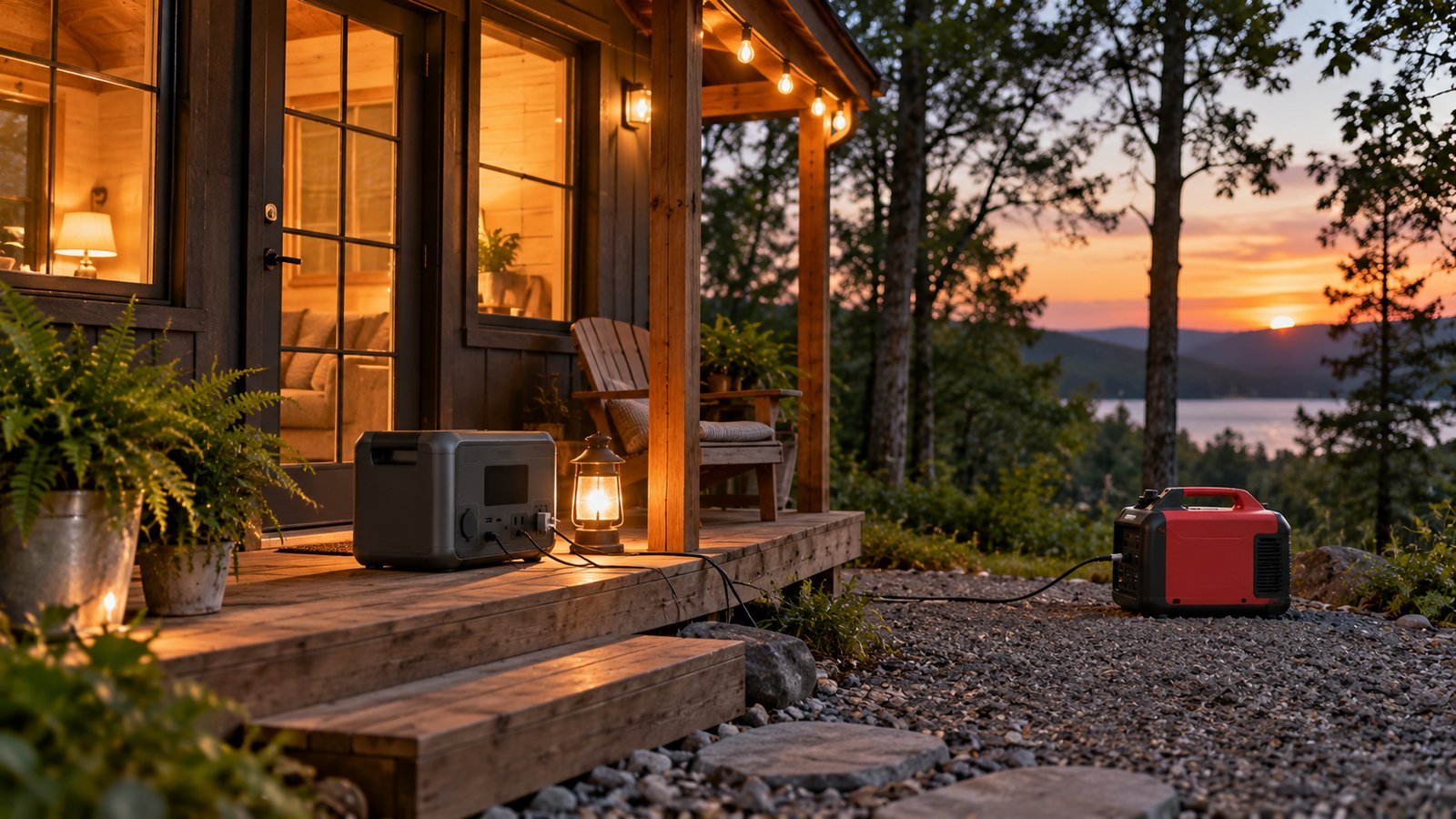
The same comparison plays out outside the home. In an RV or at a campsite, a portable power station runs lights, fans, phones and a CPAP silently and respects campground quiet hours. A gas generator can run an RV air conditioner and microwave through the RV’s 30-amp connection, but many campgrounds limit generator hours, and the same carbon monoxide rules apply: keep the exhaust away from your own and neighbors’ doors, windows and vents.
For off-grid cabins, a permanent solar and battery system is usually the main power source, with a generator as backup for long cloudy stretches. Portable power stations fit in as a handy extra for small loads rather than the core of an off-grid system.

A Decision Checklist
Work through these questions:
- What is your daily watt-hour need and your highest peak wattage?
- Do you have a safe outdoor location at least 20 feet from all doors, windows and vents, and is a generator allowed where you live?
- Do you need to power anything indoors, such as a medical device?
- How long do outages typically last in your area?
- Can you store fuel safely, and are you willing to maintain an engine?
- Is noise a concern for your household or neighbors?
- Could solar panels or a car keep a battery charged?
Answers that point to small loads, indoor use and quiet operation favor a power station. Answers that point to large loads, long outages and a safe outdoor space favor a generator. Mixed answers often point to both.

Frequently Asked Questions
Can a portable power station run a refrigerator?
Many mid-size and larger units can, if the inverter can handle the compressor’s starting surge and the battery is large enough for the hours you need. Check the refrigerator’s running and starting watts against the station’s output rating.
Is it safe to use a power station indoors?
Power stations make no exhaust and are designed for indoor use. Follow the manual on charging, ventilation and storage, keep them away from heat and water, and stop using any unit that is damaged.
How far from the house should a generator be?
The Consumer Product Safety Commission recommends at least 20 feet from the home, with the exhaust pointed away from windows, doors and vents. Never run one in a garage, even with the door open.
Which is cheaper to own, a power station or a generator?
It depends on usage. Generators often deliver more power per dollar upfront but cost money for fuel and maintenance. Power stations cost little to recharge but lose capacity over their cycle life. Compare total cost over the years you expect to own it.
Can I use both together?
Yes. Many households run a generator for a few hours to recharge a power station and cool appliances, then rely on the power station overnight for quiet indoor power.
Can a portable power station replace a whole-house generator?
Not usually. Portable power stations are sized for essential devices. Powering a whole house typically takes a whole-house generator or a large, permanently installed home battery system.
Which is better for an RV, a power station or a generator?
For lights, fans, phones and a CPAP, a power station is quiet and runs inside. For an RV air conditioner or microwave, most people need a generator or very large battery system. Check campground generator hours.
Do I need a transfer switch for a gas generator?
Only if you want the generator to power home circuits. Otherwise, run outdoor-rated extension cords from the generator’s outlets to individual appliances. Never plug a generator into a wall outlet.
Sources: U.S. Consumer Product Safety Commission (Portable Generator Safety; Carbon Monoxide Safety), Ready.gov (Power Outages; Generators), UL Standards and Engagement (UL 2201), Portable Generator Manufacturers’ Association (ANSI/PGMA G300), manufacturers’ published specifications and manuals; Preger et al., Sandia National Laboratories, Degradation of Commercial Lithium-Ion Cells as a Function of Chemistry and Cycling Conditions (2020). Prices and specifications change often; check current product documentation before buying.