Radiation Emergency Safety: Get Inside, Stay Inside, Stay Tuned
This post may contain affiliate links, full disclosure here.
Quick answer: federal guidance for a radiation emergency is “get inside, stay inside, stay tuned.” Go into the nearest sturdy building, ideally brick or concrete, and move to the basement or the middle of the building away from windows. Stay inside for at least 24 hours unless officials tell you otherwise, and follow official instructions through radio, TV, phone alerts or the internet. If you were outside, remove your outer layer of clothing, bag it, and wash with soap and water. Take potassium iodide only if public health officials tell you to.
Radiation emergencies are rare, and that is exactly why so few people know what to do in one. The instinct to get in the car and drive away, or to rush to pick up children, can put people at greater risk. Federal agencies have spent years refining simple, consistent instructions that work for most kinds of radiation incidents.
This guide summarizes guidance from Ready.gov, the Centers for Disease Control and Prevention (CDC) and the U.S. Nuclear Regulatory Commission (NRC). It is part of our apartment emergency preparedness guide. In a real emergency, follow the instructions of local officials.
Sources: Ready.gov, Radiation Emergencies and Nuclear Explosion pages; Centers for Disease Control and Prevention, Radiation Emergencies, “Get Inside, Stay Inside, Stay Tuned,” self-decontamination guidance and potassium iodide (KI) fact sheet; U.S. Nuclear Regulatory Commission, emergency planning zones and backgrounder on emergency preparedness at nuclear power plants; FDA guidance on potassium iodide. Checked October 2026.
Kinds of Radiation Emergencies
Ready.gov and the CDC describe several situations that could release radiation into the environment:
- Nuclear power plant accidents, where radioactive material escapes from a plant
- Radiological dispersal devices, often called dirty bombs, which use conventional explosives to spread radioactive material
- Radiological exposure devices, hidden radioactive sources that expose people nearby
- Transportation accidents involving radioactive materials
- Nuclear detonations, the most severe and least likely scenario
The specific risks differ, but the first protective action is broadly the same: get inside a building and stay there.

Step 1: Get Inside
Buildings block much of the radiation from radioactive material outside. The CDC explains that the walls and roof put distance and dense material between you and the source, which reduces exposure.
Choosing the best spot
Not all shelter is equal. Federal guidance says:
- Brick or concrete buildings offer the most protection.
- Basements or the middle floors of a larger building are better than upper floors or rooms near the roof.
- Stay in the center of the building, away from windows, doors and outside walls.
- Cars are not good shelter. If you are in a vehicle, get into the nearest sturdy building.
For apartment residents, a windowless interior hallway, stairwell or an interior bathroom on a middle floor is often a reasonable choice. In a high-rise, avoid the top floors and the ground floor if better interior space is available. Our guide to sheltering in place explains how to prepare an interior room.
Bring people and pets inside
Bring pets inside if you can do so quickly. Ready.gov advises not to delay sheltering to search for pets that are far away.

Step 2: Stay Inside
The CDC and Ready.gov advise staying inside for at least 24 hours unless local authorities provide other instructions. Radiation levels from fallout drop quickly in the first hours and days, so staying put during the most dangerous period makes a major difference.
Close up the building
- Close and lock windows and doors.
- Turn off fans, air conditioners and forced-air heating units that bring in air from outside.
- Close fireplace dampers.
- Stay away from windows and outside walls as much as possible.
In an apartment building with central ventilation, building management may control the air handling. Follow their instructions and official guidance.
Kids at school, family at work
One of the hardest instructions to follow is to stay where you are when family members are elsewhere. Ready.gov notes that schools and workplaces have emergency plans and that children at school should stay there and follow the school’s plan. Going outside to pick them up can expose you and them to radiation. Stay in touch by phone or text, and reunite when officials say it is safe.

Step 3: Stay Tuned
Official instructions will change as officials learn more about the incident. Stay tuned through:
- Local radio and TV
- Wireless Emergency Alerts on your phone
- Official social media and websites for your city, county or state emergency management agency
- NOAA Weather Radio, which also carries non-weather emergency messages
A battery-powered or hand-crank radio is important because power or cell service could be disrupted. Our guide to emergency alerts and NOAA Weather Radio explains the options.
Officials may tell you to keep sheltering, to evacuate to a specific area or to go to a community reception center for screening. Follow those instructions over general advice.
If You Were Outside: Remove Contamination
If you were outdoors when radioactive material was released, some of it may be on your clothes, skin and hair. The CDC offers clear self-decontamination steps once you get inside.
Remove your outer layer
Taking off your outer layer of clothing can remove up to 90% of radioactive material, according to the CDC.
- Remove outer clothing carefully, pulling it away from your face if possible.
- Put it in a plastic bag or other container, seal it and place it away from people and pets.
- Remove shoes and leave them outside the room or bagged.
Wash
- Shower if possible, using soap and water. If you cannot shower, wash at a sink, or wipe with a damp cloth.
- Wash your hair with shampoo or soap. Do not use conditioner, because the CDC says it can bind radioactive material to your hair.
- Do not scrub or scratch your skin. Keep cuts and scrapes covered while washing.
- Blow your nose and gently wipe your eyelids, eyelashes and ears with a clean, wet cloth.
- Put on clean clothes from a drawer or closet that was not exposed.
If you cannot shower, the CDC suggests wiping exposed skin with a damp cloth or moist wipe, focusing on hands and face.
Helping others
Help children, older adults and people with disabilities decontaminate. Pets that were outside can be washed with shampoo or soap and water while wearing gloves if available, and you should wash your hands afterward.

Potassium Iodide (KI): What It Does and Does Not Do
Potassium iodide is often misunderstood. The CDC and FDA explain that KI can help block radioactive iodine from being absorbed by the thyroid gland. It does not:
- Protect any other part of the body
- Protect against other radioactive materials
- Reverse damage that has already occurred
KI is most useful in specific situations, mainly when radioactive iodine is released, such as in some nuclear reactor accidents. The CDC advises taking KI only when public health or emergency management officials tell you to. It can cause side effects, and some people, including those with certain thyroid conditions or iodine allergies, should talk with a doctor. Iodized table salt and dietary supplements are not substitutes, and they can be harmful in the amounts that would be needed.
Some states distribute KI to residents near nuclear power plants. Check with your state or local health department if you live nearby.
Food, Water and Medicine While Sheltering
During a radiation emergency, the CDC notes that food and water in sealed containers, such as cans, bottles and packaged food, and food in closed refrigerators and freezers are generally safe. Wipe off containers before opening them. Tap water may be safe, but officials will tell you if there are any concerns, and bottled water is the safest choice if you have it.
Avoid food that was uncovered outside, such as garden produce, until officials say it is safe. Keep any needed medications with you in your shelter area.
Shelter supplies
A basic kit for sheltering for a day or more might include:
- Drinking water for each person and pet
- Non-perishable food in sealed containers
- Battery-powered or hand-crank radio and extra batteries
- Flashlights
- Prescription medications
- Phone chargers and a power bank
- Plastic bags, for bagging contaminated clothing
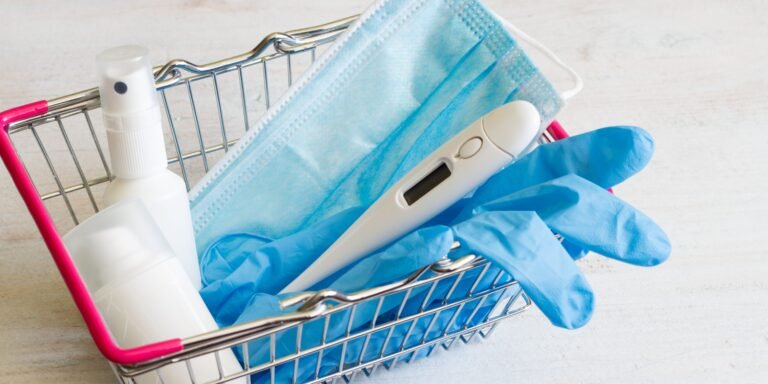
- Moist wipes, for decontamination if water is limited
- A first aid kit, such as the one in our guide to a first aid kit for a small apartment
- Pet supplies

Living Near a Nuclear Power Plant
The NRC requires emergency planning around commercial nuclear power plants. Two zones are defined:
| Zone | Approximate radius | Main concern |
|---|---|---|
| Plume exposure pathway | About 10 miles | Direct exposure and inhalation |
| Ingestion pathway | About 50 miles | Contaminated food, water and milk |
People living within the 10-mile zone typically receive emergency information from the plant operator and local officials, including evacuation routes and how alerts will be sounded, often through sirens. If you live near a plant, read that information and keep it with your emergency supplies.

Nuclear Explosion: Additional Steps
A nuclear detonation is highly unlikely, but Ready.gov offers specific advice:
- Do not look at the flash or fireball, which can cause temporary blindness.
- If outside, take cover behind anything that might offer protection, and lie face down with your head covered.
- Get inside the nearest building quickly, ideally before fallout arrives, and move to the basement or center.
- Stay inside for at least 24 hours unless officials say otherwise.
Fallout is most dangerous in the first hours after a detonation, so getting inside quickly is the most effective action.

Common Myths About Radiation Emergencies
Misinformation spreads fast during any crisis. A few ideas come up again and again:
- “Taking KI protects me from radiation.” Potassium iodide protects only the thyroid, and only from radioactive iodine. It is not a general radiation pill.
- “Duct tape and plastic make a room radiation-proof.” Sealing a room can limit outside air and dust, but distance and dense building materials provide the main protection. The center of a sturdy building matters most.
- “I should leave right away.” Unless officials order an evacuation, sheltering in a sturdy building is generally safer than being outdoors or in a car.
- “Everything in the house is contaminated.” Food and water in sealed containers and closed refrigerators are generally safe, according to the CDC.
- “If I feel fine, I was not exposed.” Officials may ask people from affected areas to go to a reception center for screening. Follow those instructions even if you feel well.

Preparing Ahead as an Apartment Dweller
City residents can do a few things now, before anything happens:
- Pick your shelter spot. Walk through your apartment and building and identify the most interior space on a middle floor, such as a hallway or bathroom without windows.
- Learn your building’s plan. Ask management how the ventilation system is controlled and how residents will be notified.
- Sign up for local alerts from your city or county emergency management office.
- Store a few days of supplies, including water and food in sealed containers, so you can stay inside without needing to shop.
- Talk with family about the plan, including the rule that children stay at school and adults stay at work until officials say otherwise.
- Keep a battery radio where you can grab it during a power outage.
These steps overlap with preparation for other hazards, so the same kit and plan serve many emergencies.

Why Driving Away Is Usually Not the Answer
Evacuation is sometimes ordered, and you should follow those orders. Without them, getting on the road during a release can expose you to radioactive material outside, trap you in traffic and leave you sheltered in a vehicle, which offers little protection. Staying inside a sturdy building until officials provide instructions is generally safer.

Frequently Asked Questions
How long should I stay inside after a radiation emergency?
At least 24 hours, unless local officials tell you otherwise, according to the CDC and Ready.gov.
Should I take potassium iodide?
Only if public health or emergency officials tell you to. KI protects only the thyroid and only against radioactive iodine.
Should parents pick up children from school during a radiation emergency?
Federal guidance says to stay where you are. Schools have emergency plans, and going outside can expose you and your children.
Does removing clothing really help?
Yes. The CDC says removing your outer layer of clothing can remove up to 90% of radioactive material.
Is a car good shelter in a radiation emergency?
No. Cars offer little protection. Get into the nearest sturdy building, ideally brick or concrete.

The Bottom Line
Get inside, stay inside and stay tuned. Choose the center of a sturdy building, close up the space, stay for at least 24 hours unless told otherwise, wash off contamination if you were outside and take potassium iodide only on official advice.