Shelter in Place: What It Means and How to Do It
This post may contain affiliate links, full disclosure here.
You may hear the words “shelter in place” on a weather alert, from a school, or on the radio after a chemical spill. They sound simple, and they are, but people often get the details wrong. Staying inside is not the same as staying home and carrying on. It is a specific set of actions, and the right ones depend on the threat.
What Shelter in Place Means
Ready.gov describes sheltering in place as staying where you are, inside a building, to protect yourself from an outside danger. The danger may be severe weather, a chemical or radiological release, an active threat nearby, or something else. Officials ask you to stay put when going outside is riskier than staying in.
It is different from an evacuation, which tells you to leave. If you are unsure, follow the instructions on official channels: local emergency alerts, the radio, or your city’s website. Our guide on how to decide whether to bug out or stay put covers the thinking behind that choice.
Weather Threats: Go to the Safest Place
For a tornado warning, the National Weather Service advises moving to a small interior room on the lowest floor, away from windows. Basements are best. For high winds from a hurricane, an interior room without windows is the usual advice. For these threats, you do not seal the room; you protect yourself from flying debris and collapse.
For a flood, the right action depends on the type of flooding. Ready.gov says to evacuate if told to, move to higher ground or a higher floor, or stay where you are, depending on what officials advise. Never walk, swim or drive through flood water. Our guide to bugging in covers the supplies that make a long stay at home easier.
Chemical or Outdoor Air Hazards: Seal the Room
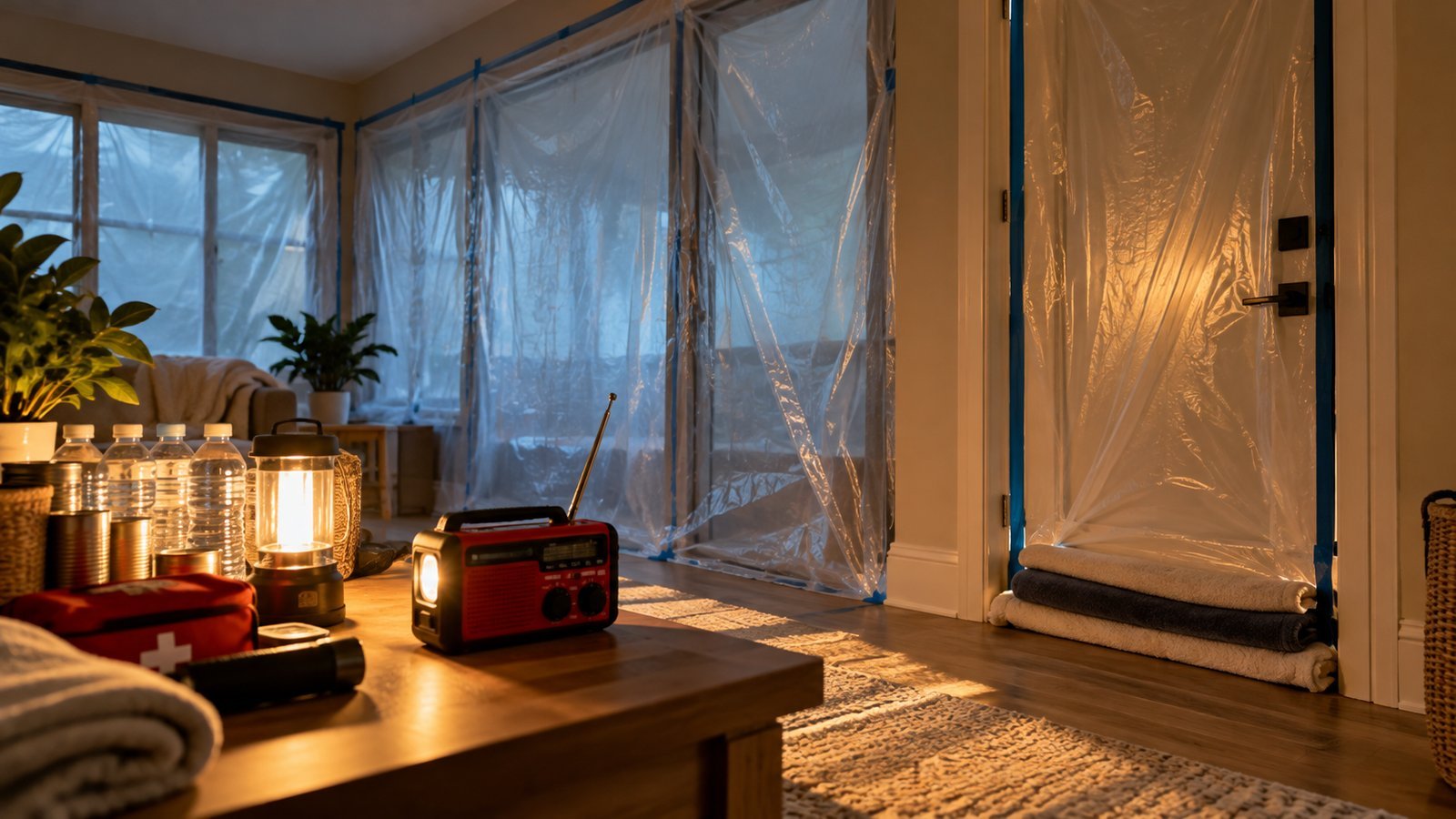
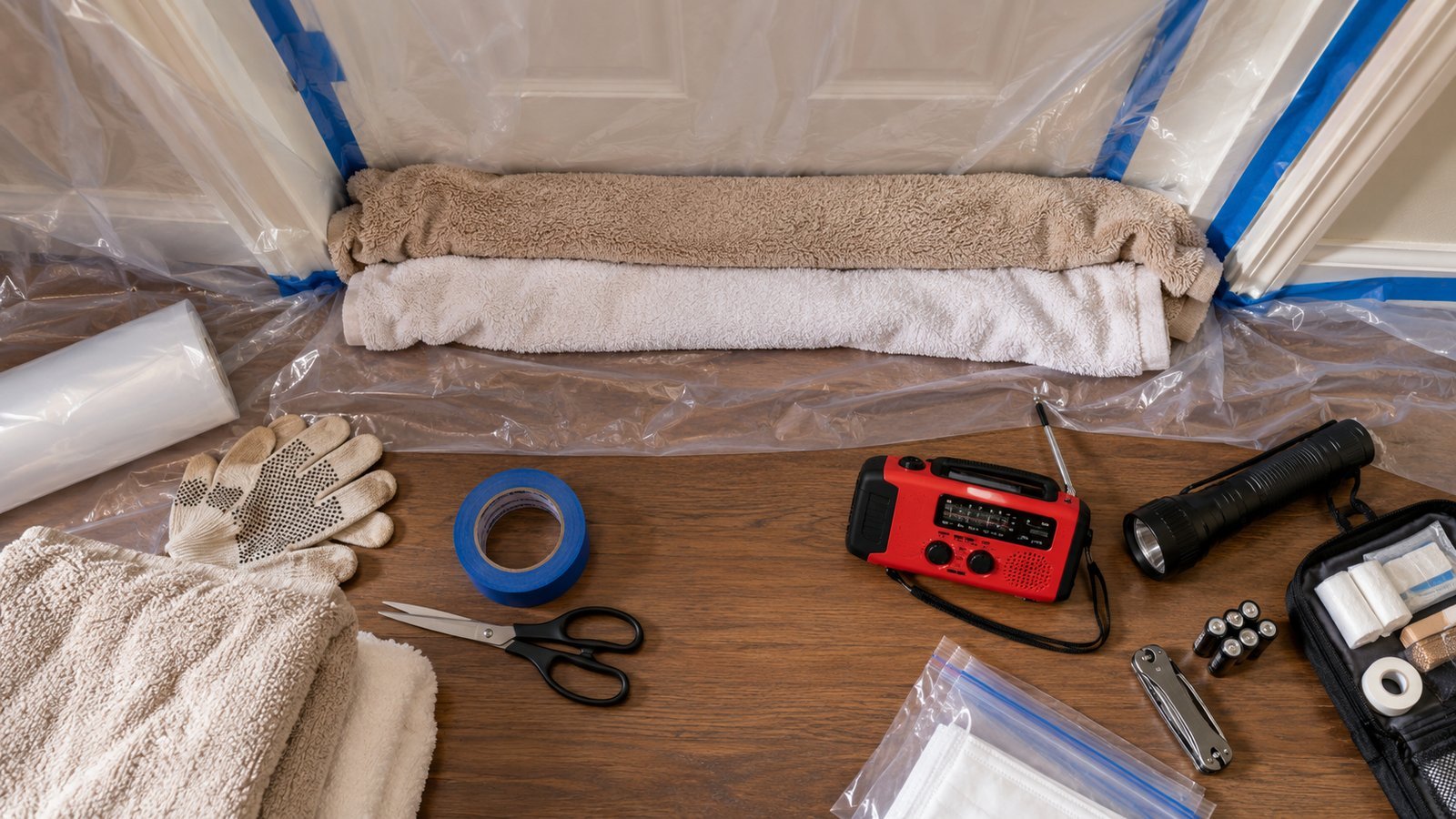
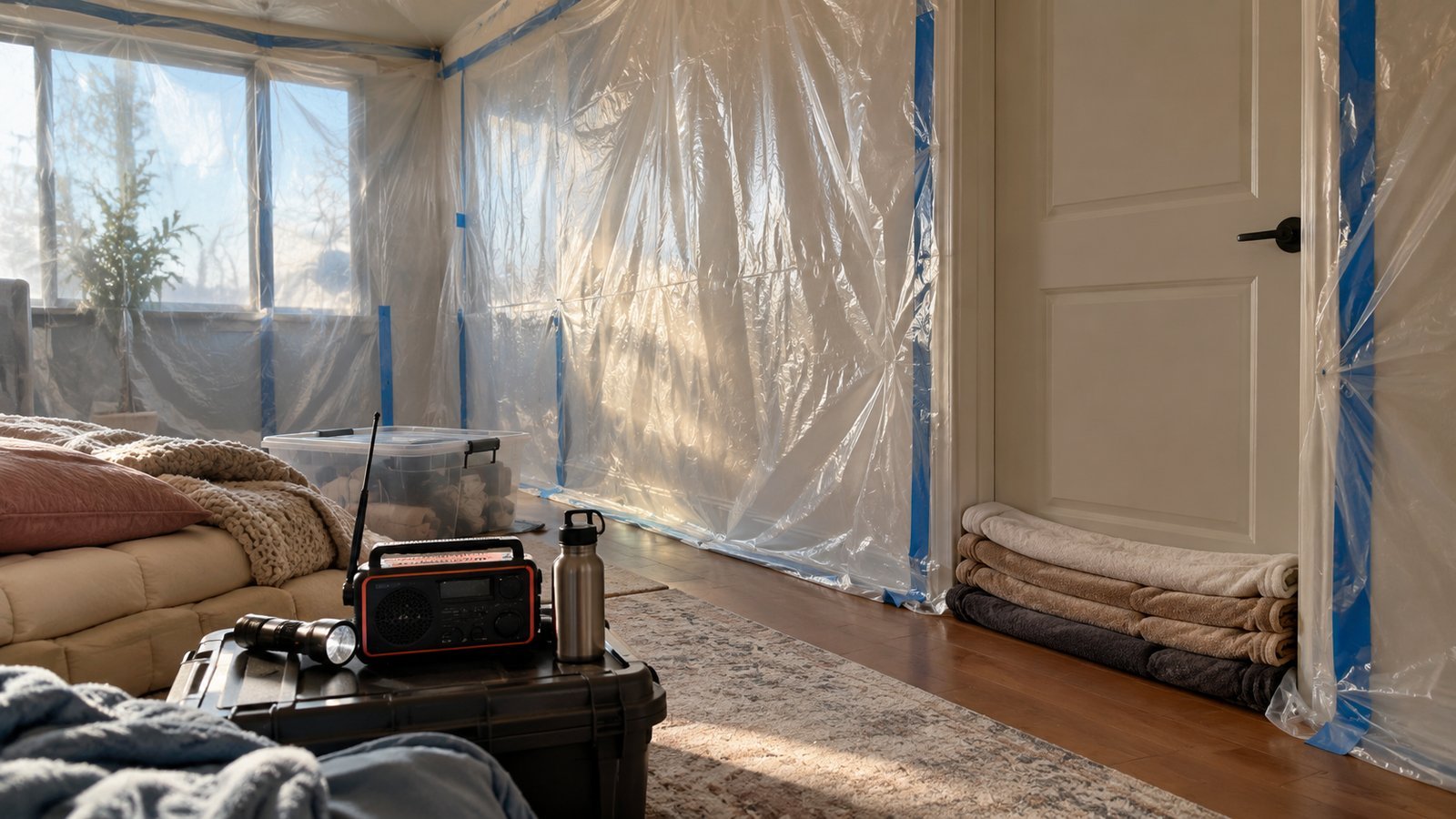
If officials say a hazardous substance is in the air, the advice is different. Go inside, bring your family and pets with you, and lock the doors. Close windows, air vents and fireplace dampers, and turn off fans, air conditioning and forced-air heating. Take your emergency supply kit and go into an interior room with few windows if possible. Ready.gov says you can seal windows, doors and air vents with thick plastic sheeting and duct tape. Cut the sheeting several inches wider than the opening, label each piece, and tape the corners first, then all the edges. Be ready to improvise with what you have to create a barrier between you and any contamination. Do not leave until officials say it is safe, and follow their instructions on when and how to ventilate afterward.
Keep a radio, a phone and your kit in the room. Do not leave until officials say it is safe. When they do, open windows and turn on ventilation to flush out any remaining contaminated air.

Build a Small Room Kit
You do not need much. A few supplies in an interior room will make a few hours, or a day, bearable. Think of it as a small version of the 72-hour kit.
- Water and snacks
- A battery-powered radio and a charged phone or power bank
- A flashlight and batteries
- First aid kit and any medication
- Plastic sheeting, scissors and duct tape
- Wipes, trash bags and a bucket for sanitation if the stay is long
- Blankets and something to keep children occupied

Stay Informed and Stay Calm
Official instructions can change. Keep a radio on and check an official source on your phone, such as local emergency management, the National Weather Service or your city’s alert system. Sign up for local alerts before you need them. Children and pets will take cues from you, so keep a calm voice and a routine. Books, cards and snacks help a long wait.
If you are caught away from home, shelter in the nearest safe building. Do not try to drive through a threat unless told to evacuate.

Common Mistakes
A few come up again and again. People open windows to see what is happening. They leave before the all-clear. They treat sealing a room as more than it is. Ready.gov calls it a temporary protective measure that needs pre-planning, such as keeping plastic sheeting and duct tape in your kit. And they forget pets. Plan for water, food and a place for them to relieve themselves.
Sheltering at Work, School and in Public
You will not always be at home when the alert comes. At work or school, follow the building’s plan and the instructions of staff. Know where the designated shelter areas are before an emergency; employers and schools usually post maps. In a store, restaurant or theater, staff can direct you, but do not be afraid to ask where the safest interior area is. Pay attention to your surroundings and note exits.
If you are driving when a shelter-in-place order for an outdoor hazard is issued, pull into the nearest safe building if you can. Close the windows, turn off the ventilation and listen to the radio if you must remain in your vehicle. For severe weather, as noted above, a vehicle is not a safe place, so move to a building when you can do so safely.

Pets, Medications and Comfort
Bring pets in before the stay begins. Have a litter box or a puppy pad ready and a supply of food and water. Keep medications with you, and any items you cannot do without. A long stay can feel isolating, so keep devices charged, talk with your family, and look after each other’s stress. Children often feel less anxious when they have something to do. A deck of cards, a book or a simple craft goes a long way.
Sleep when you can. Take turns watching the radio. Eat regular meals and drink water if a stay stretches past a day. The calmer and better rested you are, the better your decisions will be when the all-clear comes, or when instructions change.
After the All-Clear
When officials end the order, follow their directions about ventilation and re-entry. Remove the tape and plastic carefully and open windows if you sealed a room. Local authorities may recommend specific steps for cleaning surfaces or checking food and water if there was a chemical release. Wait for that guidance before eating or drinking anything that may have been exposed. Check on neighbors, especially those who live alone or have limited mobility, and restock what you used in your kit.
Sign Up Before You Need an Alert
Most counties and cities run an opt-in notification system that sends texts, calls or emails about local emergencies. Search your city or county name with the words emergency alerts, and register every adult in the household. Check that wireless emergency alerts are switched on in your phone settings. These take five minutes, and they are often the first way you hear that you should go inside. Add the NOAA weather radio frequency for your area to your kit notes.
A Quick Rehearsal
Pick a room today. Stand in it and ask what is missing: a radio, a light, a charger, water. Put those things in a small bin and leave it there. Next, tell everyone at home which room it is, and let kids practice walking there with their eyes on you, not on a screen. Ten minutes of rehearsal is plenty.
Different Hazards, Different Rooms
The right room depends on the hazard. For a tornado or severe windstorm, you want an interior room on the lowest floor, away from windows. For a chemical release outdoors, Ready.gov says to choose an interior room with few windows if possible, and local officials will tell you if a particular floor is better for that substance. For other threats, such as a radiological event or an active threat nearby, the right action depends on the event, and the instructions come from officials and law enforcement. Do not rely on a general rule.
This is why official information matters. The details change with the event, and authorities see the whole picture. Remember to go indoors and listen if you only remember one thing.
Air, Ventilation and Dust
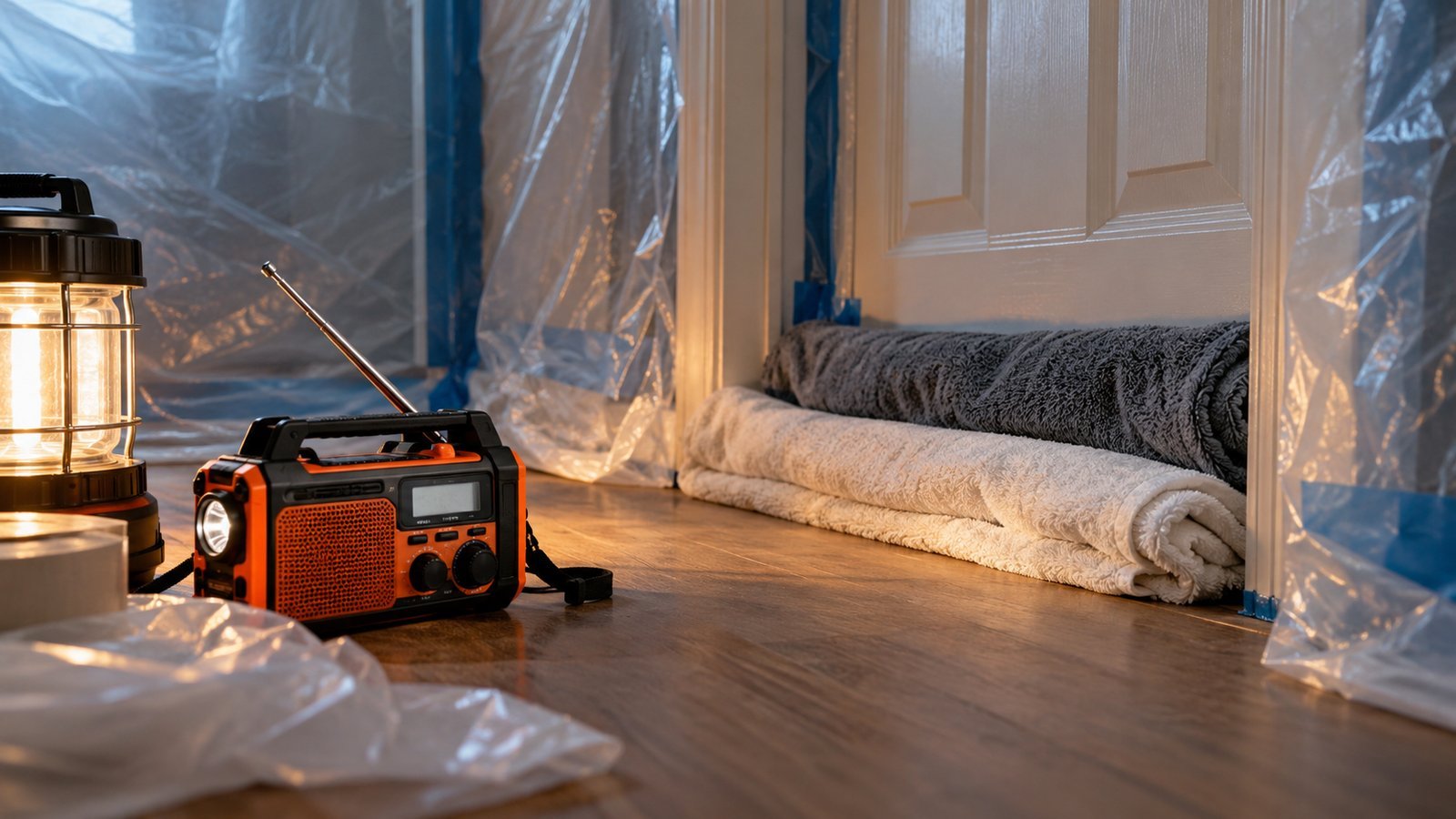
Closing off ventilation reduces the amount of contaminated air that enters if the threat is outdoor air. Turn off the HVAC system, close vents where you can, and shut exhaust fans. Seal gaps under doors with damp towels. Dust masks do not protect against chemicals but may help with dust and debris; the right respirator depends on the hazard, and officials will say whether one is needed.
Wildfire smoke is a related hazard. When air quality is poor, health agencies advise staying indoors with windows and doors closed, so check your local air quality alerts. Ready.gov also says that large amounts of debris in the air, or word from authorities that the air is badly contaminated, are signs that sheltering in place may be the right call.
Water, Food and Waste During a Longer Stay
If a stay may last a day or more, plan for the basics. Keep water for drinking and sanitation: at least a gallon per person per day. Eat foods that need no cooking. Do not use a gas stove for heat. For waste, a bucket with a trash bag and some kitty litter or similar absorbent material works as an emergency toilet. Wash hands with soap or use hand sanitizer afterward. Our water storage guide covers how to store and treat water for longer events.
Keep communication open. Text a family member to say you are safe, then conserve battery. Establish a time to check the radio each hour and rotate the job among adults so one person is not up all night.
Helping Others Safely
A phone call or a knock on the door can wait until it is safe unless someone is in immediate danger, in which case call emergency services if neighbors need help. Do not go outside into a hazard to check on others. After the all-clear, offer help carrying supplies or checking on anyone who lives alone. Communities that look after each other recover more quickly, and that starts with knowing who is nearby.
Why People Hesitate, and What to Do Instead
Many people hesitate when an alert arrives. They want to check on a relative, finish an errand or see for themselves. That is human, but it is also how people get hurt. The instruction to take shelter is usually based on information about timing and location that you do not have. Treat it the way you would treat a smoke alarm: act first, ask questions later.
Send a short text if you must contact someone. Remember that they are probably also being told to take shelter if you are worried about a family member in another place. Schools generally keep them inside and will contact parents through their notification system, and arriving at the school can complicate the response if children are at school. Trust the plan you made in advance, which is the reason to make it.
Building a Habit of Checking Alerts
Keep your phone’s emergency alerts switched on and pay attention to them. When a notice arrives, read it fully. Alerts typically name the hazard, the area and the recommended action. Do so immediately, then look for follow-up details from your local emergency management agency, the National Weather Service or local news if one tells you to shelter in place. Keep a notebook or a note on your phone with the names of official accounts to follow so you do not have to search under stress.
Frequently Asked Questions
How long do I stay sheltered?
Until officials say it is safe. For many events that is a few hours. Do not leave on your own judgment.
Should I seal every window?
Only if told a hazardous substance is in the air. For a tornado or high wind, sealing is not the goal.
Can I shelter in my car?
Only if there is nothing else nearby, and only for certain events. For tornadoes, a sturdy building is much safer than a vehicle.
Where do I get alerts?
Sign up for your local alert system, use a NOAA weather radio, and enable wireless emergency alerts on your phone.