
How to Prepare for a Power Outage in a High-Rise
This post may contain affiliate links, full disclosure here.
A blackout in a house is an inconvenience. A blackout in a high-rise adds a few problems that people do not think about until they are standing in a dark hallway on the 18th floor. Elevators stop. Water pumps that push water up the building may stop too. Stairwells are dim. And if the outage is part of a larger event, building staff may be stretched thin.
You cannot fix these things, but you can plan around them. Here is what to think about, in the order you will likely meet it.
First Hour: Get Oriented
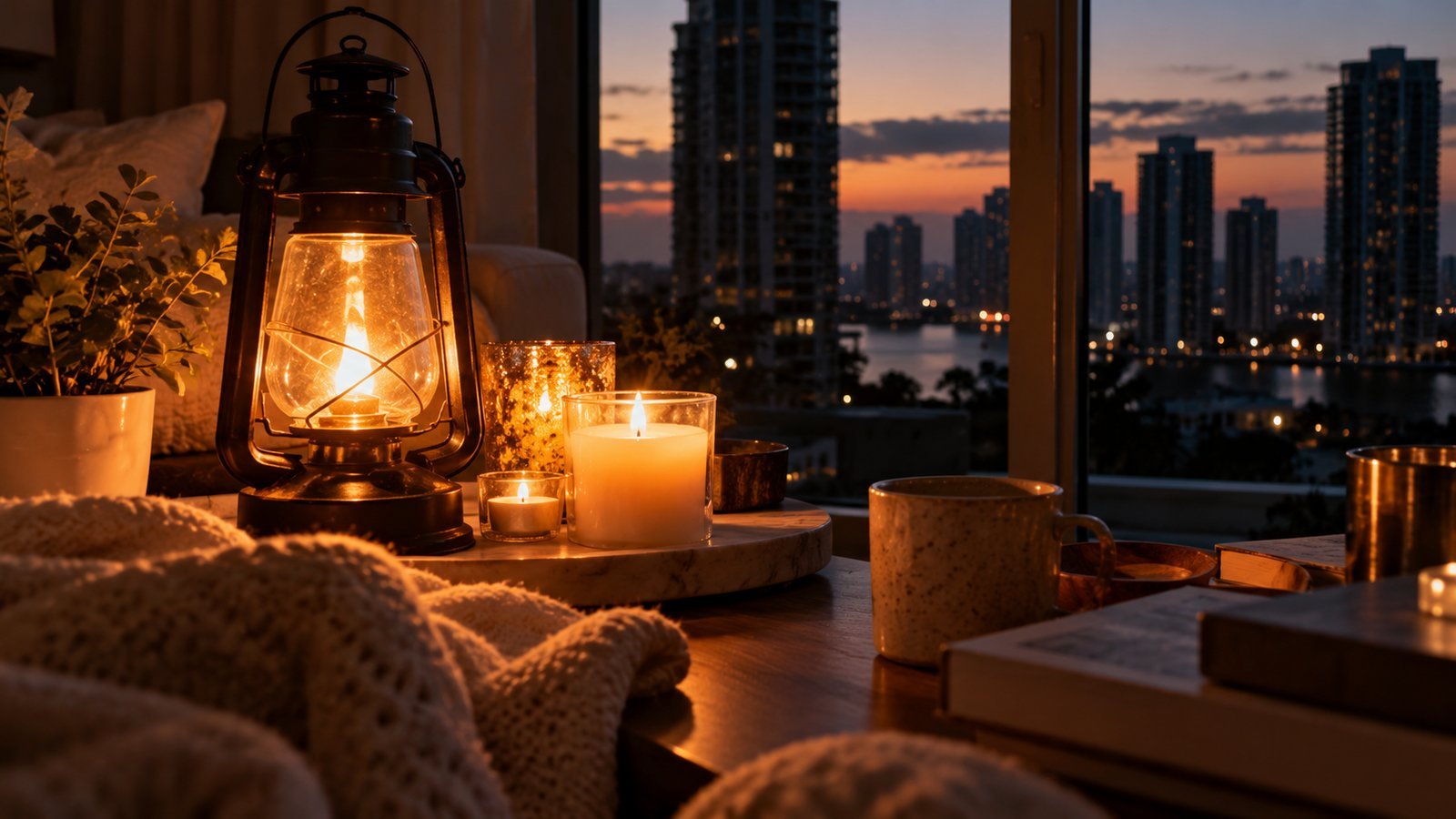
Check whether the outage is only your unit, such as a tripped breaker, or the whole building. Look out the window or ask a neighbor. If it is wider, report it to your utility rather than assuming others have. Then switch to battery light, put phones on low-power mode and unplug sensitive electronics so a surge when power returns does not damage them. Leave one lamp switched on so you notice when it comes back.
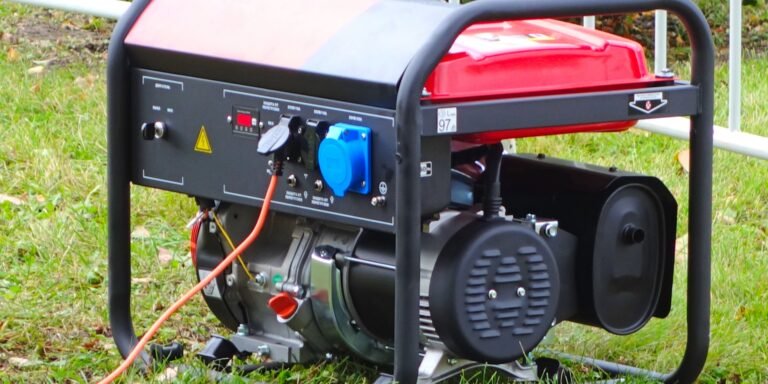
Do not use a gas stove or oven to heat your home, and keep grills, camp stoves and generators outdoors. Ready.gov and the CDC warn that carbon monoxide, a colorless, odorless gas, can poison a household without warning, and Ready.gov says fuel-burning equipment belongs at least 20 feet from windows. Our guide to winter power outages explains safer alternatives.
Elevators and Stairs
Some buildings have backup power for an elevator or two, but you should not count on it. Expect to use the stairs, and plan who can and cannot. Residents who use wheelchairs, have mobility limits, or carry small children need a plan in advance. Tell your building management in writing if you need assistance, and ask what their procedure is. Some cities keep voluntary registries of residents who may need help during emergencies, so check with your local emergency management office.
If you are caught in an elevator when power fails, stay calm, use the emergency call button or phone, and wait for help. Do not try to pry the doors or climb out.
Practice the stairs once, in daylight, with your flashlight. Count the floors to the lobby and note any locked doors. Many stairwell doors lock from the stairwell side, which can matter if you walk down and cannot re-enter. Ask building management how that works.

Water, Toilets and Cooking
In taller buildings, water is often pumped to rooftop tanks or boosted by pressure pumps. In a long outage, supply to upper floors can drop or stop even when the city main is fine. Store water before you need it. A bathtub filled in advance gives you buckets of non-drinking water for flushing, which is done by pouring water into the tank or bowl. Our article on storing emergency water covers drinking supplies.
For food, lean on your pantry. Eat refrigerated items first, then freezer items, and keep the doors closed. Food safety guidance from the USDA says a refrigerator keeps food safe for about four hours if the door stays shut, and a full freezer for about 48 hours (24 if half full). Throw out perishable food that has been above 40 degrees F for more than two hours. For cooking, choose foods that need no heat.

Heat, Cooling and Comfort
In winter, close curtains at night, wear layers and gather in one room. In summer, heat can become dangerous faster than people expect, especially on upper floors. Move to the coolest room, drink water, wear light clothing and check on older neighbors. If you or someone nearby shows signs of heat illness, call for help. The CDC lists symptoms such as heavy sweating, dizziness, nausea and confusion.

Stay Informed and Connected
Cell towers can be overloaded or lose power. Text messages often get through when calls do not. A battery radio gives you official updates. Agree on a family contact plan ahead of time and keep a paper list of important numbers. If the outage drags on and stores are affected, our guide on surviving a food shortage may help.
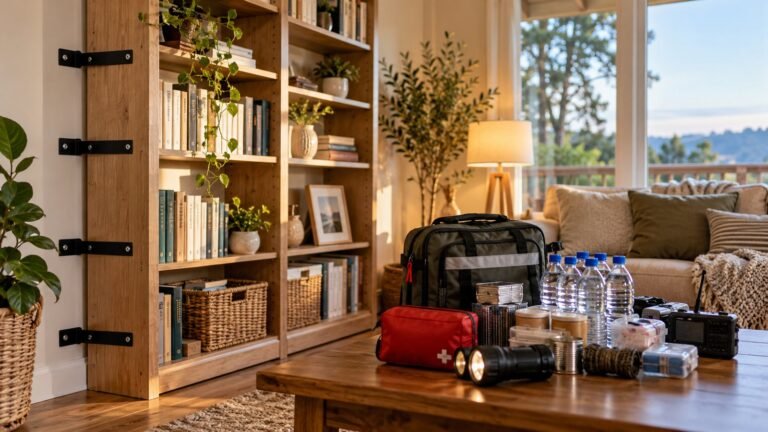
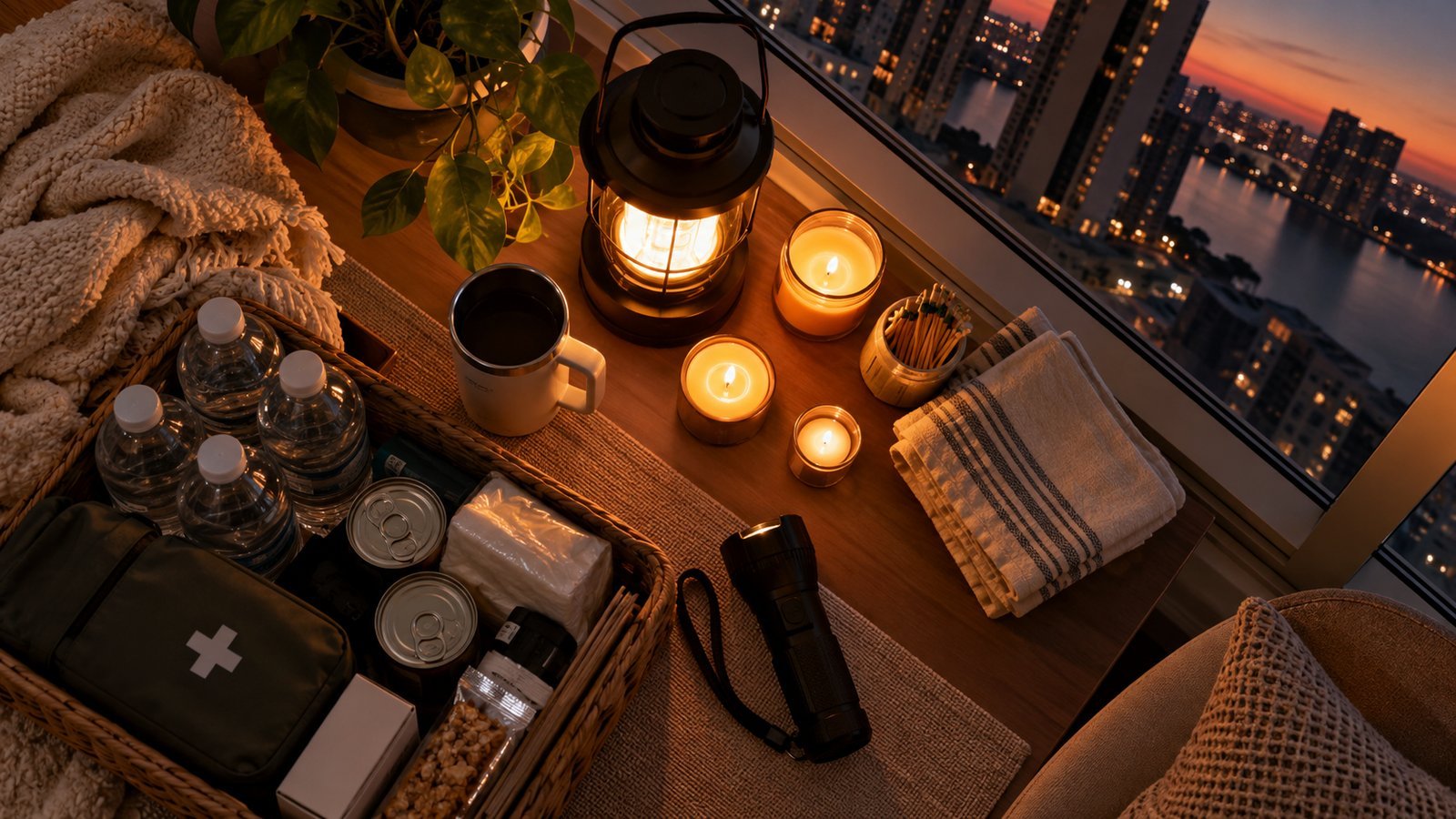
- Headlamps and battery lanterns on every floor of your unit
- A charged power bank and cables, plus a car charger if you have a car
- A battery or hand-crank radio
- Water for drinking and a way to flush toilets
- Shelf-stable food and a manual can opener
- Medications, with a few days of extras
- A paper list of numbers and a plan for who checks on whom

Know Your Neighbors
People in tall buildings can live inches from each other without ever exchanging names. In a blackout, that changes quickly. Make a point of knowing the people on your floor, especially anyone who lives alone or who needs help. Trade phone numbers. Agree who checks on whom. It takes five minutes and it is the best preparedness tool in the building.

Security and Safety Inside the Building
When the lights go out, ordinary building security can change. Electronic door locks may fall back to a manual setting, intercoms may stop, and parking gates may open or stick closed. Ask your property manager what happens in a blackout. Keep your door locked, and let a neighbor know if you plan to leave. Do not prop stairwell doors open, because they may be fire doors that protect the escape route.
Fire safety matters more in the dark. Test your smoke alarms; many are hard-wired with a battery backup, and the backup battery should be replaced once a year, or as the maker directs. Keep a flashlight beside the bed and shoes where you can find them. Know two ways out of your unit and floor, and never use an elevator during a fire.
Plan for Different Lengths of Outage
A two-hour outage and a three-day outage are not the same problem. For a few hours, you need light, patience and a charged phone. For a day, add water, food that does not need cooking and a plan for temperature. For several days, you must consider sanitation, medication that needs refrigeration, and whether staying in the building is safe. A friend’s house or a public cooling or warming center may be the better choice if the outage is long and the weather is extreme. Cities usually announce those on official channels.
Keep your pantry stocked with foods you can eat cold. Our list of canned foods to stock for emergencies is a good place to start.
A Simple Checklist for Your Unit
Spend twenty minutes this weekend walking through your apartment as if the power had just gone out. Where is the flashlight? Can you find it with your eyes closed? Is your phone charger within reach, and is there a power bank that is actually charged? Is there water in the cabinet and a manual can opener in the drawer? Each gap you notice is a small fix now. Write the fixes on a sticky note and clear one a day. Most households can close every gap in a week without spending much.
Medications, Medical Devices and Health
Such as oxygen concentrators, nebulizers or powered mobility devices, talk to the provider about backup options if anyone in your home relies on electrically powered medical equipment. Ask how long a battery lasts and what to do when it runs out. Many equipment suppliers have emergency instructions. Register with your utility as a medical-needs customer if that program exists in your area, and note that priority listing is not a guarantee of restoration.
Medicines that need refrigeration, such as insulin, require specific guidance. The FDA and manufacturers publish how long particular products remain usable at room temperature. Ask your pharmacist ahead of time. Keep an insulated bag and ice packs ready, and keep a list of medications and doses with you. Do not guess about medicine safety in a long outage; call the pharmacy or your doctor when you can.
Getting Through the Night
Nights are the hardest part. A building that is quiet and dark may feel unsettling, and temperatures can swing. Prepare a sleeping setup before dark falls: bedding for the weather, a flashlight within arm’s reach, and a plan for a bathroom trip. Keep phones charged by dimming screens and closing unused apps. Stay away from windows if the outage is part of a storm.
Do not use a gas range or oven to warm your apartment, and never burn charcoal inside. These practices are involved in many carbon monoxide poisonings. Check them if your building has battery-powered carbon monoxide alarms. Follow the manufacturer’s instructions and keep it outdoors and away from windows and vents if you use any fuel-burning equipment in an emergency.
Children, Older Adults and Pets
Children handle outages better when the adults around them are calm. Turn it into a quiet evening: flashlight games, board games, stories. Keep a few special snacks in the kit. For older adults, check in often, make sure they have light and medicines, and help them with stairs. For pets, keep water bowls full, and take dogs out with a light and a leash. Remember that long stair trips are hard on small and elderly animals if you live in a high-rise.
What to Do When Power Returns
Wait a few minutes before plugging everything back in. Power can flicker on and off as the grid stabilizes, and surges can damage electronics. Turn on appliances one at a time. Check the fridge and freezer and use the USDA rules to decide what to keep. Reset clocks and alarms, restock your supplies, and write down what worked and what did not. That note is the most valuable part of the whole experience. Add a line to your next shopping list for the items you wished you had if you have a few extra minutes.
Talking to Your Building Management and Landlord
Management knows things you do not. Ask a few direct questions this month. Does the building have a generator, and what does it power? How long can it run on its fuel? Where do residents gather in an evacuation? How will management communicate during an outage, and who can residents with medical needs call? Are there rules about what you may leave in hallways or on balconies? Are there any plans to keep common-area lighting on?
Write down the answers and share them with your household. Say so politely and offer to help draft a one-page plan if management has no answers. Many property managers are glad to get one. Raise the issue at the next board meeting if you live in a condo or co-op. A building where residents have exchanged numbers, know the stairwells and keep a small kit is a more resilient building for everyone, including people who never read a preparedness guide.
Summer and Winter Differences
The season changes the risk. In winter, a high-rise with sealed windows can hold heat for a while, but it cools faster than many people expect once the heating stops. Layers, blankets and a single room to gather in help a lot. In summer, a sealed building can heat up quickly. Close blinds on sunny sides, open windows on opposite sides if it is safe to create a cross-breeze, and keep water on hand. Go to a cooling center or a friend’s home rather than waiting it out if the temperature becomes dangerous. Older adults, infants and people with chronic illness are most at risk. Check on them early and often.
Frequently Asked Questions
Will my building have backup power?
Many have emergency generators for stairwell lights, fire pumps and some elevators, but not for apartments. Ask your building manager exactly what is covered and for how long.
Is it safe to use the stairs in the dark?
Use a headlamp, hold the rail and go slowly. Emergency lighting in stairwells is usually battery-powered and may last a limited time.
Can I use my car to charge my phone?
Yes, if the car is outdoors or in a well-ventilated space. Never run an engine in an enclosed garage because of carbon monoxide risk.
How long can food stay in the fridge?
USDA guidance is about four hours if the door stays closed. A full freezer holds for about 48 hours.