How to Make a Family Emergency Communication Plan
This post may contain affiliate links, full disclosure here.
Quick answer: a family communication plan answers four questions before a crisis hits. Who do we call? Where do we meet? How do we reach each other if phones fail? And what does each person do in a specific emergency? Write the answers on a card, put a copy in every bag and practice it.
When an emergency happens, family members are often in different places: work, school, the gym, a bus. Phone networks can clog, and in a bad storm they can fail. A plan means nobody has to guess. Ready.gov, FEMA and the Red Cross all recommend making one before you need it, and their guides use similar steps.
Step 1: Collect Contact Information
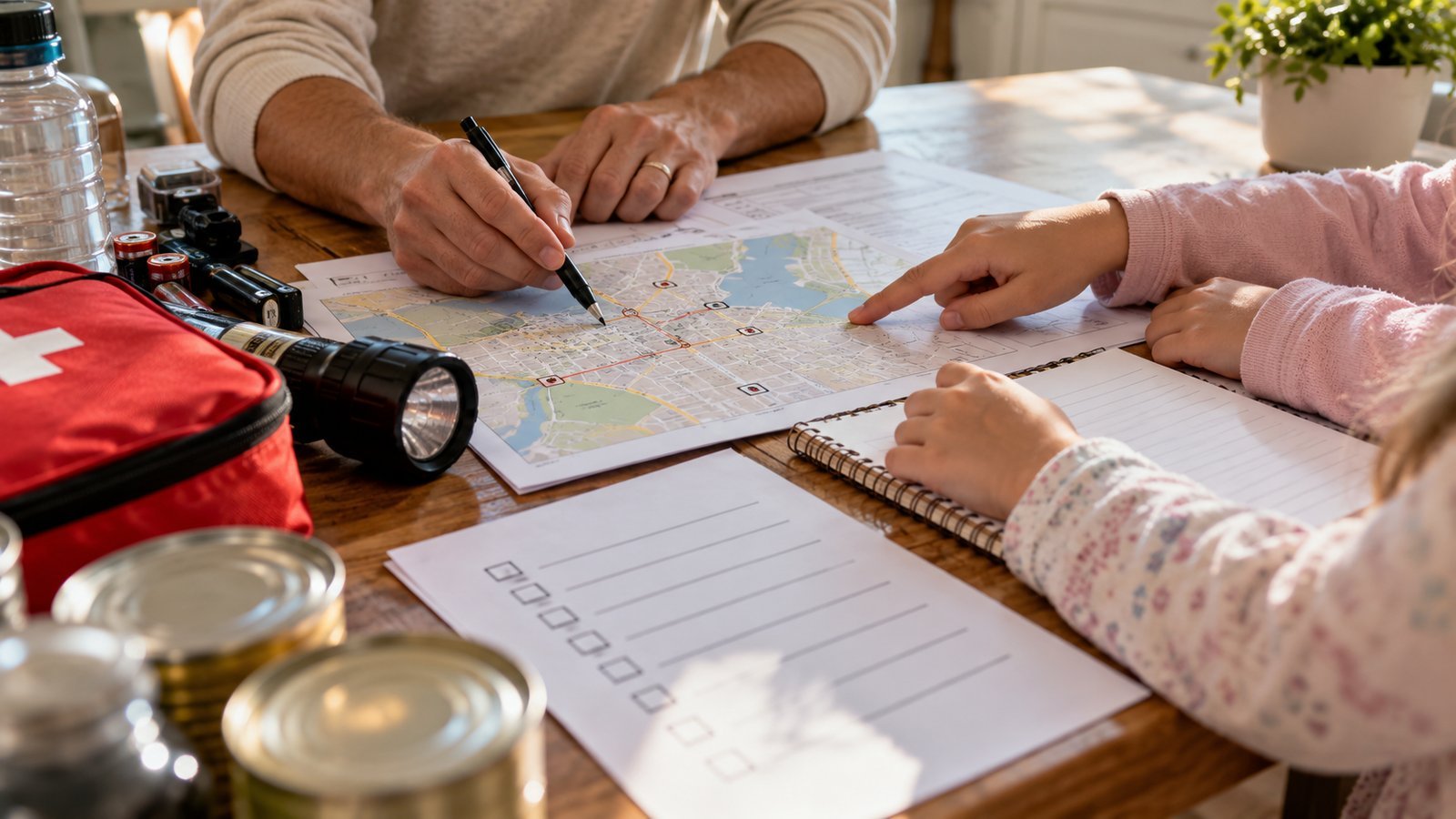
Write down phone numbers, email addresses, workplaces, schools and any medical details for each family member. Include a neighbor you trust and a doctor. Store the list on paper because phones die and passwords get forgotten. Put a copy in your wallet, your go-bag and your child’s backpack. Our 72-hour kit checklist reminds you to include documents too.
Kids who cannot yet read a phone can carry a laminated card with an adult’s number. It should stay in the same pocket or zipper every day.
Step 2: Choose an Out-of-Town Contact
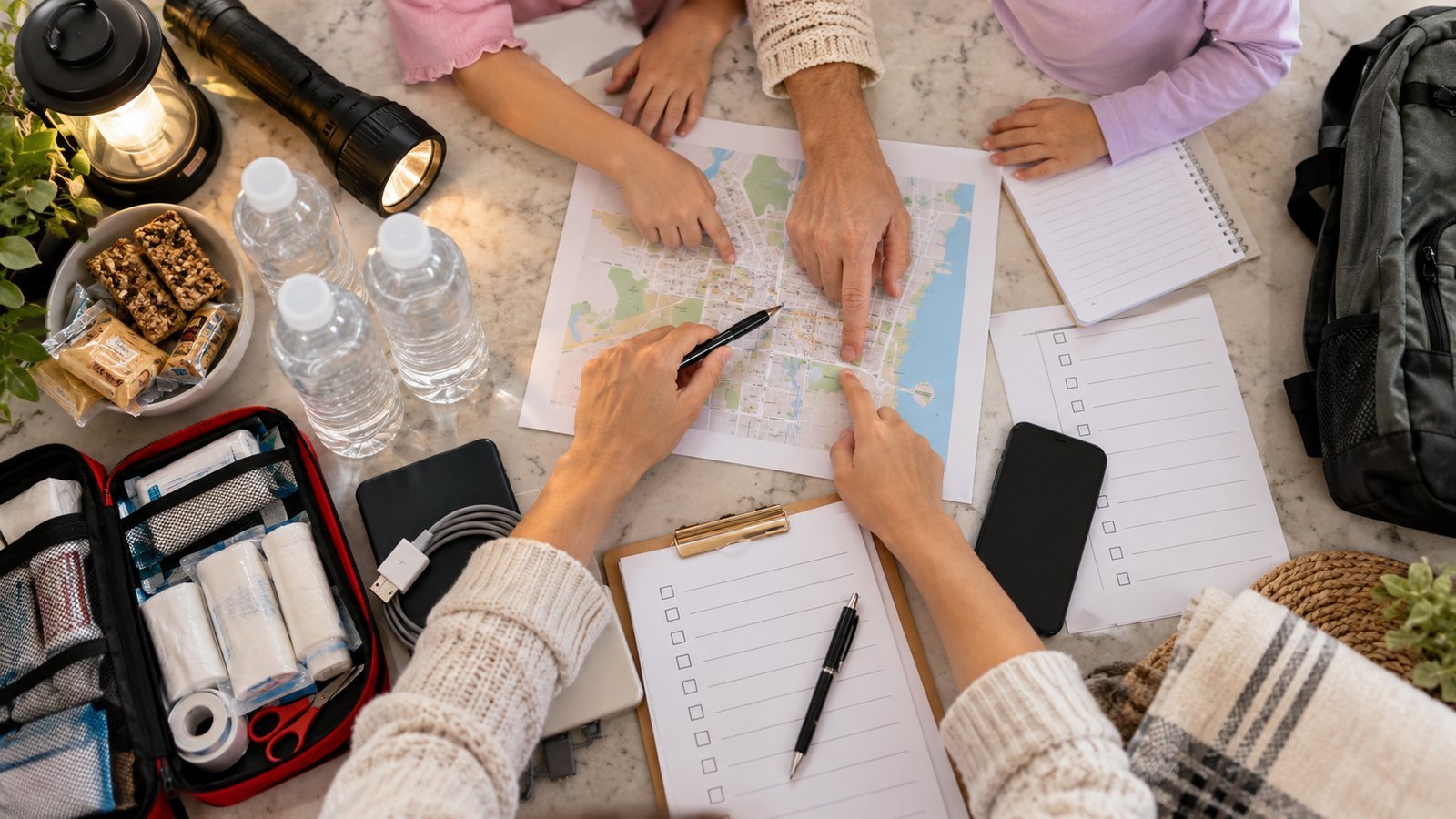
Local lines can be jammed while a call to another area still goes through. Pick a relative or friend outside your region and ask them to be the family hub. Everyone checks in with them, and they relay messages. Make sure each person has the number saved and written down.
Texts use less bandwidth than calls and often get through when calls do not. Teach everyone, including grandparents, to send a short text such as “I am safe at the school”. Keep voice calls short to free up the network.
Step 3: Pick Meeting Places
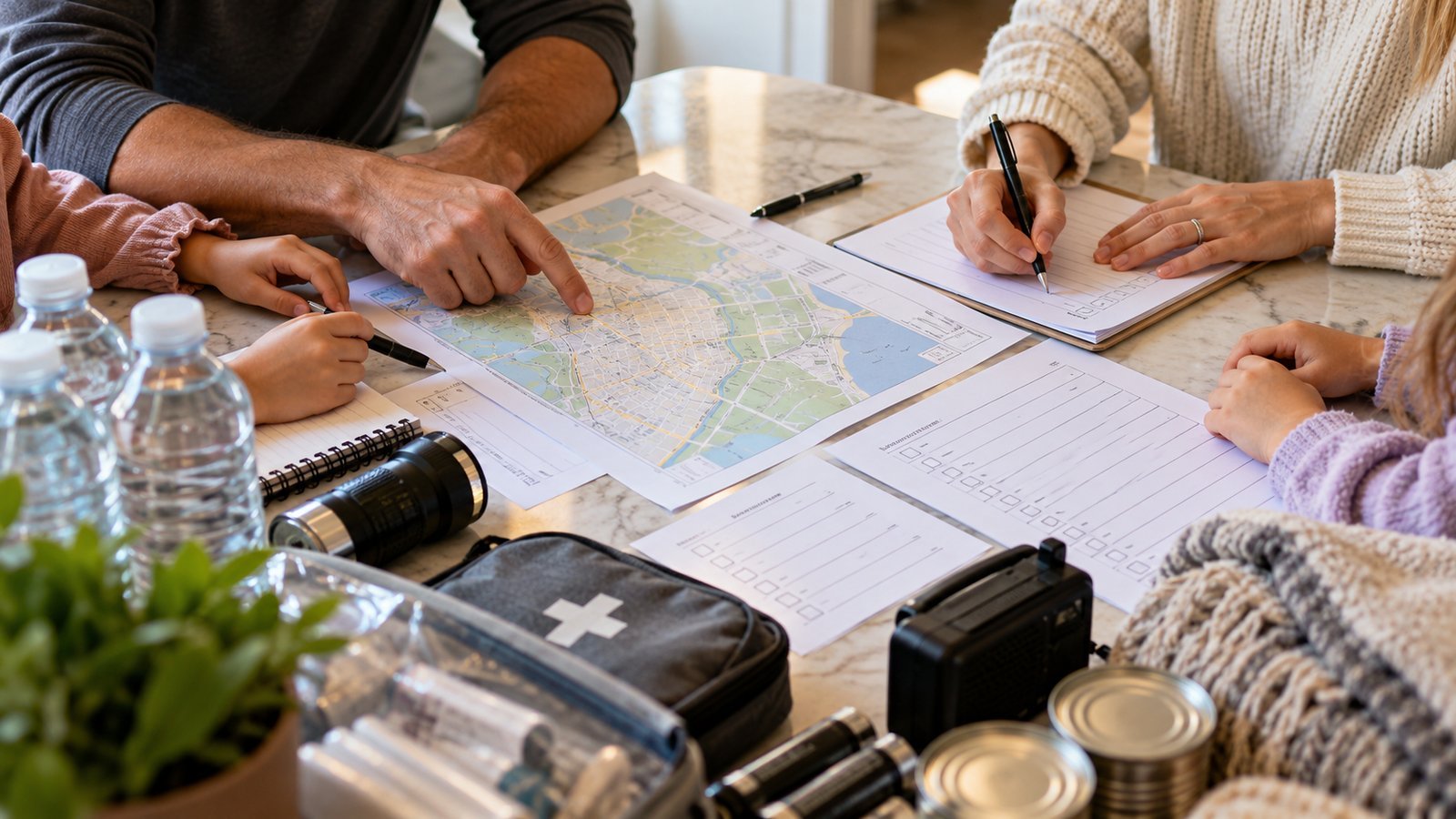
Choose at least two places: one right outside your home, for sudden problems like a fire, and one in your neighborhood in case you cannot return home. A third location outside your area helps for large evacuations. Pick spots that are easy to find, such as a library, a place of worship or a friend’s house. Walk to each one together so the route is familiar.
- Right outside the home, such as the mailbox or a specific tree
- A neighborhood spot within walking distance
- A regional spot outside the area, with a route that avoids main highways
Step 4: Plan for School, Work and Special Needs
Ask schools and daycares how they will notify parents, where kids go in a lockdown or evacuation, and who may pick them up. Make sure your emergency contacts are up to date. At work, find out whether your employer has a plan and how it will contact you.
If someone in your family has a disability, uses medical equipment, or needs help moving, build the plan around that. Share it with neighbors who might help. For older relatives, check our checklist for medical supplies and medications.

Step 5: Decide Who Does What
Give every person a job, even small ones. One grabs the go-bags, one gathers the pets, one shuts off utilities if safe. When roles are clear, people act faster and fight less. Children can be given a simple job, like carrying the flashlight or the pet’s leash.

Step 6: Practice
Run a short drill twice a year. Pick a scenario, such as a fire at night, and walk through the plan. Where would you go? Who would you call? What would you grab? Afterwards, ask what did not work and fix it. A plan that stays in a drawer does not help anyone. Our guide to the bugging in decision gives you a second scenario to talk through.
Keep the plan current. Update it after a move, a new job, a new school, or a change in health. Review phone numbers whenever you review your kit.
What to Put on Your Family Emergency Card
A wallet card works better than a long document. Keep it short enough to read in a hurry, and write it in pen so it does not fade. Include the following.
- Each person’s name, mobile number and email
- The out-of-town contact’s name and number
- The home address and the nearest cross streets
- Meeting places, with addresses
- Medical needs, allergies and key medications
- Doctor, pharmacy and insurance numbers
- School and workplace phone numbers
- Any pets, and the vet’s number
Take a photo of the card and keep it in a favorites album on each phone. Print one for each bag. When someone changes jobs or schools, update it the same week.

Using Technology Without Depending on It
Apps and group chats make coordination easy on a normal day. In an emergency, they might be slow or unavailable, and a dead battery ends the conversation. Use them, but treat them as a bonus. Turn on location sharing with family members you trust if that suits your household, and test it before you need it. Download offline maps of your area. Consider a small power bank for each person, and teach everyone how to put a phone in low-power mode.
Social media can help during large disasters, because authorities and relief groups often post updates there, and the Red Cross has offered ways in past disasters for people to let relatives know they are safe. Use official accounts rather than rumors. Share only what you know to be accurate, and avoid posting the location of people who may be in danger.
Special Situations to Plan For
Think through the days that are not typical. What if the kids are with a babysitter, or a grandparent, when something happens? What if you travel for work? What if the emergency is a house fire, and you are all at home and need to meet outside? Walk through each scenario for five minutes. You will find gaps, and they are easy to fix when no one is panicking. For a deeper look at the home-or-leave decision, see our guide to bugging out or staying put.
Keep the Plan Simple Enough to Remember
The best plan is the one a ten-year-old can recite and a stressed adult can follow. If yours runs to three pages, shrink it. Aim for three things everyone memorizes: the out-of-town contact’s number, the first meeting place and the second one. Everything else lives on the card. Repeat them at dinner now and then, and ask the youngest family member to say them back. That small habit turns a document into a reflex.
Plans for Different Emergencies
One plan does not fit every event. A house fire calls for a quick exit and a meeting place outside. A tornado calls for a shelter spot inside the home. A wildfire or hurricane may require evacuation, with a route and a destination. A long power outage may mean staying put and checking on neighbors. Write a line or two for each hazard that is likely where you live. The Ready.gov website lists hazard-specific guidance, and your local emergency management office can tell you which events matter most in your area.
For each hazard, decide whether you stay or go, who makes that call and how you will tell the rest of the family. If parents or caregivers are away, who is the backup decision-maker? Put that name on the card. Spell out when a child should leave a place on their own and when they should wait for an adult. Clear rules reduce panic.
Neighbors, Caregivers and Community Help
Your plan should not depend only on your family. Neighbors are often the first people able to help. Exchange numbers with two or three of them and share key information, such as who has medical needs and where the shutoff valves are. If you have a babysitter, a home health aide or a dog walker, give them a copy of the plan and tell them what to do if an emergency occurs on their shift.
Build a plan for them too if you are a caregiver for an older adult who lives somewhere else. Who checks on them? Where will they go if they must leave? Do they have transportation? Do they have a week of medication? Many community organizations, including local aging services, can help with planning.
Pets and Livestock Belong in the Plan
Include animals in every part of the plan. Most public shelters do not allow pets, though service animals are generally permitted, so research pet-friendly options before you need them: hotels, boarding facilities, veterinary clinics and friends outside the area. Keep vaccination records with the family documents and make sure pets have ID tags and microchips with current information. Our guide to the bug-out bag reminds you to pack pet food and medicine too.
Money, Insurance and Practical Matters
A communication plan also covers practical details. Who has access to bank accounts if one adult is unreachable? Where are insurance policies and the lease or deed? Does someone have a spare key? Does your out-of-town contact know where you would go? Take care to store sensitive information securely, and share it only with people you trust. Write down your landlord’s emergency number if you rent.
Finally, keep a small amount of cash, a physical map of your area and a list of local shelters or places to stay. These are the pieces that fall apart first when technology fails, and the cheapest to prepare.
A Simple Weekend Plan to Get It Done
Most families never finish this because it seems big. Split it into small pieces. On Saturday morning, sit at the table with a blank card and fill in the contacts. Choose the out-of-town contact together, then call them to ask if they are willing. After lunch, pick the two meeting places and walk to the nearer one. On Sunday, make copies of the card for wallets, backpacks and bags, and take the photo for each phone. End with a ten-minute practice: pretend the power is out, and everyone says what they would do.
That is about three hours spread over two days, and most of it is conversation. Put a reminder in your calendar six months out to review. Fix the card that week if something changes sooner. A plan is only as useful as it is current, and the habit of updating it matters more than getting it perfect the first time.
Questions Families Often Ask
Parents often wonder how much to tell young children. A good rule is to be honest and brief. Explain that sometimes bad weather or other emergencies happen, and that your family has a plan to stay safe. Let kids help build the card and choose a meeting place. Giving them a role reduces fear. Teens can handle more detail, and they can help teach grandparents how to send texts or use location sharing. Make it a family project rather than a lecture, and revisit it whenever the news raises questions.
One more practical tip: store the out-of-town contact under the same name in every phone, such as “ICE Family Hub”, so anyone, including a first responder or a neighbor helping a child, can find it quickly. Tell the contact what role you are asking them to play, and thank them. A short call from them on the day of an event, to confirm who has checked in, is all the job requires.
Frequently Asked Questions
What if phone networks are down completely?
Rely on your meeting places. Leave a note, if safe, and go to the regional spot if you cannot reach one. A battery radio will tell you what authorities want you to do.
Should kids know the whole plan?
Give them age-appropriate versions. Even young children can memorize a parent’s number or a meeting place when it is taught as a game.
Do I need an out-of-state contact?
Out-of-area is the key, not necessarily out of state. Someone far enough that a local disaster will not affect them works well.
How often should we update the plan?
At least once a year and any time something big changes.