Food Safety in a Power Outage: Fridge and Freezer Timelines
This post may contain affiliate links, full disclosure here.
Quick answer: the USDA says a refrigerator keeps food safe for about 4 hours during an outage if the door stays closed. A full freezer holds a safe temperature for about 48 hours, and a half-full freezer for about 24 hours. Throw out refrigerated perishable food such as meat, poultry, seafood, milk, eggs, soft cheese and leftovers if it has been above 40 degrees Fahrenheit for more than 2 hours. Frozen food that still has ice crystals or is at 40 degrees or below can be refrozen. Use an appliance thermometer to check, and never taste food to decide.
Food is often the biggest financial loss in a power outage, and the decisions afterward can be stressful. Toss too much and money goes in the trash. Keep the wrong thing and someone could get sick.
The USDA Food Safety and Inspection Service publishes clear rules for this situation, and Ready.gov and FoodSafety.gov repeat them. This guide puts those rules in order: what to do before an outage, how long food lasts during one, what to keep or discard afterward, and how to extend the timeline with ice and coolers. It is part of our emergency power guide, which covers backup power for refrigerators and other essentials.

Why the 40-Degree Line Matters
Foodborne bacteria, the germs that cause food poisoning, grow fastest between 40 and 140 degrees Fahrenheit, a range the USDA calls the Danger Zone. In that range, some bacteria can double in number in as little as 20 minutes. Refrigerators keep food below 40 degrees to slow that growth, and freezers keep food at 0 degrees or below to stop it.
When the power goes out, the clock starts as the temperature inside the appliance climbs. The rules below are built around how long food can sit in the Danger Zone before the risk becomes too high. The bacteria that cause illness usually do not change how food looks or smells, which is why sight, smell and taste are not reliable tests.

Before an Outage: Steps That Buy Time
A few minutes of preparation can add hours to the safe window. The USDA and Ready.gov recommend:
- Keeping appliance thermometers in both the refrigerator and freezer, so you know the actual temperature at any moment
- Setting the refrigerator at 40 degrees or below and the freezer at 0 degrees or below
- Freezing containers of water, ice packs or gel packs to fill empty freezer space and to use later in the refrigerator or a cooler
- Freezing refrigerated items you will not need right away, such as leftovers and milk, to keep them colder longer
- Grouping frozen foods together, since a packed freezer stays cold longer than a sparse one
- Knowing where to buy dry ice or block ice locally
- Having coolers ready for moving food if the outage drags on
- Keeping a supply of shelf-stable food that needs no refrigeration
When a storm is forecast, some households turn the refrigerator and freezer to their coldest settings a day ahead. That gives a little more cushion when the power fails. Our hurricane preparedness checklist includes this along with other steps to take before a storm arrives.
During an Outage: The Timelines
Refrigerator: about 4 hours
The USDA says a refrigerator will keep food safe for about 4 hours if it is unopened. Every opening lets warm air in and shortens that window, so keep the door closed as much as possible. Plan meals around shelf-stable food during the first hours instead of reaching into the fridge.
Freezer: about 48 hours full, 24 hours half full
A full freezer will hold its temperature for about 48 hours if the door stays closed, according to the USDA. A half-full freezer lasts about 24 hours. The mass of frozen food keeps everything cold, which is why filling empty space with frozen water containers helps.
Extending the timeline
If the outage is expected to last longer than 4 hours, move perishable refrigerated food into a cooler with ice or frozen gel packs. Keep the cooler closed and add ice as it melts. An appliance thermometer in the cooler shows whether food is staying at 40 degrees or below.
Packing an insulated cooler or ice chest
A well-packed insulated cooler can keep food safe for many more hours. The USDA’s cooler guidance boils down to a few habits:
- Start with a cold cooler and plenty of ice, block ice or frozen gel packs. Block ice melts more slowly than cubes.
- Pack the cooler full. Empty air space warms quickly, so fill gaps with frozen water bottles or extra ice.
- Put raw meat, poultry and seafood at the bottom, wrapped or in sealed containers, so juices cannot drip onto ready-to-eat food.
- Use a second ice chest for drinks, which get opened often, so the food cooler stays closed.
- Keep coolers in the coolest, shadiest spot available and out of direct sun.
- Check the thermometer often and add ice as needed to keep the food at 40 degrees or below.
Dry ice can keep a freezer cold longer. The USDA notes that 50 pounds of dry ice should hold an 18-cubic-foot full freezer cold for two days. Handle dry ice with gloves or tongs, never touch it with bare skin, and keep the area ventilated, since it releases carbon dioxide gas as it warms.
Block ice and bags of ice can also be placed in the refrigerator to keep it cold. In a widespread outage, ice often sells out quickly, so arranging a source ahead of time matters.

After an Outage: What to Keep and What to Toss
When power returns, check the thermometers before making any decisions. Then work through the refrigerator and freezer separately.
Refrigerated food
The USDA’s rule: discard refrigerated perishable food that has been above 40 degrees for more than 2 hours, or that was in a refrigerator without power for more than 4 hours and you cannot confirm the temperature. Foods in that category include:
- Raw or cooked meat, poultry, fish and seafood
- Lunch meats, hot dogs, bacon and sausage
- Milk, cream, yogurt and soft cheeses
- Eggs and egg dishes
- Cooked pasta, rice, potatoes and casseroles
- Leftovers of any kind
- Opened baby formula
- Gravy, stuffing and cream-based sauces
The USDA’s charts list some foods that generally hold up better above 40 degrees, such as hard cheeses, butter, uncut raw fruits and vegetables, peanut butter, bread, and many condiments like ketchup, mustard and jelly. Check the USDA’s food-by-food chart on FoodSafety.gov for any item you are unsure about, and discard anything with an off smell, color or texture.
Dairy products at a glance
Dairy products are where many people hesitate. Following the FoodSafety.gov chart, milk, cream, yogurt, sour cream and soft cheeses such as ricotta, cottage cheese, cream cheese and brie should be discarded after more than 2 hours above 40 degrees. Hard cheeses such as cheddar and Parmesan, along with butter and margarine, generally keep. Shredded cheese and processed cheese have their own lines on the chart, so look them up rather than guessing.
Frozen food
Frozen food can be safely refrozen if it still contains ice crystals or is at 40 degrees or below, according to the USDA. Food that has thawed and sat above 40 degrees for more than 2 hours should be discarded. Refreezing may reduce quality, making some foods softer or drier, but it does not make them unsafe if the temperature rules were followed.
When in doubt, throw it out
That short phrase from the USDA is the best tiebreaker. A few dollars of food is never worth a case of food poisoning, particularly for young children, pregnant people, older adults and anyone with a weakened immune system, groups the CDC notes are at higher risk of serious illness from foodborne germs.

Flooding Adds Another Layer
If floodwater reached the kitchen, the rules change. The USDA advises discarding any food that may have come into contact with floodwater, including food in plastic wrap, cardboard boxes, screw-top jars and home-canned goods. Commercially canned food in undamaged, all-metal cans can be saved if the labels are removed and the cans are washed and sanitized according to USDA instructions. Refrigerators and freezers that were flooded may need to be cleaned or replaced.
Water, Baby Formula and Dry Food Supplies
A power outage affects more than the refrigerator. Water service can be disrupted, too, especially in high-rise buildings that rely on electric pumps or in areas with boil-water notices.
Bottled water
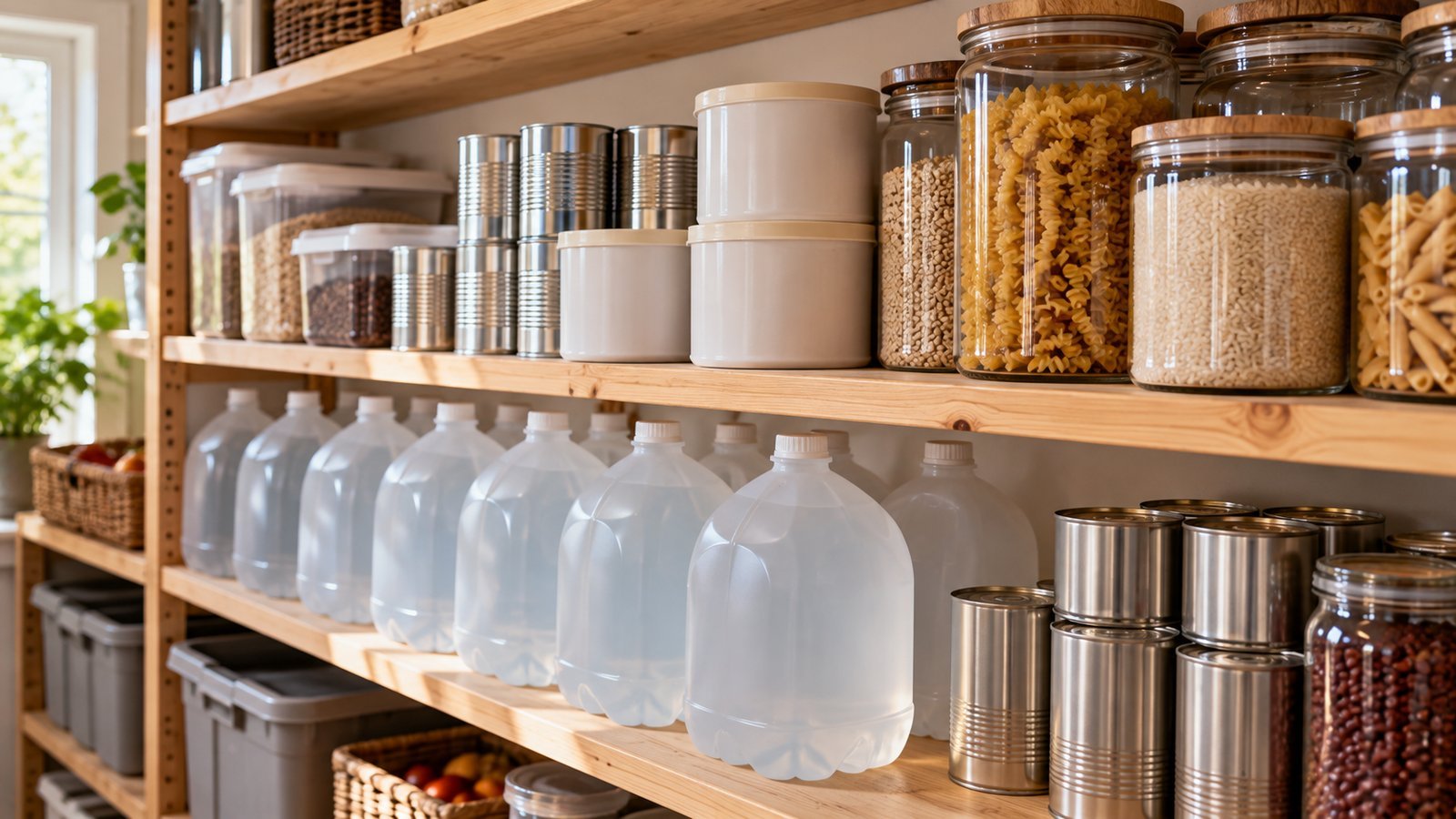
Ready.gov recommends storing at least one gallon of water per person per day for several days, for drinking and basic hygiene. Bottled water from the store is the simplest option because it stays sealed until opened. Keep it in a cool, dark place and rotate it before the date on the package. Pets need water too, so count them in your total.
Canned baby formula
The CDC calls ready-to-feed infant formula the safest option during an emergency, because it is sterile and needs no water for mixing. Unopened cans or bottles of ready-to-feed formula can be stored at room temperature until the expiration date; once opened, use the formula within the time on the label or discard it. If you use powdered formula, the CDC advises mixing it with bottled water, or with water that has been boiled for one minute and cooled if bottled water is not available, and preparing each bottle fresh when you cannot refrigerate it.
Dry food and pantry staples
Dry food such as crackers, cereal, oats, rice cakes, nuts, dried fruit and granola needs no refrigeration and little or no cooking. Pair it with canned goods and shelf-stable milk, and choose foods your household already eats so nothing goes to waste. Dry goods such as rice, pasta and beans store well but need water and a way to cook, so keep a few no-cook options for the first days.

Medicines and Baby Formula
Some medicines need refrigeration. The FDA advises that refrigerated medicines exposed to high temperatures may lose effectiveness and that people should check with a pharmacist or health care provider before using them. Insulin is a common example; many types can be kept at room temperature for a limited time, which varies by product, so check the package insert.
Prepared baby formula that has been sitting without refrigeration should be discarded, and powdered formula should be mixed with safe water. Our emergency water guide explains how to store and treat water for drinking and mixing.
Using Backup Power for the Refrigerator
Backup power can save the whole refrigerator, but it takes the right equipment. A refrigerator’s compressor needs a surge of power to start, so a battery power station must have an inverter large enough to handle it, and enough capacity for the hours you need. A fuel generator can run a refrigerator easily but must operate outdoors, at least 20 feet from the home, according to the Consumer Product Safety Commission.
Many generator owners run the refrigerator and freezer for a few hours at a time rather than around the clock, checking thermometers to keep the temperatures in range. That approach saves fuel. Our guide on preparing for a winter power outage covers keeping food cold in cold weather, including why storing food outdoors in winter is risky because temperatures can swing above 40 degrees in sunlight and animals can get into it.
Cooking and Eating During an Outage
Shelf-stable food reduces the need to open the refrigerator at all. Good options include canned beans, tuna and chicken, peanut butter, crackers, cereal, dried fruit, nuts and shelf-stable milk. Keep a manual can opener with your supplies.
Cooking without power needs care. The CDC and Ready.gov warn never to use a charcoal grill, gas grill, camp stove or generator indoors, in a garage or in any partly enclosed space, because of carbon monoxide. That includes bringing a charcoal grill into the garage after cooking: coals keep giving off carbon monoxide until they are fully out. Cook outdoors, well away from windows and doors. Our guide on staying safe in a heat wave and outage covers keeping cool, and hydration, when the air conditioning is off.
Cleaning Up After Spoiled Food
A long outage can leave a refrigerator or freezer with spills and lingering odors. The USDA’s guidance on removing refrigerator odors starts with throwing out spoiled food and any loose ice, then removing shelves and drawers and washing them with hot water and detergent before rinsing. Interior surfaces can then be wiped with a sanitizing solution; the USDA suggests one tablespoon of unscented liquid chlorine bleach per gallon of water. Leave the door open for a while to air out. Open boxes of baking soda or activated charcoal can absorb odors that remain.
Bag spoiled food securely before putting it in the trash, especially meat and seafood, and take it out as soon as collection allows. In hot weather, double bagging and keeping trash cans closed help keep pests away.
Keep a short outage log
Writing down a few details helps with decisions and, in some cases, with insurance or assistance claims: when the power went out, when it returned, thermometer readings, and what was discarded. Photos of discarded food can support a claim. Check your policy, since coverage for food spoilage varies.

A Quick Decision Checklist
Use this order when the power comes back on:
- Check the refrigerator and freezer thermometers.
- Note how long the power was out and whether the doors were opened.
- Refrigerator above 40 degrees for more than 2 hours: discard perishables.
- Freezer food with ice crystals or at 40 degrees or below: refreeze.
- Freezer food fully thawed and above 40 degrees for more than 2 hours: discard.
- Anything touched by floodwater: discard, except undamaged commercial metal cans that can be sanitized.
- Anything uncertain: throw it out.
Frequently Asked Questions
How long does food last in the fridge without power?
About 4 hours if the door stays closed, according to the USDA. After that, discard perishable food that has been above 40 degrees for more than 2 hours.
How long will a freezer stay cold without power?
A full freezer holds its temperature for about 48 hours and a half-full freezer for about 24 hours, as long as the door stays closed.
Can I refreeze food that thawed during a power outage?
Yes, if it still contains ice crystals or is at 40 degrees or below. Food that sat above 40 degrees for more than 2 hours should be discarded.
Are eggs safe after a power outage?
Refrigerated eggs that have been above 40 degrees for more than 2 hours should be discarded, according to USDA guidance.
Is it safe to taste food to see if it went bad?
No. Bacteria that cause illness often do not change taste, smell or appearance. Use a thermometer and the USDA timelines instead.
Is canned baby formula safe to use during a power outage?
Yes. The CDC calls unopened ready-to-feed formula the safest choice in emergencies because it is sterile and needs no water. Follow the label for how long it lasts after opening.
How much bottled water should I store for an outage?
Ready.gov recommends at least one gallon per person per day for several days, plus extra for pets.
Which dairy products are safe after a power outage?
Hard cheeses, butter and margarine generally keep. Milk, cream, yogurt and soft cheeses should be discarded after more than 2 hours above 40 degrees.
Sources: USDA Food Safety and Inspection Service (Keeping Food Safe During an Emergency; Food Safety in a Power Outage), FoodSafety.gov (Food Safety During Power Outages charts), Ready.gov (Power Outages), CDC (Food Safety After a Disaster; People at Risk of Food Poisoning), U.S. Food and Drug Administration (Safe Drug Use After a Natural Disaster; insulin storage), U.S. Consumer Product Safety Commission (Portable Generator Safety); CDC Infant and Child Feeding in Emergencies toolkit (ready-to-feed formula; preparing powdered formula); USDA, How to Pack a Cooler to Prevent Food Poisoning; Ready.gov (Water).