How to Build an Apartment Building Emergency Plan With Your Neighbors
This post may contain affiliate links, full disclosure here.
Quick answer: Ready.gov advises apartment and condo residents to talk with neighbors about working together in an emergency, find out who has useful equipment or skills such as medical training, decide who will check on elderly or disabled neighbors and make backup plans for children if parents cannot get home. In practice, that means an opt-in contact list, a volunteer contact person for each floor, a short skills-and-needs inventory, a check-in plan for blackouts and storms, and a copy of the building’s official emergency procedures. FEMA’s free CERT training can give a few residents basic disaster response skills.
In a large apartment building, hundreds of people may live within a few hundred feet of each other. When an emergency hits, those neighbors are often the first help anyone gets, well before firefighters, utility crews or family members can arrive.
Most buildings, though, have no plan for neighbors to help each other. This guide walks through how to build one, using guidance from Ready.gov and FEMA. It complements our apartment emergency kit guide, which covers the supplies each household should keep.
Sources: Ready.gov, Plan for Locations (neighborhoods, condominiums and apartments; high-rise buildings), Make a Plan and People with Disabilities pages; FEMA, Community Emergency Response Team (CERT) program and CERT Basic Training materials; U.S. Fire Administration, high-rise fire safety guidance. General information; this plan supplements, and never replaces, your building’s official fire and evacuation procedures or instructions from emergency responders. Checked October 2026.
Why Neighbor Plans Matter in Apartment Buildings
Ready.gov’s guidance for neighborhoods, condominiums and apartments is short and practical:
- Talk to your neighbors about how you can work together during an emergency.
- Find out if anyone has specialized equipment, such as a power generator, or expertise, such as medical knowledge, that might help in a crisis.
- Decide who will check on elderly or disabled neighbors.
- Make backup plans for children in case you cannot get home in an emergency.
- Share plans and communicate in advance.
Apartment buildings make this easier in some ways, since everyone is close together, and harder in others, since many residents never meet. A simple, opt-in plan bridges that gap.
Step 1: Start With Management and the Official Plan
Before organizing anything, ask building management or the board for the building’s official emergency procedures. Ready.gov notes that you need information about building managers’ plans, and if plans are not available, you may need to work with managers or other residents to develop them. Ask about:
- Fire alarm and evacuation procedures, including whether residents should stay in their units for certain fires.
- Locations of exits, stairs and any areas of refuge.
- Whether there is a shelter-in-place plan.
- Backup power for lights, elevators and water pumps.
- How management communicates with residents in an emergency.
Your neighbor plan should match these procedures. If the building tells residents to stay in their units during a fire on another floor, for example, your plan should not tell people to gather in the hallway. Our apartment fire safety plan explains the stay-or-go decision in detail.
Step 2: Gauge Interest and Keep It Voluntary
Post a notice in the lobby or mailroom, use a resident group chat if one exists, or bring it up at a tenant or board meeting. Keep it simple: a short note explaining that residents are building a voluntary emergency contact list and check-in plan.
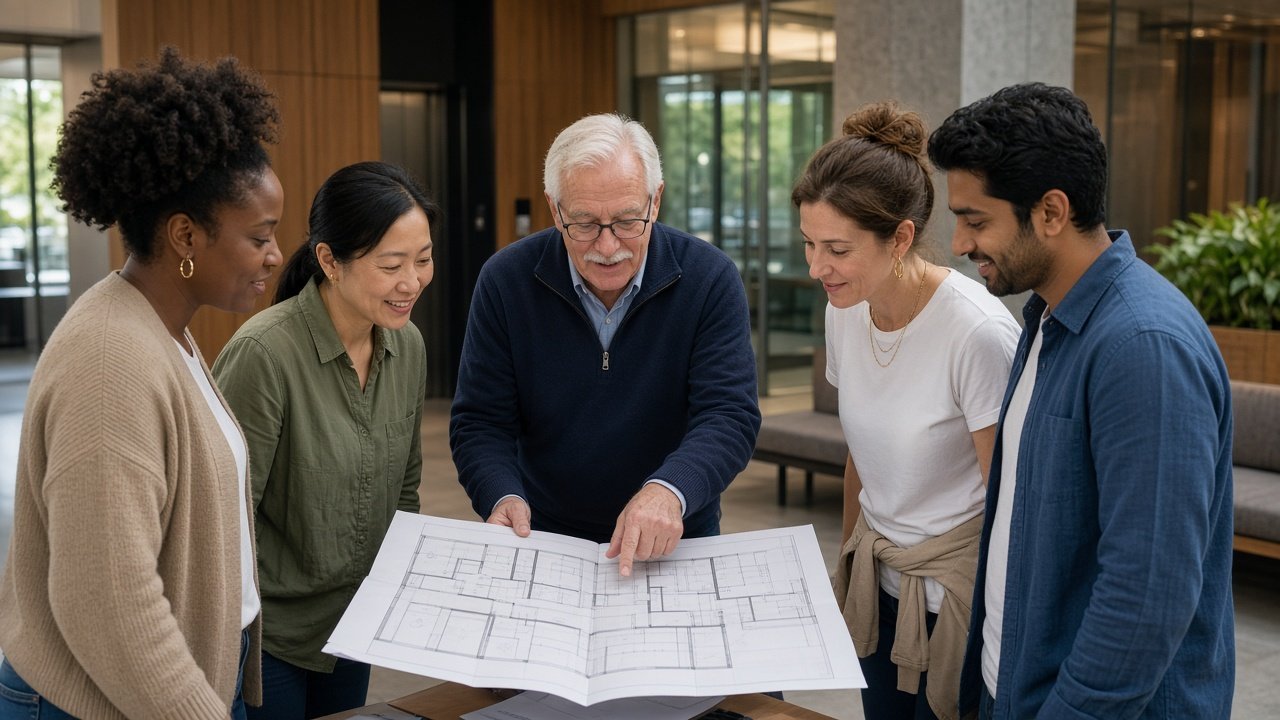
Some neighbors will be eager. Others will want privacy, and that is fine. A plan that covers even a third of the building is far better than none. Consider a short first meeting in a common room or lobby, with a sign-up sheet and a printed copy of the building’s official procedures, so people can see the plan is practical and low-commitment before they share any details.
Step 3: Create an Opt-In Contact List
The heart of a neighbor plan is a contact list. For each participating household, collect only what people choose to share:
- Names and apartment number.
- Phone numbers and preferred contact method, such as text or call.
- An emergency contact outside the building.
- Whether they would like a check-in during outages or storms.
- Pets in the unit, which helps if someone needs to retrieve them.
Store the list securely, share it only with participants and update it at least once a year. Respect privacy laws and building rules, and never pressure anyone to share health information.

Step 4: Pick Floor Contacts
In buildings with more than a few floors, assign a volunteer contact for each floor or group of floors. Floor contacts do not replace first responders. Their job is simply to:
- Keep the contact list for their floor current.
- Check on neighbors who asked for a check-in during an outage, heat wave or storm.
- Pass along official information from management.
- Know which neighbors may need help evacuating so they can tell responders.
Having a backup for each floor contact helps, since anyone can be away when an emergency hits.

Step 5: Do a Skills and Needs Inventory
Ready.gov specifically suggests finding out who has useful equipment or expertise. A short voluntary survey can capture both skills and needs:
| Skills and resources to ask about | Needs to ask about |
|---|---|
| Medical training, such as nurses, EMTs or doctors | Mobility limitations or wheelchair use |
| CPR and first aid certification | Electricity-dependent medical equipment |
| CERT or emergency response training | Medications that need refrigeration |
| Languages spoken | Hearing or vision disabilities |
| Tools, flashlights, radios or power stations | Young children at home alone after school |
| A car for emergency errands | Pets that would need help |
Keep this information private, share it only as needed and let people update or withdraw it anytime.
Step 6: Plan Check-Ins for Common Emergencies
Different emergencies call for different kinds of neighbor help.
Power outages
Long blackouts are one of the most common big-city emergencies, and in tall buildings they can cut off elevators and water pumps. Floor contacts can check on neighbors who asked, share flashlights or charge phones from a power station, and pass along updates. Our guide to preparing for a power outage in a high-rise covers household steps.
Heat waves and cold snaps
Check on older adults and anyone who lives alone, especially if air conditioning or heat fails. Share information on cooling or warming centers.
Fires and building evacuations
Follow the official procedures first. A neighbor plan helps after the fact: knowing who is accounted for and telling firefighters which residents may need help.
Storms and shelter-in-place orders
Residents may need to stay inside for days. Neighbors can share updates, swap supplies and check on vulnerable households. Our guide to sheltering in place explains what officials mean by the term.
Step 7: Plan for Children and Dependents
Ready.gov recommends making backup plans for children in case you cannot get home. A neighbor plan can include parents who agree to watch each other’s kids, with written permission and contact details shared ahead of time. Do the same for pets and for elderly relatives who live in the building.
Step 8: Set Up a Communication Chain
Decide how information will move through the building:
- Group text or messaging app for quick updates when cell service works.
- A printed notice board in the lobby or mailroom for updates when phones are down.
- Door-to-door checks by floor contacts for those who asked.
- A meeting point, such as the lobby or a nearby park, for when people need to gather after evacuating.
Ready.gov advises listening for and following official instructions. Make sure your chain shares official information from management and authorities, not rumors. Our guide to making an emergency communication plan covers how each household can plug into this.
A Sample Floor Contact Checklist
Give each floor contact a one-page checklist they can follow under stress. A simple version:
- Make sure you and your own household are safe first.
- Follow any instructions from building staff, alarms or responders.
- Check the group chat or notice board for official updates.
- Contact neighbors on your list who asked for a check-in, by text first, then by knocking.
- Note anyone who does not respond or who needs help, and tell building staff or responders.
- Share only confirmed information, and say where it came from.
- Report back to the group once your floor is checked.
Print the checklist on the back of the floor’s contact list so both are in one place, and keep a copy in each floor contact’s own kit.

Handling Common Concerns
Residents sometimes hesitate to join a neighbor plan. Addressing their concerns openly helps:
- Privacy. Make every piece of information optional and explain who will see it. Let people join with only a phone number.
- Time. Floor contacts commit to a few check-ins during emergencies and a yearly update, not ongoing meetings.
- Responsibility. Volunteers are not rescuers. Their role is to check in, share information and alert professionals, not to enter dangerous areas or anyone’s apartment without permission.
- Language barriers. Translate the notice and the contact form into the main languages spoken in the building, and note bilingual volunteers in the skills inventory.
- Renters vs. owners. Plans work in rental buildings and condos alike. In rentals, ask management to help distribute the notice to all units.
Step 9: Consider Shared Supplies
Some buildings keep a small shared emergency cabinet, with management’s approval. Possible items include flashlights, a battery or crank radio, a first aid kit, glow sticks for stairwells and a printed copy of the contact list. Shared supplies never replace each household’s own kit, but they help in common areas.
Keep fuel-burning equipment out of the plan for indoor use. Generators and grills produce carbon monoxide and should never be run inside a building or in hallways.

Step 10: Get Trained Through CERT
FEMA’s Community Emergency Response Team (CERT) program trains volunteers to help their communities before, during and after disasters. CERT Basic Training is offered locally, usually at no cost, and covers topics including disaster preparedness, fire safety and utility controls, basic disaster medical operations, light search and rescue, disaster psychology and team organization.
Even two or three trained residents can make a building’s plan stronger. Contact your local emergency management office or search for CERT programs in your city to find a class.

Keep the Plan Alive
A neighbor plan works only if it stays current. Once or twice a year:
- Update the contact list and floor contacts.
- Welcome new residents and invite them to join.
- Review the official building procedures with management.
- Run a short check-in drill, such as a test text to the group.
- Refresh any shared supplies.
Frequently Asked Questions
Frequently Asked Questions
How do I organize my apartment building for emergencies? Start with management's official procedures, then create an opt-in contact list, assign floor contacts, collect a voluntary skills and needs inventory and agree on how you will check on each other.
What does Ready.gov recommend for apartment residents? Talk with neighbors about working together, find out who has useful skills or equipment, decide who will check on elderly or disabled neighbors and make backup plans for children.
What is a floor contact? A volunteer who keeps the contact list for a floor current, checks on neighbors who asked for help and passes along official information during an emergency.
What is CERT training? FEMA's Community Emergency Response Team program trains volunteers in disaster preparedness, fire safety, basic medical operations, light search and rescue and team organization. Classes are offered locally.
Should neighbors share medical information? Only if they choose to. Keep any health or needs information voluntary, private and limited to what helps someone check on them.
Does a neighbor plan replace the building's evacuation plan? No. It supplements official procedures and never replaces instructions from building management or emergency responders.

The Bottom Line
The people living down the hall are your closest source of help in an emergency. A voluntary contact list, floor contacts, a skills and needs inventory and a simple check-in plan turn a building of strangers into a network that can act quickly. Start small with management’s support, keep it opt-in and update it every year.