Apartment Evacuation Planning for People With Disabilities or Limited Mobility
This post may contain affiliate links, full disclosure here.
Quick answer: if you live in an apartment and cannot easily use stairs, plan now for the moment elevators stop. In a fire, the U.S. Fire Administration says not to use elevators unless directed. If you cannot self-evacuate, call 911, tell them your exact location and be prepared to shelter in place in a room with the door closed, or wait on a clear stair landing or in a designated area of refuge. Build a personal support network, tell building management what help you need, consider your local emergency registry, and keep a kit with medications, device batteries, a backup mobility aid and a printed medical information card.
Apartment living puts a lot of distance between you and the street. For most residents, that means a long walk down the stairs. For people who use wheelchairs, walkers or oxygen, or who have heart, lung, vision or cognitive conditions, it can mean that the usual exit route is not an option at all.
This guide focuses on that gap: how to plan for emergencies in a multi-story building when stairs are hard or impossible, using guidance from the U.S. Fire Administration, Ready.gov and the National Fire Protection Association (NFPA). It fits into our broader apartment emergency kit guide, which covers the supplies every apartment should have.
Sources: U.S. Fire Administration (FEMA), Protecting People Who Live or Work in High-Rises; Ready.gov, People with Disabilities; National Fire Protection Association, Emergency Evacuation Planning Guide for People with Disabilities (revised 2024) and high-rise building safety guidance; U.S. Access Board and ADA standards on areas of refuge as summarized by NFPA. General safety information, not a substitute for your building’s emergency plan or local fire department instructions. Checked October 2026.

Why Elevators Are the Weak Point
Elevators are how many people with mobility limitations get in and out of their homes every day. In an emergency, they are often the first thing to become unavailable.
The U.S. Fire Administration advises residents not to use elevators during a fire, because they may become disabled or be secured by first responders for their own operations and rescues. Power outages stop elevators too, and some buildings have backup power only for limited elevator service, or none at all. If you are on the 12th floor and the elevator is out, the plan you make now decides what you do next.
Some newer high-rises have occupant evacuation elevators designed for use during certain emergencies. The USFA notes that occupants might sometimes be directed to evacuate to a different floor. Only use an elevator in an emergency if building staff or firefighters tell you it is safe.

Know Your Building's Safety Features
The USFA explains that modern high-rises are generally required to include fire-rated compartments, alarms, automatic sprinklers, smoke control systems and multiple protected exit stairs. Older buildings may not meet these standards, so find out what yours has. Ask building management:
- How many exit stairs are there, and where do they discharge?
- Does the building have sprinklers in every unit and hallway?
- Are there designated areas of refuge or areas of rescue assistance, and do they have two-way communication?
- Is there an evacuation chair or other device, and who is trained to use it?
- What is the building’s plan for residents who cannot use stairs?
- Is there backup power for any elevators, and for how long?
- How are residents notified in an emergency, including those who are deaf or hard of hearing?
Write down the answers and keep them with your emergency information. If management cannot answer, ask them to find out or to contact the local fire department.

Your Options When You Cannot Use the Stairs
In a fire, your choices depend on where the fire is, how much smoke there is and your building’s design. The USFA lists several options for people who cannot self-evacuate:
- Call 911 first. Give your address, apartment number, floor and the fact that you cannot use stairs. Stay on the line if you can.
- Shelter in place. Stay in a room with the door closed and use a wet towel to seal cracks around the door. A room with a window and a phone is ideal.
- Wait in the stairwell. If you can get to the nearest exit stair and it is clear or nearly clear of smoke, the USFA says you can wait on the stair landing for assistance. Keep stair doors closed so smoke control systems work.
- Use an area of refuge. Many buildings have designated spaces, often near stairs, built to protect occupants while they wait for help. NFPA notes they typically include a two-way communication system to reach responders.
NFPA guidance treats a buddy system as helpful but not reliable on its own, since the person you count on may not be home or able to help. Build backups into every step.

Build a Personal Support Network
Ready.gov recommends creating a support network of people who can help in a disaster. For apartment residents, that might include:
- A neighbor on your floor and one on another floor.
- A building staff member, such as the superintendent or front desk.
- A family member or friend nearby who can come over or call for help.
- A caregiver or home health aide, if you have one.
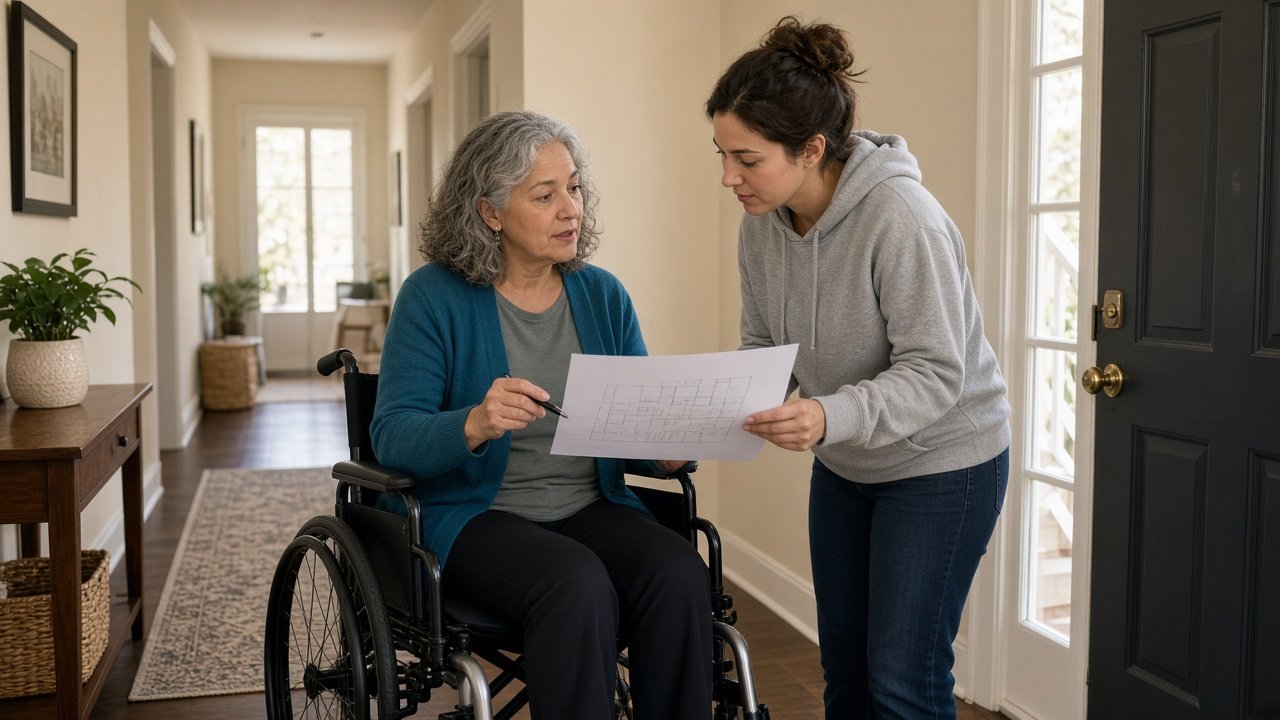
Ready.gov also suggests telling your network where you keep your emergency supplies, and possibly giving a trusted person a key. Practice with them: show them how your wheelchair folds or how your oxygen works. Ready.gov specifically recommends showing others how to assemble, disassemble and operate your wheelchair.
Share a written copy of your plan with your network. Our guide to making an emergency communication plan includes a contact list format that works well here.

Register Where It Helps
Ready.gov notes that many city and county emergency management agencies maintain voluntary registries where people with disabilities can self-identify to receive targeted help. Contact your local emergency management office to ask whether one exists where you live.
If you use electricity-dependent medical equipment, Ready.gov also recommends asking your power company to put you on a list for priority power restoration. This is not a guarantee of service, but it puts your needs on record. Our guide to backup power for medical devices during outages covers battery and generator options.

Plan for Power Outages, Not Just Fires
Not every emergency involves leaving the building. A long blackout can trap residents on upper floors for hours or days without elevators, lights or, in some buildings, water pressure. For many people with mobility limitations, sheltering at home is the safest choice during an outage, as long as supplies are in place.
Prepare for that scenario with:
- Several days of water and shelf-stable food stored in your unit.
- Charged power banks for phones and spare batteries for devices.
- A battery-powered or crank light at bedside and near your mobility aid.
- A plan for medications that need refrigeration, such as a cooler and chemical ice packs, which Ready.gov recommends.
- A way to call for help if your phone dies.
Our guide to preparing for a power outage in a high-rise goes deeper on blackout logistics in tall buildings.

Build a Kit for Your Specific Needs
Ready.gov recommends adding items to your basic kit based on the things you use every day. For mobility needs, its list includes:
- A lightweight manual wheelchair as a backup to a power chair, if possible.
- An extra, charged battery for a power wheelchair or other battery-operated devices.
- A patch kit or sealant for tires, and a portable air pump.
- An extra cane or walker if you use one.
- An extra seat cushion if you rely on one for skin protection or balance.
For other needs, Ready.gov suggests:
- Several days of prescription medicines and a written list of medications, dosages and allergies.
- Extra eyeglasses, hearing aids and batteries.
- A weather radio with text display and flashing alert for people who are deaf or hard of hearing.
- Braille or large-print labels on supplies for people who are blind or have low vision.
- Laminated communication cards for people with speech disabilities, in case devices fail.
- A list of style and serial numbers for medical devices, with operating instructions.
- Copies of insurance and Medicare cards.
Keep the essentials in a bag you can grab quickly or that a helper can carry. Our urban go-bag checklist covers the general items to add.
Make a Medical Information Card
First responders may not know your needs, and you may not be able to explain them in a crisis. Ready.gov recommends wearing medical alert tags or bracelets and adding medical information to your devices. A printed card can include:
- Your name, address and apartment number.
- Conditions and medications that responders should know about.
- Mobility aids you use and how to move you safely.
- How to communicate with you, if you have a communication disability.
- Emergency contacts and your doctor’s name and number.
Keep one card in your wallet, one in your kit and one near the door.

Planning for Service Animals and Pets
Ready.gov reminds residents to plan food, water and supplies for service animals, support animals and pets. Keep a collar with ID, records and a leash or carrier where a helper can find them. If evacuation is needed, check whether local shelters accept pets, since some only allow service animals.

Practice Your Plan
A plan you have never tested may fail when it matters. Once or twice a year:
- Walk or roll your route to the nearest exit stair and area of refuge, if there is one.
- Time how long it takes to get out of bed, into your mobility aid and to the door.
- Test that you can reach 911 from each room and that your phone is charged.
- Review your plan with your support network and update phone numbers.
- Ask building management to include residents with disabilities in fire drills, as NFPA recommends involving occupants with disabilities in evacuation planning.

Talk to Building Management in Writing
Let management know, in writing, that you may need assistance in an emergency and what kind. Ask whether they keep a list of residents who need help and how it is shared with the fire department. Renters may have rights to reasonable accommodations under federal fair housing law, and a local disability rights organization can help if requests are not addressed.

Frequently Asked Questions
Frequently Asked Questions
Should I use the elevator to evacuate during a fire? Generally no. The U.S. Fire Administration warns that elevators may become disabled or be taken over by responders. Use one only if firefighters or building staff direct you to.
What should I do if I cannot use the stairs during a fire? Call 911 with your exact location, then shelter in place in a room with the door closed and cracks sealed, or wait on a clear stair landing or in an area of refuge for responders.
What is an area of refuge? A protected space, often near an exit stair, where people who cannot use stairs can wait for help. Many include a two-way communication system for contacting responders.
How do I build a support network for emergencies? Choose several people, including neighbors on different floors and building staff, share your plan and the location of your supplies, and show them how to operate your mobility equipment.
Is there a registry for people with disabilities in emergencies? Many cities and counties have voluntary registries. Contact your local emergency management office to find out.
What should be in an emergency kit for someone with limited mobility? Backup mobility aids, spare device batteries, tire repair supplies, medications and a medication list, device information and copies of insurance cards, along with basic water, food and light.

The Bottom Line
The stairs are the backbone of most apartment evacuation plans, so residents who cannot rely on them need a plan built around other options. Learn your building’s safety features, line up a support network, register where it helps, stock a kit for your specific needs and practice. When the elevator stops, those steps let you act quickly instead of waiting and hoping.