High Wind and Severe Thunderstorm Safety for Apartments: Balconies, Windows and Falling Debris
This post may contain affiliate links, full disclosure here.
Quick answer: When a High Wind Warning or Severe Thunderstorm Warning is issued, bring in or tie down anything loose on balconies and terraces, close windows and blinds, move away from windows to an interior room and stay inside until the wind dies down. The National Weather Service defines a severe thunderstorm as one producing winds of at least 58 mph or hail at least 1 inch across. Outdoors, city winds can turn scaffolding, signs, tree limbs and balcony items into dangerous debris, so avoid walking near construction sites and trees during strong winds.
Strong winds hit cities differently than open country. Tall buildings funnel gusts through streets and plazas, balconies on upper floors catch more wind than the ground below and construction sites, scaffolding and signs add sources of flying debris. Severe thunderstorms bring sudden, damaging gusts with little warning, sometimes with hail and lightning.
This guide covers what wind and thunderstorm alerts mean, how to secure your apartment and how to stay safe inside and on the street. It is part of our severe weather preparedness guide.
Sources: National Weather Service, severe thunderstorm and high wind safety pages, watch and warning definitions and Storm Prediction Center derecho information; Ready.gov, Thunderstorms and Lightning, Tornadoes and Power Outages; American Red Cross, thunderstorm and high wind safety guidance. General information; follow instructions from local officials and building management. Checked October 2026.
What Wind and Thunderstorm Alerts Mean
Different NWS alerts cover different wind threats. Understanding them helps you know how quickly to act.
| Alert | What it means | What to do |
|---|---|---|
| Wind Advisory | Strong winds are expected that can make driving difficult and blow around unsecured objects. Criteria vary by region. | Secure balcony items and take care outdoors |
| High Wind Warning | Damaging sustained winds or gusts are expected. Criteria vary by region, but commonly include sustained winds of 40 mph or more or gusts of 58 mph or more. | Secure or bring in loose items, stay indoors and prepare for outages |
| Severe Thunderstorm Watch | Conditions are favorable for severe thunderstorms in and near the watch area | Review your plan and keep alerts on |
| Severe Thunderstorm Warning | A severe thunderstorm is occurring or imminent, based on radar or reports | Go indoors, move away from windows and stay inside |
The NWS considers a thunderstorm severe if it produces winds of at least 58 mph, hail at least 1 inch in diameter or a tornado. Storms below that threshold can still bring dangerous lightning and flash flooding.
Derechos
A derecho is a widespread, long-lived windstorm associated with a band of fast-moving thunderstorms, according to the Storm Prediction Center. Derechos can bring hurricane-force gusts across hundreds of miles. They are treated like severe thunderstorms in terms of warnings, but their scale means widespread outages and damage are common.

Why Wind Behaves Differently in Cities
City streets and buildings change how wind moves. Gusts can accelerate between tall buildings and around corners, and wind speeds generally increase with height above the ground. That means upper-floor balconies and rooftop terraces may feel much stronger winds than the street.
Cities also have more objects that can become debris:
- Scaffolding, sidewalk sheds and construction materials.
- Signs, awnings and banners.
- Street trees and their limbs.
- Balcony furniture, planters and grills.
- Trash cans, recycling bins and loose items on sidewalks.
Some cities, such as New York, issue weather advisories to construction sites ahead of high winds so crews can secure materials. Residents should still assume that debris can fall or blow around during strong winds.

Before the Wind: Securing Your Apartment
Preparation can prevent damage and keep your neighbors safe below.
Balconies and terraces
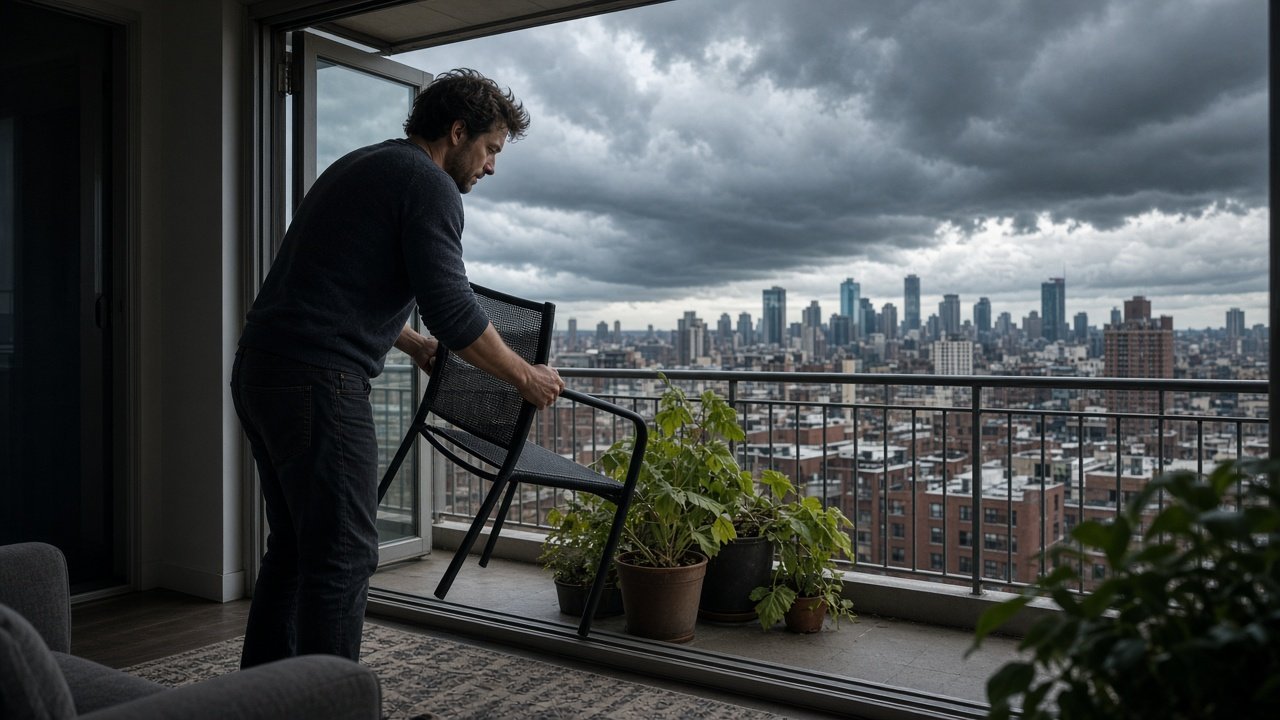
Anything on a balcony can blow off and fall, which is especially dangerous from upper floors. Before strong winds:
- Bring in furniture, cushions, umbrellas, planters, decorations and toys.
- Tie down or bring in grills, and never leave propane tanks loose.
- Close and secure balcony doors.
- Check whether your building has rules about securing balconies during wind events.
Windows
- Close and lock windows; locking helps seal them tightly.
- Close blinds, shades or curtains, which can help reduce the spread of broken glass.
- Remove items from windowsills.
- Report cracked windows or loose frames to building management before storm season.
Power and supplies
Wind and thunderstorms often knock out power. Charge phones and power banks, keep flashlights and batteries handy and have a battery or hand-crank radio. Our guide to high-rise power outages explains what to expect with elevators and water pumps.
During the Storm: Staying Safe Indoors
The safest place during strong winds is inside, away from windows. Ready.gov and the NWS recommend:
- Move to an interior room or hallway away from windows and glass doors.
- Stay off balconies, terraces and rooftops.
- Avoid corded phones, plumbing and plugged-in electronics if lightning is present.
- Keep shoes and a flashlight nearby in case glass breaks or power goes out.
- Monitor alerts, since severe thunderstorms can produce tornadoes.
If a Tornado Warning is issued, go to the lowest floor of your building and an interior room or hallway away from windows. Our tornado safety guide covers apartment and high-rise shelter options.
High-rise residents should know that upper floors feel stronger winds and may sway slightly in high wind; tall buildings are designed to flex. Follow building management instructions, and move to interior spaces on a lower floor if officials or management advise it.

Staying Safe Outdoors in High Winds
Avoid going out during high winds if you can. If you must:
- Stay away from construction sites, scaffolding and sidewalk sheds.
- Avoid walking under trees, which can drop limbs or fall entirely, especially when soil is wet.
- Keep clear of signs, awnings and loose building materials.
- Watch for flying debris at street corners and plazas where gusts accelerate.
- Hold handrails on stairs and bridges, and take extra care with strollers, bikes and umbrellas.
Never touch or approach downed power lines, and assume any line is live. Report them to your utility and call 911 if there is immediate danger.

Driving and Commuting in High Winds
Strong crosswinds can push vehicles, especially high-profile ones such as vans, trucks and SUVs. The NWS advises drivers to keep both hands on the wheel, slow down and watch for debris and downed trees. Bridges and open stretches of highway are often the windiest places.
Transit systems may slow or suspend service on elevated lines and bridges during high winds. Check service alerts before you leave, and have a backup plan for getting home.

After the Storm
When the wind dies down:
- Check for damage to windows, balconies and your apartment, and report issues to management.
- Stay away from downed lines and damaged trees.
- Watch for loose debris that may still fall from buildings, scaffolding and trees.
- Photograph any damage for insurance or your landlord.
- Check on neighbors, especially older adults and people living alone.
- Use generators safely, outdoors and away from windows, if you have one.
If power is out for a long time, follow food safety guidance and keep refrigerator and freezer doors closed as much as possible.

Hail Safety
Severe thunderstorms can bring hail large enough to break windows and dent cars. If hail is in the forecast:
- Stay indoors and away from windows and skylights.
- Move cars into a garage or covered parking if you can do so safely before the storm.
- If you are driving, pull over in a safe place, ideally under a covered structure, and stay inside the vehicle. Avoid stopping under bridges or overpasses on highways, where parked cars can block traffic.
Building a Wind and Storm Kit for Your Apartment
Most of what you need for high winds overlaps with a general apartment kit. Our apartment emergency kit guide covers where to store everything in a small space. For wind and thunderstorm season, make sure your kit includes:
- Flashlights or headlamps for each person, plus spare batteries. Our emergency lighting guide compares options.
- A battery-powered or hand-crank radio for alerts when cell service or power fails.
- Charged power banks for phones.
- Sturdy shoes kept by the bed, since broken glass is a common hazard after windows fail.
- Work gloves and a small broom and dustpan for cleaning up glass.
- A basic first aid kit.
- Water and no-cook food for at least a few days in case outages last.
- Copies of important documents and your renters insurance policy information.
Check the kit each spring before thunderstorm season peaks and again in fall, replacing batteries and expired items.

Who Pays for Wind Damage in a Rental?
Wind damage in a rental usually splits between tenant and landlord. In general, the building owner’s insurance covers the structure, including windows, walls and the roof. Your renters insurance covers your belongings.
According to the Insurance Information Institute, standard renters policies typically cover personal property damaged by windstorm and hail, subject to your deductible and policy limits. If a window breaks and rain soaks your furniture, your policy may help. If a tree falls on your car, auto comprehensive coverage usually applies rather than renters insurance.
After a storm:
- Make the apartment safe and prevent further damage if you can do so safely, such as moving belongings away from a broken window.
- Notify your landlord in writing about structural damage and request repairs.
- Photograph damage to the unit and your belongings.
- Contact your insurer to start a claim for personal property.
- Keep receipts for emergency purchases and, if you have to stay elsewhere, for temporary housing costs, which some policies cover as additional living expenses.
Policies vary, so review yours before storm season and ask your agent about deductibles and exclusions.

Keeping Your Household Connected
Severe thunderstorms often hit in the afternoon and evening, when family members may be at work, school or on the way home. Agree in advance on how you will check in and where each person will shelter if a warning is issued while they are out. Texting is often more reliable than calling when networks are busy. Our family emergency communication plan guide walks through contacts, meeting places and wallet cards.

Wind Safety for Building Managers and Boards
Building managers, co-op boards and condo associations can help protect residents and passersby.
- Send reminders to secure balconies before forecast high winds.
- Inspect rooftop equipment, signs and facade elements before storm season.
- Secure construction materials and scaffolding, and follow any local construction weather advisories.
- Close rooftop amenities during wind and thunderstorm warnings.
- Communicate elevator and building systems plans for outages.

High Wind Safety Checklist
Before strong winds:
- Bring in or secure all balcony and terrace items.
- Close and lock windows and close blinds.
- Charge devices and gather flashlights.
- Sign up for alerts.
During:
- Stay indoors in an interior space away from windows.
- Stay off balconies and rooftops.
- Watch for tornado alerts.
After:
- Avoid downed lines, damaged trees and loose debris.
- Report damage and check on neighbors.

Frequently Asked Questions

Frequently Asked Questions
What wind speed makes a thunderstorm severe? The National Weather Service classifies a thunderstorm as severe when it produces winds of at least 58 mph, hail at least 1 inch in diameter or a tornado.
What should I do with balcony furniture in high winds? Bring it inside or securely tie it down before the wind arrives. Items blown off upper-floor balconies can cause serious injuries and damage below.
Where should I go in my apartment during a severe thunderstorm? Move to an interior room or hallway away from windows and glass doors, and stay off balconies. If a Tornado Warning is issued, go to the lowest floor and an interior space.
Is it safe to walk outside in high winds? Avoid it when possible. If you must go out, stay away from scaffolding, construction sites, trees, signs and downed power lines.
What is a derecho? A derecho is a widespread, long-lived windstorm associated with a line of fast-moving thunderstorms. It can bring hurricane-force gusts over hundreds of miles.
Do tall buildings sway in high winds? Tall buildings are designed to flex slightly in strong winds, and upper floors may feel movement. Follow building management instructions.

The Bottom Line
High winds and severe thunderstorms turn ordinary objects into dangers, especially in cities full of balconies, scaffolding and street trees. Secure your balcony, close your windows, shelter away from glass and stay off the streets until the wind dies down. For other storm hazards, see our severe weather preparedness guide.